Communication is key when running a business. The content you put up on your webpage is the primary means of communication with your clients, regulators, investors, and global stakeholders.
Having a Formal English Translator is a non-negotiable requirement for maintaining an immaculate content library, including legal agreements, compliance updates, financial disclosures, technical documentation, and corporate reports. Enterprises must ensure that every English-language output is polished, consistent, and aligned with professional standards.
Formal English translation elevates communication to a refined standard suitable for a business environment.
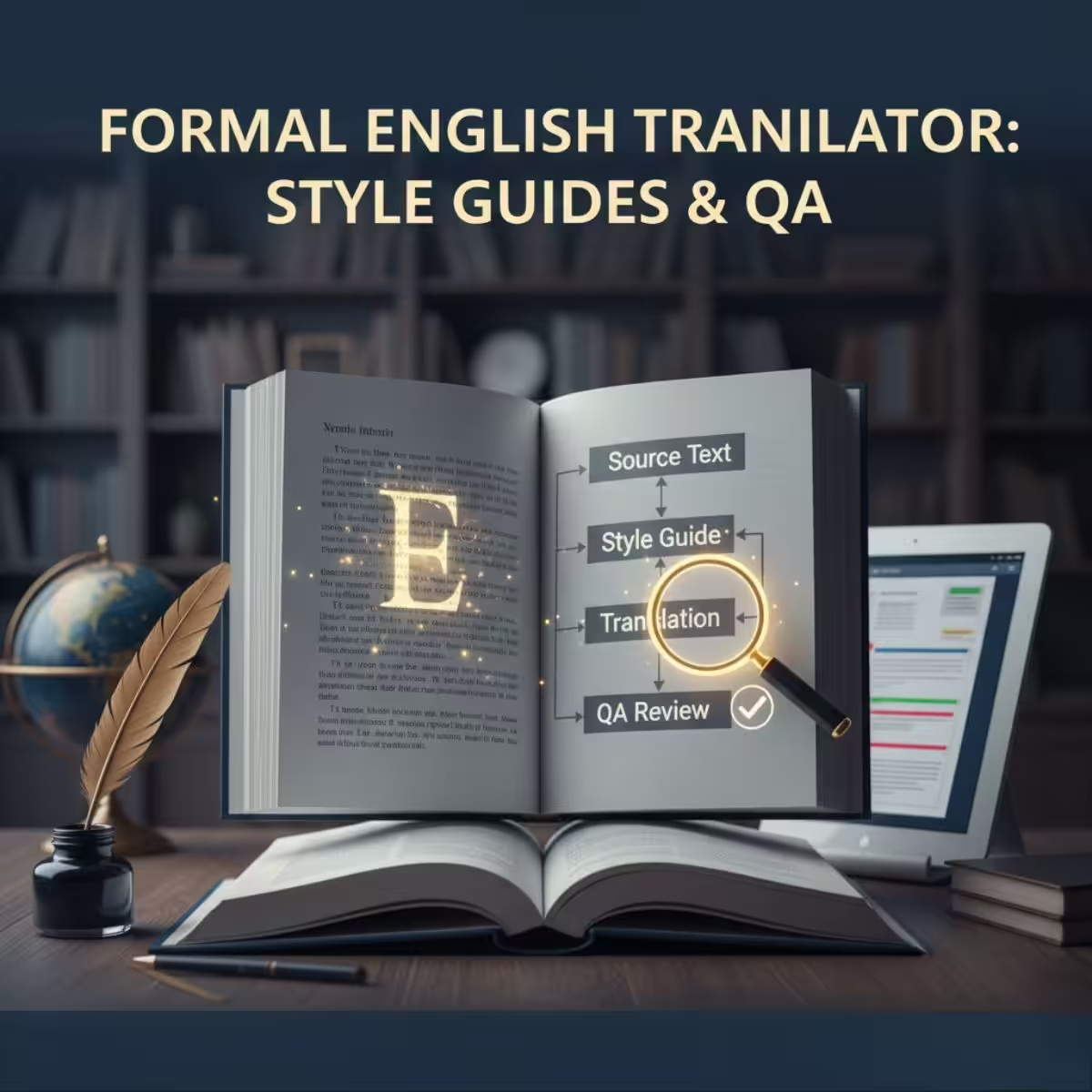
Style guides help maintain consistency in tone and industry-specific terminology to avoid confusion. Linguistic frameworks and structured quality assurance processes aid the process.
This article breaks down how formal English translation works, when companies need it, how style guides shape quality, how QA systems enforce accuracy, and why selecting the right partner, such as Circle Translations, can significantly improve corporate language performance across all markets.
What Is a Formal English Translator and When Do Businesses Need One?
A formal English translator specializes in transforming informal or inconsistent material into polished, standard English suitable for business audiences. Their work focuses on appropriate tone, consistent tone, grammatical precision, and industry-standard terminology.
Businesses rely on formal English translators for a wide range of scenarios, including:
- Corporate and compliance communication
- Financial statements and investor updates
- Legal correspondence and contract language
- Healthcare and regulatory documents
- Technical manuals, SOPs, and product documentation
- Customer-facing communication requires a professional tone
Here’s an example for visualization:
A casual email such as “We need you to fix the attached ASAP” becomes “Kindly review the attached document at your earliest convenience.”
The meaning remains unchanged, but the tone aligns with the expectations of professional, regulated environments.
This adaptation is supported by style guides, terminology databases, and increasingly, AI-assisted tools that help detect tone mismatches and enforce consistency.
Key Differences Between General and Formal Translation
Formal translation strays quite far from general translations, and it’s important to know the distinctions between them.
Here’s a table summarizing the key difference:
| Area | Informal Translation | Formal Translation (Professional / Enterprise) |
| Tone & Register | Casual, conversational, sometimes direct. | Polished, professional, compliant with formal English register. |
| Vocabulary | Everyday words, contractions, and colloquial phrases. | Precise terminology, industry vocabulary, no contractions or slang. |
| Audience Fit | Suitable for internal notes, casual emails, and social content. | Required for legal, financial, compliance, corporate, and regulated communication. |
| Grammar & Structure | Flexible sentence structure; may simplify concepts. | Controlled syntax, consistent structure, clarity-focused phrasing. |
| Terminology Control | Limited or inconsistent terminology usage. | Enforced terminology management (TM/TB), glossary-aligned output. |
| Accuracy Expectations | Meaning is conveyed, but nuance may be lost. | High accuracy needed—tone, nuance, risk-sensitive phrasing preserved. |
| Compliance Alignment | Not suitable for regulated sectors. | Follows ISO 17100, MQM/DQF, and compliance frameworks. |
| Use Case Examples | “We’ll get back to you soon.” | “We will provide an update at our earliest convenience.” |
Why Formal Tone Matters in B2B Communication
Formal translation upholds a brand’s reputation in foreign markets. This also serves as a risk mitigation shield.
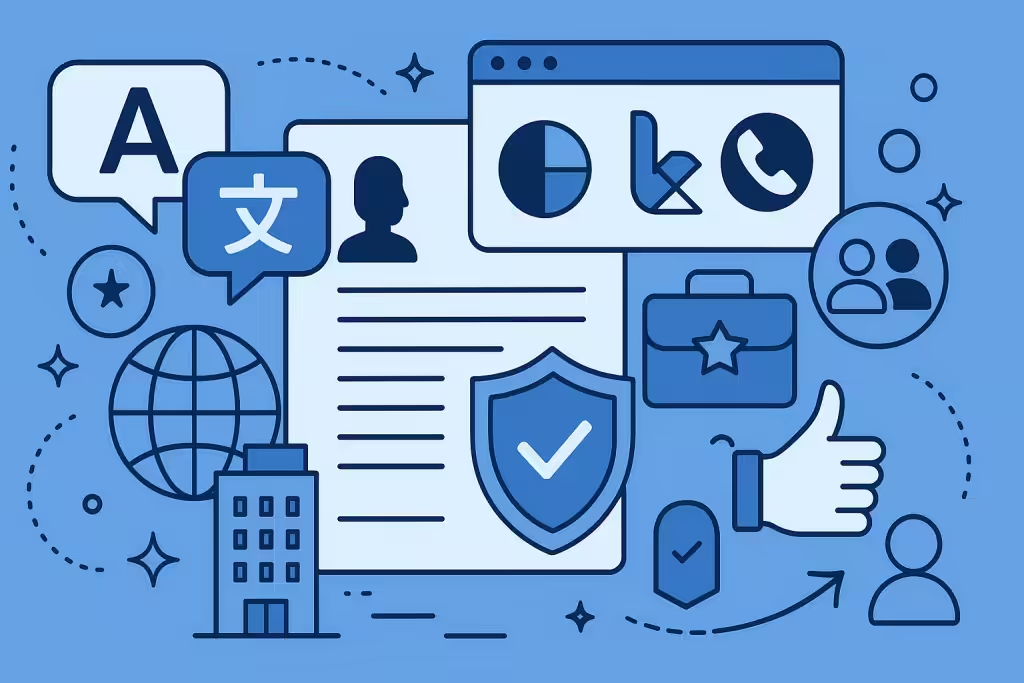
Localization platforms, such as Circle Translations, Lokalize and LanguageLine, report that consistent tone improves trust and reduces misunderstandings in B2B settings.
Formal English ensures Clear, unambiguous communication, Professional presentation of legal or compliance content, reduced risk of misinterpretation in regulated industries, and Consistent brand voice across markets. Not only that, but it also leads to higher credibility with partners and regulators.
How Style Guides Define the Rules for Formal Translation
Style guides help translators by identifying the target audience, the translation’s structure, and a glossary of dos and don’ts, and serve as a complete set of instructions for the project.
A well-built style guide ensures that every translator, editor, and AI tool uses the same rules, reducing variation and improving efficiency.
What Should a Formal English Style Guide Include?
Style guides act as a set of instructions that are followed in every step of the localization platform. This sets the expectation of how a project should look like. This helps with consistency, reduces confusion and errors, and drives efficiency.
What Should a Formal English Style Guide Include?
A complete guide includes:
- Audience definition: Who the content is aimed at
- Tone rules: Level of formality, politeness, and lexical sophistication
- Formal vocabulary: Required industry terms and terminology conventions
- Grammar and syntax rules: Passive voice usage, modals, and sentence length
- Forbidden vocabulary: Colloquialisms, slang, contractions, and ambiguous phrases
- Client-specific preferences: Industry style variations, formatting, and citation rules
Who Creates and Maintains the Style Guide?
Creating a style guide requires intervention at multiple levels of the workflow to ensure the vision aligns with market expectations and remains feasible.
Here are six levels of insights explained in creating a proper style guide:
- Project Managers (PMs)
PMs collect and explain client requirements and tone expectations, starting the process. They also consolidate rules into a unified, accessible document, ensure the guide aligns with workflow stages, deadlines, and deliverables, maintain version control inside the TMS, and coordinate updates across teams
- Senior Linguists
The linguistic team defines tone, register, grammar standards, and sentence structure rules, establishes vocabulary preferences and formal vs informal variants, identifies linguistic risks (ambiguity, inconsistency, colloquialisms), and provides model sentences and reference examples.
- Industry Subject-Matter Experts (SMEs)
Validate industry-specific terminology (legal, finance, medical, technical), ensure terminology complies with sector regulations and standard conventions, flag prohibited wording or ambiguous phrasing that could cause risk, and align language with market expectations and stakeholder requirements.
- Client Reviewers / In-House Stakeholders
Client reviewers ensure the style guide reflects the organization’s brand voice, approved terminology, and internal communication standards. They validate tone level, formatting choices, and company-specific phrasing while resolving edge cases where corporate preference overrides linguistic convention. Their input ensures the final formal English output is fully aligned with brand identity and regulatory expectations.
- Editors & QA Leads
Editors and QA leads convert style-guide rules into enforceable MQM/DQF criteria, define punctuation and capitalization standards, and add formal usage instructions across formatting, abbreviations, and structure. They create error examples, correction models, and do/don’t references while conducting periodic audits to guarantee adherence, consistency, and compliance across all translation teams.
- Localization Engineers (Optional but Common for Enterprises)
Localization engineers configure style-guide rules into TMS automation and QA tooling, ensuring file formats, tags, placeholders, and markup follow enterprise style standards. They maintain compatibility with CAT tools, automate rule enforcement where possible, and optimize technical workflows so formal English requirements are consistently applied across all content types and platforms.
How AI Supports Style Guide Enforcement
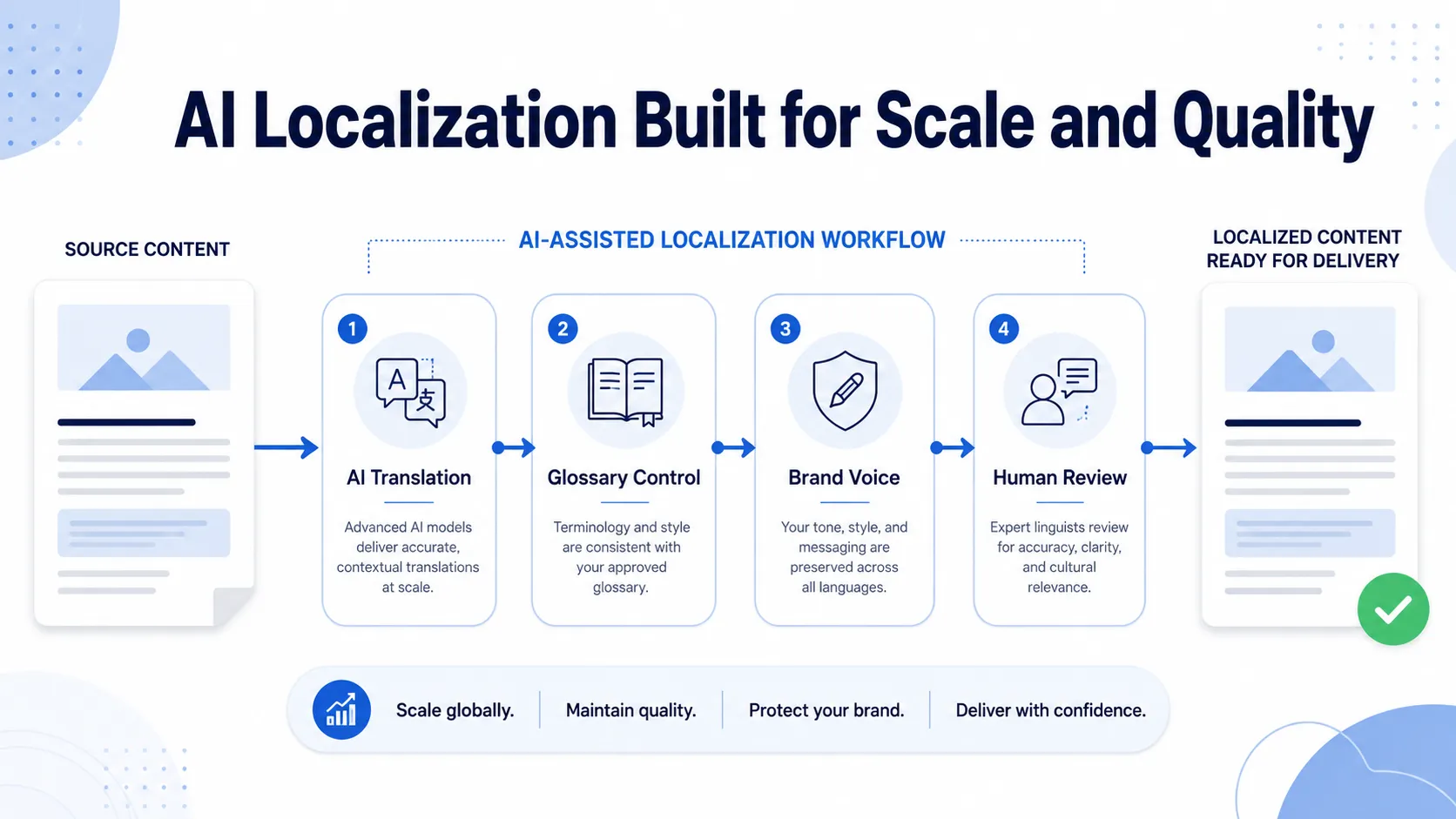
AI-assisted translation tools improve formal English quality by detecting tone inconsistencies, grammar deviations, and terminology mismatches. They support style-guide enforcement by highlighting forbidden phrases and clarifying complex sentence structures.
However, AI alone cannot guarantee cultural accuracy or formal register control, which is why Circle Translations pairs AI automation with expert human linguists, forming an MTPE workflow for fully compliant, polished formal English output.
Formal English QA: Ensuring Consistency and Accuracy
A high-quality translation workflow requires a robust Quality Assurance system in place to minimise errors. A combination of automated and manual checks is now the industry standard. Formal English QA uses frameworks such as MQM (Multidimensional Quality Metrics) and DQF (Dynamic Quality Framework) to classify errors, measure accuracy, and ensure compliance.
Formal English QA includes:
- Terminology enforcement
- Grammar and punctuation validation
- Style and register verification
- Formatting checks
- Reference consistency
- Reviewer scoring and feedback loops
Automated QA vs Human QA: Striking the Balance
QA was a human part of the MTPE workflow for the longest time; however, specialty AI systems can now assist with this part of the process as well.
Here’s a snapshot of comparing the roles of automation and manual QA processes:
| Criteria | Automated QA Tools | Human QA Review |
| Primary Focus | Mechanical accuracy (grammar, punctuation, spelling, casing) | Tone, register, cultural nuance, industry context |
| Terminology Control | Flags inconsistencies and mismatches | Validates meaning, legal accuracy, and brand-specific usage |
| Speed & Consistency | Fast, repeatable checks using tools like Xbench, Verifika, Grammarly Business | Slower but ensures interpretation, clarity, and business-critical precision |
| Tone & Style Compliance | Detects deviations but cannot accurately judge appropriateness | Ensures professional tone, politeness level, and formal register |
| Legal & Technical Precision | Cannot interpret liability risks or technical implications | Validates legal wording, compliance language, and sector-specific phrasing |
| Final Outcome | Clean text mechanically | Fully accurate, formal, compliant, and contextually correct |
Common QA Errors in Formal Translation (and How to Prevent Them)
Quality tests need to be done in multiple rounds; oftentimes, some errors always slip through.
Most common errors include:
- Mixed register (formal and informal blend)
- Incorrect modals (“can” vs “may”)
- Literal idiom translation
- Inconsistent punctuation
- Improper capitalization
- Formatting discrepancies
The Role of Peer Review in QA Workflows
According to ISO 17100, a translator + reviser model is required for quality assurance. Formal English translation adds a third layer: a QA lead or linguistic auditor. This adds another layer of security before the final rollout.
Building a Consistent Formal English Translation Workflow
A Formal English Translation Workflow requires a rigid structure and a strong team to back that up. This workflow facilitates: intake, style guide alignment, translation, QAs, feedback loops, and the final delivery. Each stage ensures quality and efficiency.
How Circle Translations Manages Formal English Projects
Circle Translations uses a multi-layered, compliance-focused workflow tailored for enterprise needs. Each project includes a dedicated PM, native English linguists, industry-specialised editors, and QA leads. AI-assisted tools support tone consistency with human reviews, make sure context-sensitive elements such as legal language, regulatory clauses, and technical wording stay consistent throughout.
Integrating AI Tools for Style Consistency
AI tools, such as DeepL, Phrase Next-Gen MT, and Azure, make translation workflows extremely efficient by automating the bulk of the process. AI systems can ensure accurate tonality, consistent terminology and keep up with the style guides, making human intervention minimal.
Challenges and Risks in Maintaining Formality Across Languages
Cultural Nuance and Tone Calibration
Cultural nuances are one of the biggest challenges formal translations face. Formality requirements like German sie/du, Spanish tú/usted, and other languages like Japanese and Korean can be really easy to overlook, and translations might not carry the same tone in English due to the loss of nuance.
How QA Frameworks Adapt for Formal vs Informal Registers
QA workflows deploy MQM/DQF frameworks that classify register errors separately from meaning, grammar, and terminology issues. This flags errors in formality, modal misuse, vocabulary, and inconsistency with the style guide in general.
Why Choose Circle Translations for Formal English Projects
Circle Translations delivers premium formal English translation using a blend of native linguists, customized style guides, AI-assisted QC, structured peer review, and ISO 17100-aligned workflows. With 24/7 PM coverage, strict confidentiality practices, GDPR compliance, and sector-specific expertise, we ensure polished, professional English across all corporate communication.
Security and Confidentiality in Enterprise Documents
Enterprise clients rely on Circle Translations for sensitive content. They serve industries, such as legal, financial, healthcare, technology, manufacturing, or generic professional services.
Security practices include:
- Encrypted file transfers
- Controlled-access TMS environments
- NDA-backed linguists
- GDPR-compliant workflows
- ISO-aligned data handling
- Zero data retention beyond project scope
This attention to regulation ensures safe handling of contracts, financial statements, medical documentation, and confidential communication, making Circle Translations the safest partner in the market for your formal translation needs.
Conclusion
In professional settings, having your documents localized appropriately is a non-negotiable. Your content reflects your brand voice, and if you’re a B2B organization, having the appropriate tonality in your translations is key to gaining trust.
Formal English translations excel at risk management, avoiding confusion, and wrong tone in your content. This puts your organization ahead of the competition in trust and measurable ROIs.
To improve tone consistency, accuracy, and linguistic governance across your organization, visit Circle Translations to learn more about formal English translation and enterprise-grade QA workflows.
FAQs
What does a formal English translator do?
A formal English translator converts text into polished, professional English aligned with industry terminology, corporate tone, and compliance standards.
How is formal English translation different from general translation?
Formal English translations focus on tone, register, politeness, and audience expectations beyond only the accuracy of meaning.
Why are style guides essential for formal translation?
They ensure consistent grammar, vocabulary, tone, and formatting across all departments, documents, and markets. This reduces confusion and errors during the translation process, ensuring industry standards are met.
What QA methods are used to maintain formality?
A mix of automated QA tools and manual review under ISO 17100 and MQM/DQF ensures accuracy, tone correctness, and compliance.
Can AI ensure formal tone accuracy?
AI assists with tone detection and terminology enforcement, but human review is necessary for cultural nuance and context.
Do formal English translators follow specific industry standards?
Yes, standards such as ISO 17100, MQM/DQF, and terminology guidelines specific to sectors like law, finance, and healthcare.
How do you handle sensitive corporate or legal documents?
Through encrypted infrastructures, strict NDAs, access-controlled systems, and GDPR-compliant processes with no data stored after project completion.