Translating a contract is the process of transferring legal meaning, obligations, and risk allocation between jurisdictions that may operate under different legal systems, regulatory expectations, and interpretive norms.
For in-house counsel, legal operations teams, founders, and procurement leads, this distinction is critical. A translated contract can carry the same legal and commercial weight as the original. In some cases, it becomes the version relied upon by courts, regulators, or counterparties.
When contract translation fails, they surface as disputes over scope, unexpected liability exposure, unenforceable clauses, delayed transactions, or regulatory scrutiny. Industry commentary and case analysis repeatedly show that relatively small translation errors, particularly in indemnities, termination rights, or limitation clauses, can materially change how a contract is interpreted and enforced.
As organizations expand across borders, contracts increasingly need to function in multilingual and multi-jurisdictional environments. This makes contract translation a governance issue rather than an administrative one.
The purpose of this guide is to explain how to translate a contract safely, where the risks typically arise, and how to structure a translation process that protects legal intent without slowing down business operations.
Why contract translation is legally risky (and why it needs specialists)
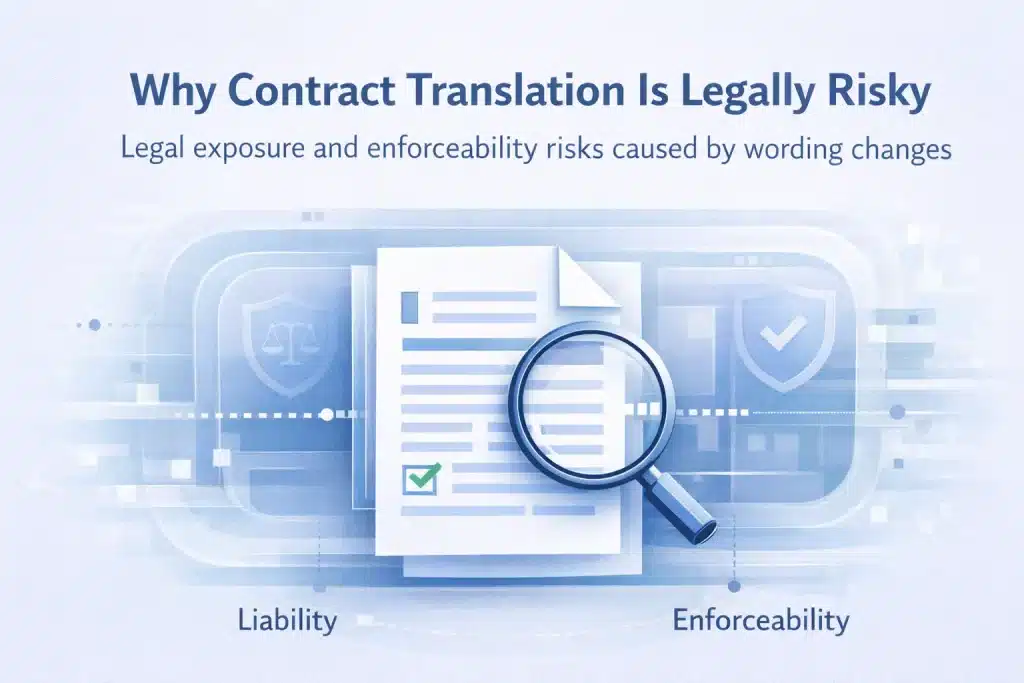
Contracts sit in the highest-risk category of translation because they define rights, obligations, remedies, and liabilities.
Unlike marketing or technical documentation, contracts are interpreted through legal frameworks that vary significantly by jurisdiction. A single ambiguous clause can trigger disputes, invalidate provisions, or expose one party to obligations it never intended to assume.
One source of risk lies in legal terminology itself. Contracts rely heavily on defined terms, internal cross-references, and carefully calibrated modifiers. A mistranslated definition or an altered qualifier can reshape the entire risk profile of an agreement.
Another risk factor is consistency. Contracts depend on uniform use of terminology across clauses, schedules, and annexes. Inconsistent translation of the same term can create ambiguity that undermines enforceability. This is particularly problematic in long agreements or contract families such as master service agreements paired with multiple statements of work.
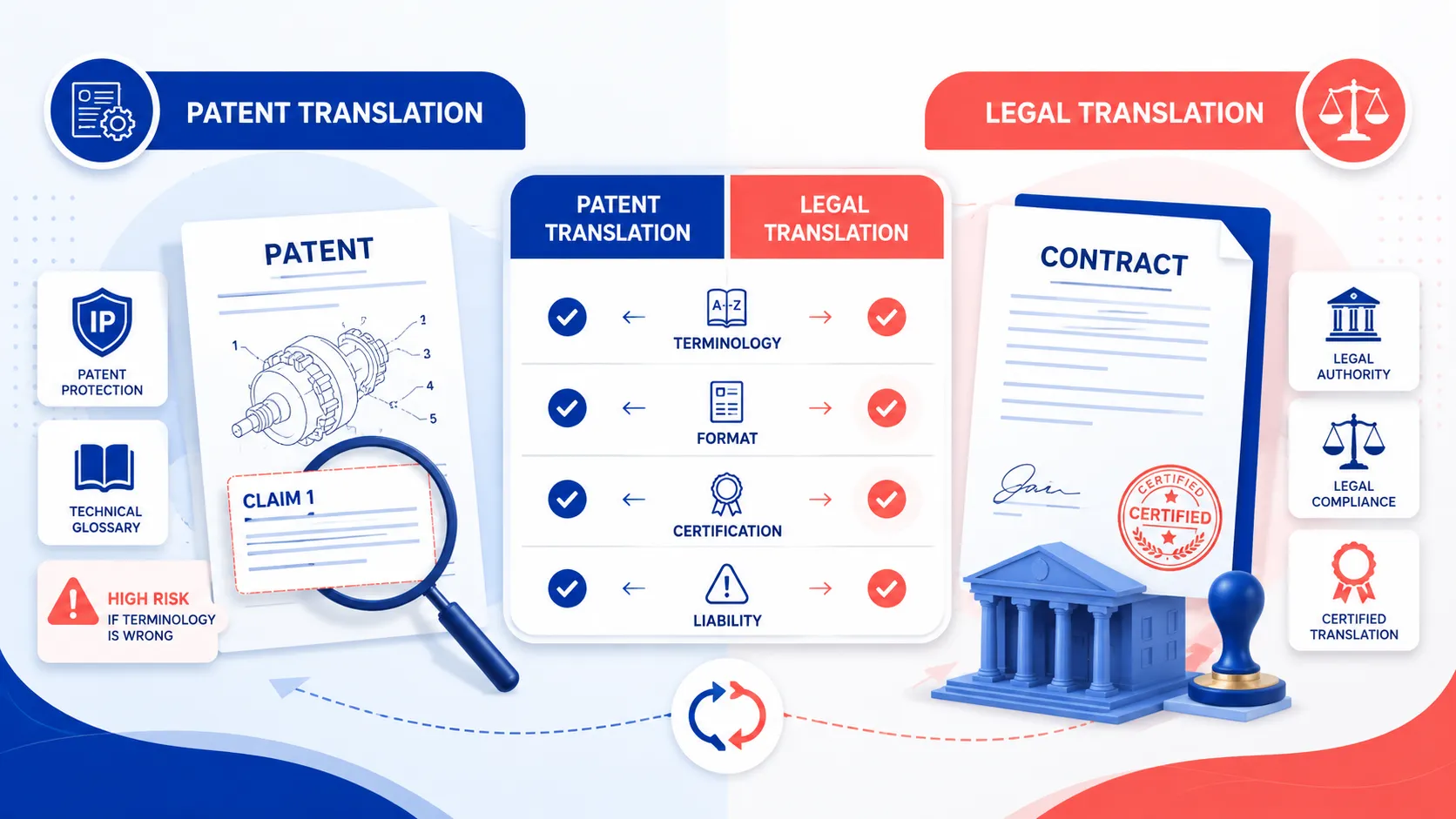
For B2B buyers, contract translation requires specialist handling. Legal translation demands an understanding of both language and law, supported by structured review and quality controls.
How legal systems differ – and why “literal” translation fails
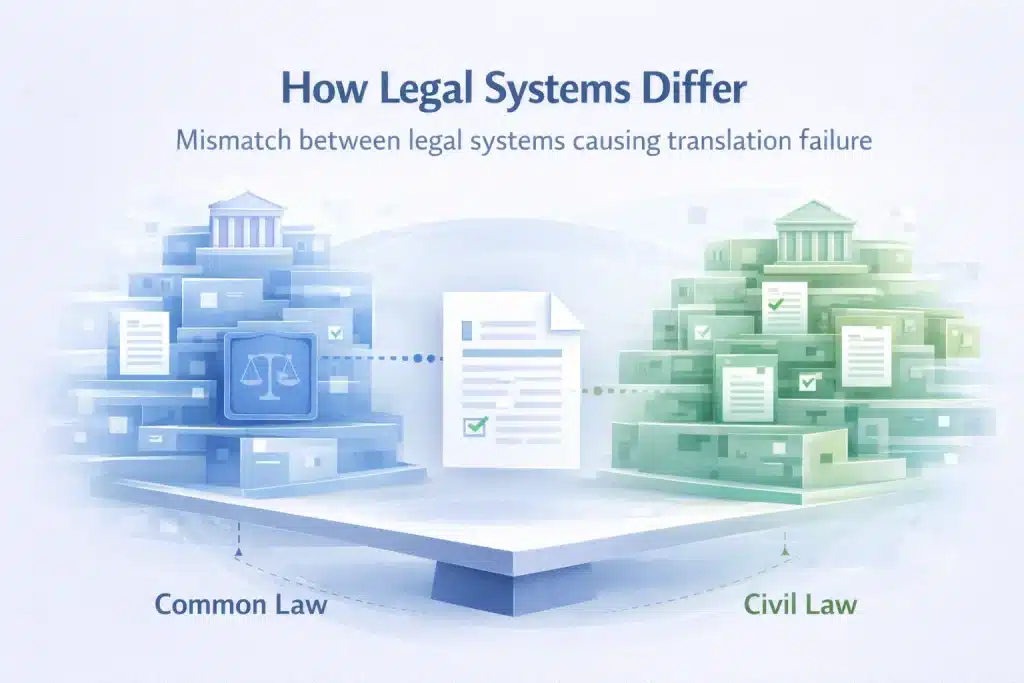
One of the most common sources of error in contract translation is the assumption that legal language can be translated literally. In reality, legal systems often structure rights and obligations differently, even when similar concepts exist.
At a high level, common law systems rely heavily on precedent and detailed contractual drafting. Civil law systems, on the other hand, tend to emphasize statutory frameworks and codified principles. As a result, concepts such as indemnity, liability, or good faith may not map cleanly from one system to another. A word-for-word translation can preserve vocabulary while distorting legal effect.
For example, a clause using “best efforts” language may carry a specific interpretive history in one jurisdiction but lack a direct equivalent elsewhere. Translating the phrase literally may suggest a stronger or weaker obligation than intended. Effective contract translation, therefore, focuses on preserving legal effect, not linguistic symmetry.
Where contract translations usually break: high-risk clause types
Certain parts of a contract are more likely to cause problems when translated. Definitions and scope clauses are frequent sources of risk because they shape how the rest of the agreement is interpreted. A mistranslated defined term can ripple through the entire contract.
Payment provisions and price adjustment clauses also require careful handling. Differences in how taxes, currencies, or adjustment mechanisms are expressed can lead to disputes or unintended financial exposure.
Warranties and limitations of liability are similarly sensitive, as even small changes in wording can shift risk allocation between parties.
Termination rights, remedies, and governing law clauses often sit at the center of cross-border disputes. Translating these provisions without full awareness of their legal implications can result in clauses that are unenforceable or interpreted in unexpected ways.
Confidentiality and intellectual property clauses round out the list of common risk areas, particularly in technology and licensing agreements.
Machine translation, templates, and AI tools – where the risk lies
Automated translation tools and templates are increasingly used to support internal workflows, and they can be useful for gaining a general understanding of foreign-language contracts. However, relying on raw machine translation or generic templates for contracts introduces significant risks.
Automated tools are not designed to assess legal effect or jurisdictional nuance. They may struggle with defined terms, conditional language, or cross-references, and they cannot validate whether a translated clause remains enforceable under the target-country law. For this reason, most legal-translation guidance cautions against using machine translation alone for contracts.
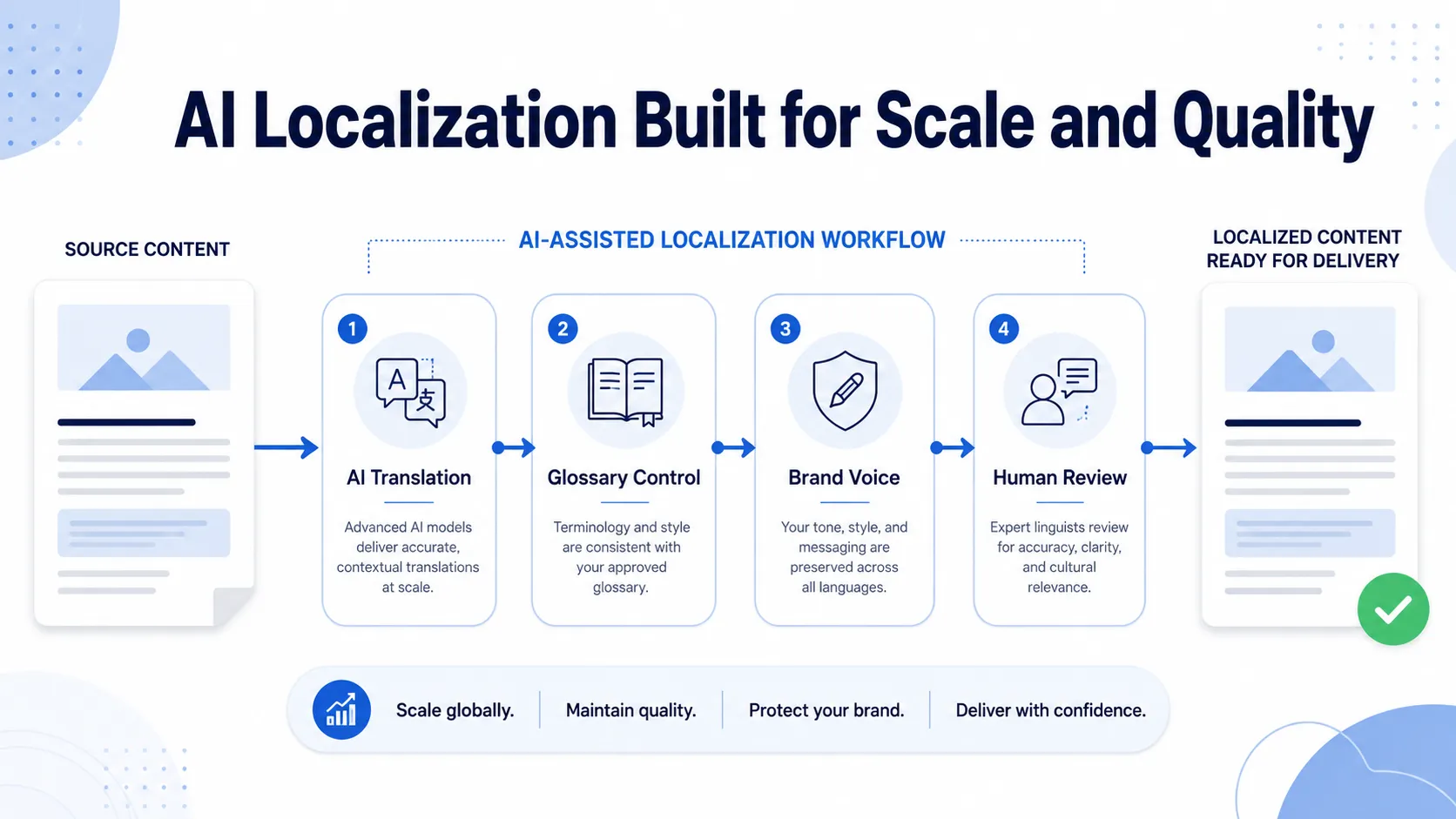
That said, technology can play a role when used with appropriate controls. Some organizations use AI-assisted workflows for preliminary review or to support human translators, with specialists retaining responsibility for final wording. The key distinction is that contracts remain human-led, with technology operating under guardrails rather than replacing expert judgment.
Step-by-step: how to translate a contract without risking legal issues
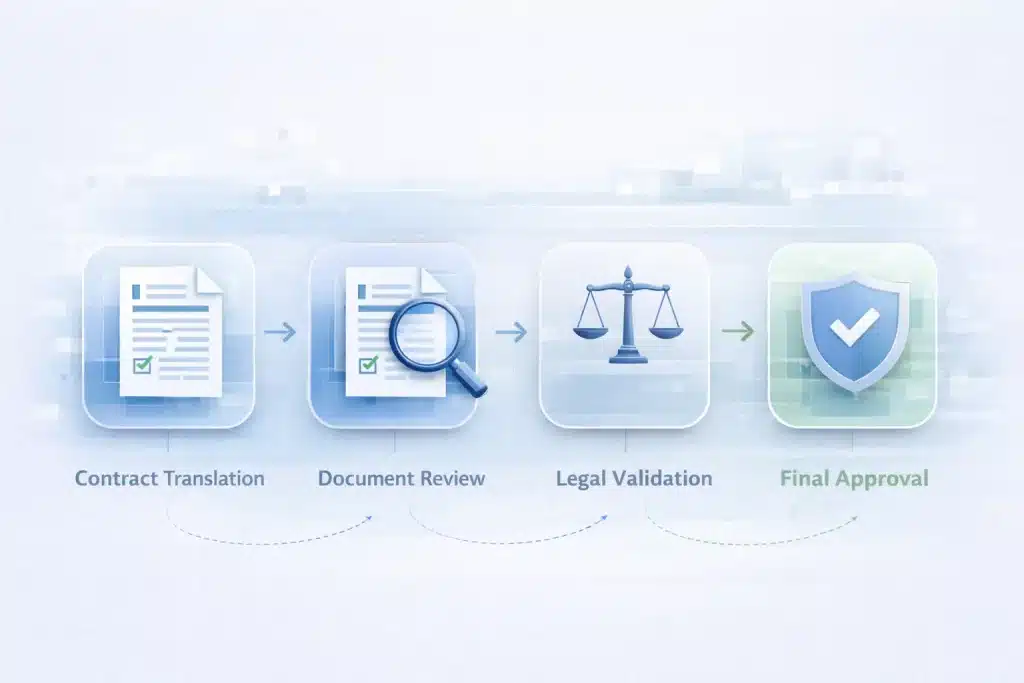
Translating a contract safely requires a structured process. This guide outlines practical steps that legal and procurement teams can follow in coordination with qualified translation partners and legal counsel.
Step 1: Clarify scope, purpose, and jurisdictions
Before translation begins, teams should define what type of contract is involved, which jurisdictions’ laws apply, and how the translated version will be used.
A contract translated for internal understanding carries different requirements than one submitted to a regulator, court, or counterparty.
Clarifying whether the translation is for negotiation, execution, filing, or enforcement helps determine the level of formality, review, and certification required. This step also informs language choices and formatting expectations.
Step 2: Collect reference material and prior agreements
Providing context improves translation quality. Reference materials such as prior bilingual contracts, approved glossaries, term sheets, and style guides help translators maintain consistency and align with organizational preferences.
For organizations managing contract families, this step is especially important. Consistent terminology across related agreements reduces ambiguity and simplifies future amendments. Translation memory tools may support this process behind the scenes. But the focus remains on legal consistency rather than efficiency alone.
Step 3: Choose a qualified legal translator or agency
Not all translators are equipped to handle contracts. Qualified legal translators are typically native speakers of the target language with formal legal training or extensive experience in legal translation. They understand contract structures, legal terminology, and the implications of wording choices.
Agencies supporting contract translation should be able to demonstrate secure processes, subject-matter expertise, and experience with similar contract types and industries. Relying on generalist translators may seem efficient, but it often increases downstream risk.
Step 4: Write a clear translation brief
A well-defined brief reduces revision cycles and missed nuances. It should specify the governing law, preferred terminology, clauses that must remain as close as possible to the source, and areas where adaptation may be acceptable.
The brief should also outline formatting requirements, approval workflows, and deadlines. Clear instructions allow translators to focus on preserving legal effect rather than guessing intent.
Step 5: Translate for legal effect, not just words
Legal translators work clause by clause, considering how each provision functions within the agreement and under the relevant legal system. They may consult statutes, precedent contracts, or bilingual legal references to ensure accuracy.
The goal is not stylistic elegance but functional equivalence. The translation needs to be done correctly, such that the translated contract reads naturally in the target language while preserving the original allocation of rights and obligations.
Step 6: Run legal review and linguistic QA
Quality assurance in contract translation typically involves two layers. Linguistic QA checks for consistency, accuracy, numbers, defined terms, and cross-references. Legal review, conducted by internal or external counsel, confirms that the translated wording reflects the intended deal and works under applicable law.
Structured review processes, second-linguist checks, and documented change logs help ensure traceability and defensibility.
Step 7: Final formatting, certification, and record-keeping
Contracts often require precise formatting to mirror the original, including numbering, annexes, and schedules. In some cases, certification or sworn statements are required. Once finalized, organizations should maintain version control and ensure bilingual copies remain aligned for future amendments.
When do you need certified or sworn contract translation?
Certification involves a formal statement attesting to the accuracy of the translation, while sworn translations may require the translator to be authorized by a court or public authority. The requirements vary by jurisdiction.
These translations are commonly required for court filings, government tenders, immigration matters, and certain regulated transactions.
Because rules differ by country, organizations should confirm requirements with the requesting authority or legal counsel.
Red flags that your situation likely needs certification
Certain scenarios increase the likelihood that a certified or sworn contract translation will be required. While rules vary by jurisdiction, the following situations commonly trigger formal certification requirements:
- Court submissions or litigation proceedings
- Government registries or official filings
- Visa, immigration, or work-permit applications
- Public-sector tenders and procurement processes
- Notarial acts or real estate transactions
- Cross-border mergers, acquisitions, or corporate restructurings
- Situations where the translated version will be legally relied upon
Securing certification early prevents delays, rework, and the administrative burden of retroactively certifying a translation that has already been completed.
How to brief a vendor for certified translations
Certified translations require more context than standard contract translations, so clarity at the start prevents delays later.
First, explain who is requesting the certified translation and why. A court, notary, immigration office, or regulatory authority may each have different certification rules. Review the requirements for certification or sworn-in translators. Without this information, a translation may be accurate but not formally acceptable.
You should also specify the country where the translation will be used, as requirements vary by jurisdiction. If the authority provides specific wording or templates for certification, share them upfront.
Clarify practical details as well, including how many certified originals are needed, whether hard copies must be delivered, and the filing deadline.
Providing this information at the outset ensures the translation is not only accurate, but also accepted by the receiving authority. This avoids rework, missed deadlines, and administrative complications.
Security and confidentiality when translating contracts
Contracts often contain sensitive commercial information, personal data, and intellectual property. As a result, translation workflows must align with organizational security policies.
Translation partners should be prepared to support security reviews or data-processing agreements where required.
How to keep contract translation inside your security policies
Contract translations often involve pricing terms, intellectual property, personal data, and strategic information. For that reason, the translation process should align with your existing security and data governance frameworks rather than operate outside them.
Start by using secure file-sharing portals instead of email attachments, especially for sensitive agreements. Access to contract files should be restricted to authorized personnel only, both internally and within the translation provider’s team.
It is also important to maintain a clear record of who handles each document throughout the workflow. Basic logging, controlled permissions, and defined approval chains help preserve accountability.
Finally, confirm retention and deletion policies in advance. Agree on how long files will be stored, where they are hosted, and when they will be securely deleted after project completion.
By embedding contract translation within your established security policies, you reduce exposure while maintaining control over sensitive legal and commercial information.
What your translation partner should commit to
Your translation partner should provide clear, documented commitments around data security and confidentiality. This includes transparency about security controls, where data is stored, whether subcontractors are involved, and how access to files is restricted.
They should also outline their incident-response process, including how and when you would be notified of a breach. These safeguards should be discussed during vendor selection and formally reflected in the service agreement to ensure expectations are aligned from the outset.
How our technical & legal translation team helps you avoid contract risk
Our approach to contract translation is built around risk control rather than speed alone. We work with legal-trained linguists, apply a dual-review workflow, and operate within secure, documented processes designed for high-stakes legal content.
We support a range of engagement models, from single agreements to large contract portfolios, and help organizations maintain consistency across languages and jurisdictions.
Typical engagement models for B2B clients
Clients may engage us for one-off contract translations, ongoing support for contract families, or framework agreements supporting global legal teams. Each model is designed to balance control, scalability, and cost predictability.
What you can expect from first contact to signed contract
Engagement typically follows a clear path: initial inquiry, scoping discussion, optional sample, quotation, onboarding, translation and review, and final delivery. Throughout, we prioritize transparency and collaboration with legal stakeholders.
Conclusion
Contracts define expectations, allocate risk, and create enforceable clarity between parties. There is no room for errors or ambiguity. When those contracts cross languages, the translation becomes part of that legal architecture. If the wording shifts even slightly, the balance of rights and obligations can shift with it.
Translating a contract safely means protecting commercial intent, preserving negotiated risk allocation, and ensuring that agreements remain enforceable across jurisdictions. It reduces the likelihood of disputes, avoids avoidable regulatory complications, and supports smoother cross-border operations.
Handled correctly, contract translation is a safeguard. By approaching it as a structured legal process, organizations strengthen governance, protect relationships, and ensure that what was agreed in one language remains fully effective in another.
Contract Translation — FAQs
Can I translate a contract myself or with Google Translate?
For contracts that will be signed or submitted to authorities, self-translation or raw machine translation is risky. Legal-translation guidance consistently warns that small errors can lead to disputes or invalid agreements.
What qualifications should a legal contract translator have?
Look for native-level proficiency in the target language, legal training or specialization, experience with your contract type and sector, and secure working practices.
When do I need a certified or sworn translation of a contract?
Certification is often required for court filings, government submissions, immigration matters, and certain regulated transactions. Requirements vary by jurisdiction.
How do I check if a translated contract is legally sound?
Verify consistency of defined terms, numbers, and cross-references, and have legal counsel review key clauses to ensure they function as intended.
How much does professional contract translation cost?
Pricing depends on language pair, length, complexity, certification needs, and turnaround time. Contracts are typically priced at the higher end due to risk and review requirements.
Is AI-assisted translation ever acceptable for contracts?
AI can support internal understanding or early drafts, but high-risk contracts still require specialist human translation and legal review before signing.
How long does it take to translate a typical contract?
Timelines vary by length and complexity. As a general guide, specialist translators handle a few thousand words per day, with additional time for review and certification.