Legal translation is one of the most complicated translations. Because it is related to a lot of policies and rules. For this kind of translation, you or your company always need a professional translator who is mainly specialized in legal document translation. It needs accuracy, terminology precision, and jurisdictional context are critical to preserving the document’s legal effect. Unlike general translation, where stylistic flexibility is acceptable, legal translation demands exact meaning preservation because errors can invalidate contracts, delay court proceedings, or cause regulatory non-compliance.
What is Legal Translation, and Why Do Types Matter?
Legal translation differs from general translation because it must preserve legal effect. The document must mean the same thing legally in both languages. A mistranslated contract clause can shift liability, alter obligations, or void entire agreements.
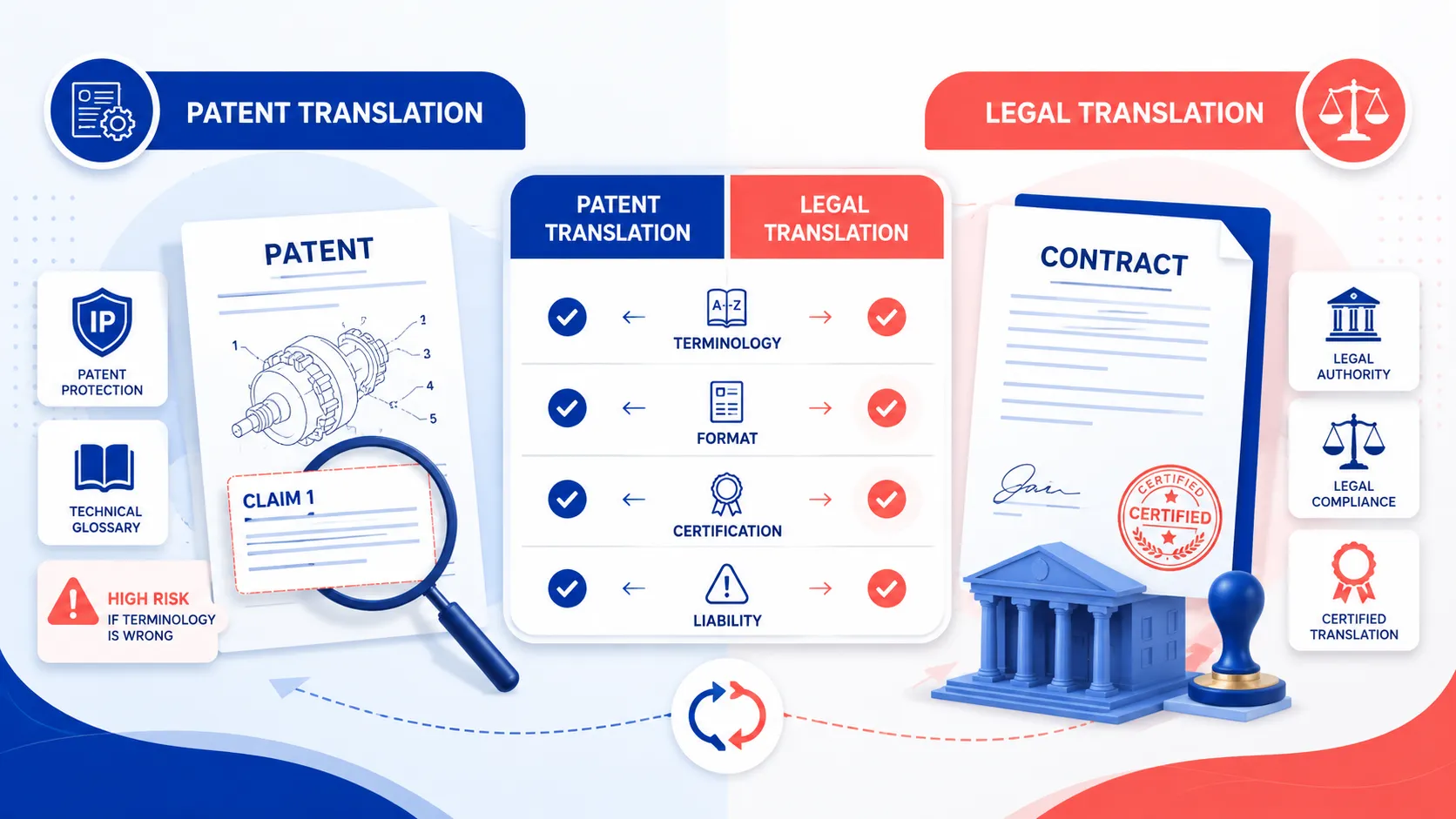
Why document types matter: Contract translators need contract law expertise. Patent translators need technical plus IP law knowledge. Court translators must follow strict formatting and certification rules. Each document type serves different functions within different legal frameworks.
Common law systems (US, UK, Australia) and civil law systems (Europe, Latin America, Asia) organize law differently. “Estoppel” has no civil law equivalent; “force majeure” was adopted into English because no equivalent existed. Translators must find functional equivalents, not just dictionary definitions.
What Are the Main Types of Legal Translation?
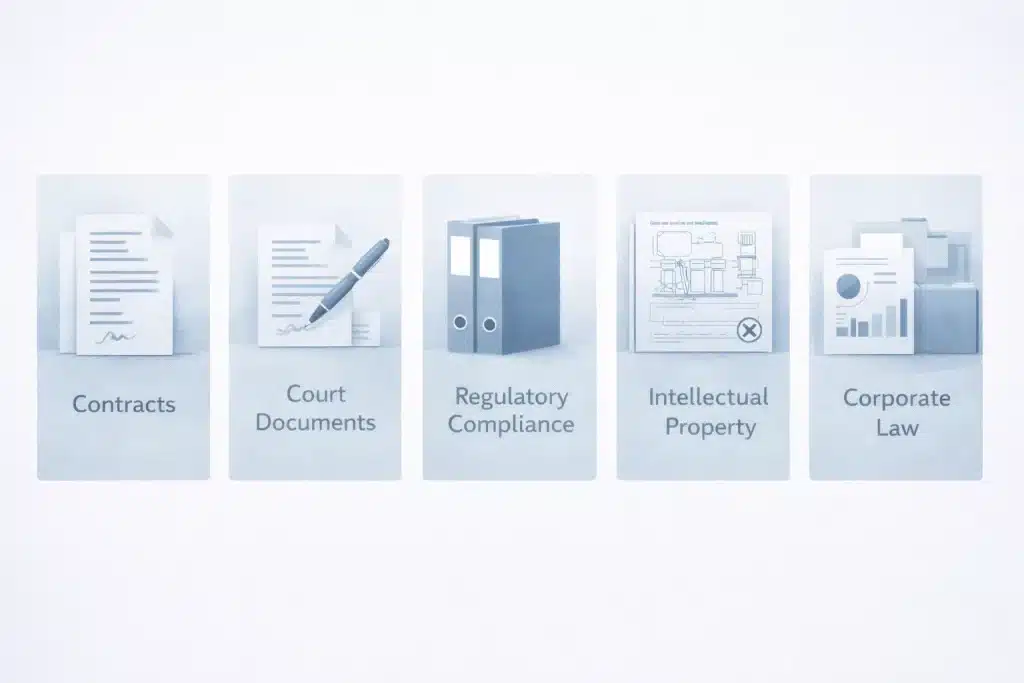
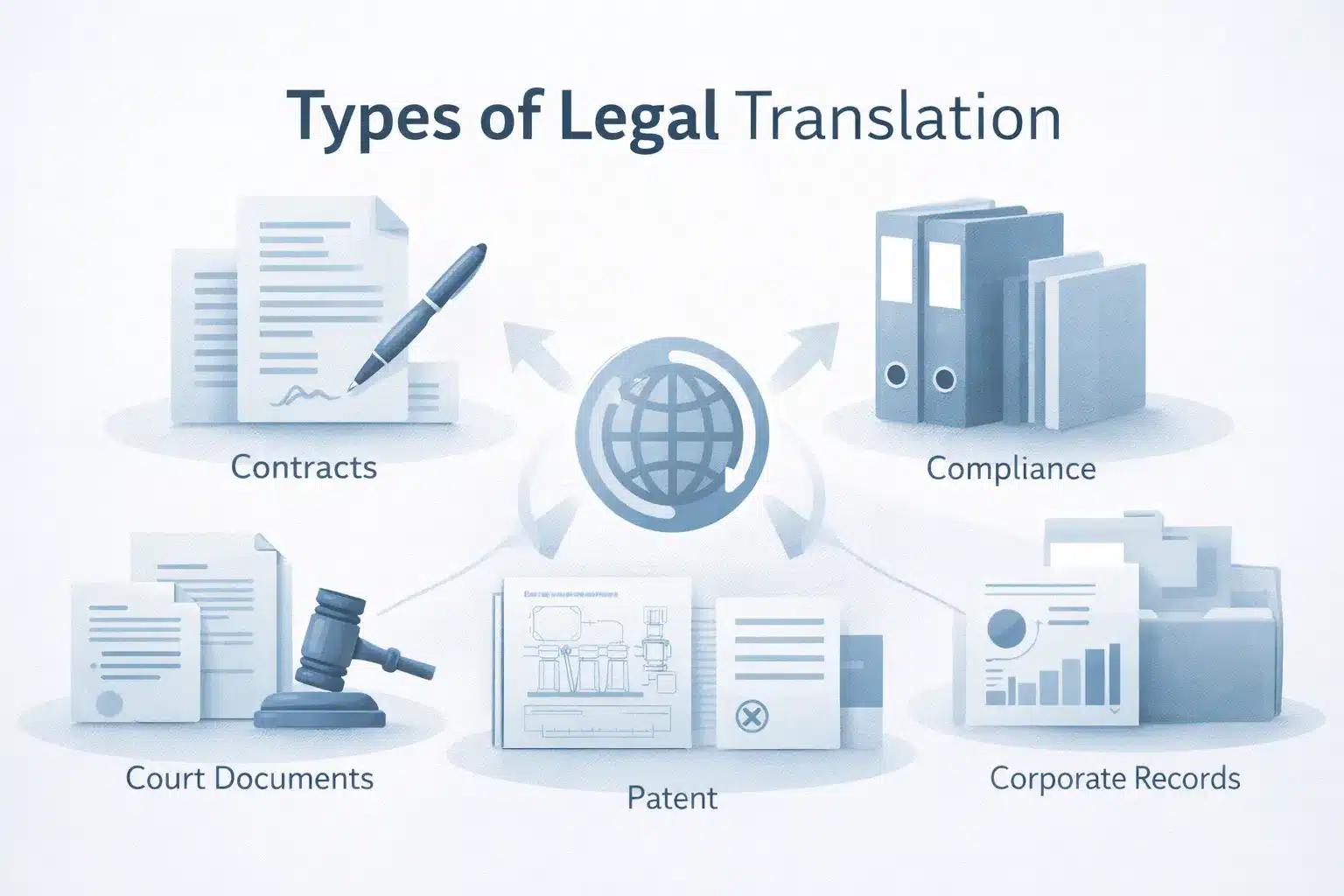
If you think all legal translations are the same then you are wrong.Legal translation divides into categories based on document function, legal domain, and risk profile. High-risk translations (court filings) need certified translators and multiple review layers. Lower-risk translations (internal materials) need accuracy but may not need certification.
If you understand these types of legal translation it will help you match the right expertise to your documents and meet certification requirements when necessary.
Contract Translation (Commercial and Civil Agreements)
Contract translation covers legally binding agreements creating enforceable rights and obligations between parties.
Some common contracts are commercial agreements, NDAs, service level agreements, employment contracts, partnership agreements, licensing deals, franchise contracts, real estate documents.
It matters mistranslating “shall” (mandatory) as “may” (optional) changes the obligation. Incorrect liability caps, payment terms, or termination conditions create unintended risk.
Terms like “Confidential Information” must appear identically throughout, legal interpretation depends on consistent terminology across the entire contract.
Court and Litigation Document Translation
Court translation supports legal proceedings with documents like pleadings, judgments, affidavits, witness statements, evidence, and expert reports.
This type of contract has a very high risk. Courts reject improperly translated documents, potentially dismissing cases. Certified or sworn translations are typically required.
Litigation translators must preserve exact meaning and often formatting. Summarizing witness testimony could result in evidence exclusion. Court filing deadlines are strict. Late translations can result in procedural sanctions.
Regulatory and Compliance Translation
Regulatory translation ensures companies meet legal obligations across jurisdictions. Translating laws, regulations, compliance policies, and regulatory filings.
Some Common types documents are Compliance manuals, regulatory submissions, corporate codes of conduct, AML/KYC documentation, data protection policies, environmental compliance reports, health and safety regulations.
Multinational companies must translate compliance materials so employees and partners understand obligations under local law. Financial services, healthcare, energy, and data protection sectors face heavy regulatory translation needs.
Intellectual Property (IP) Legal Translation
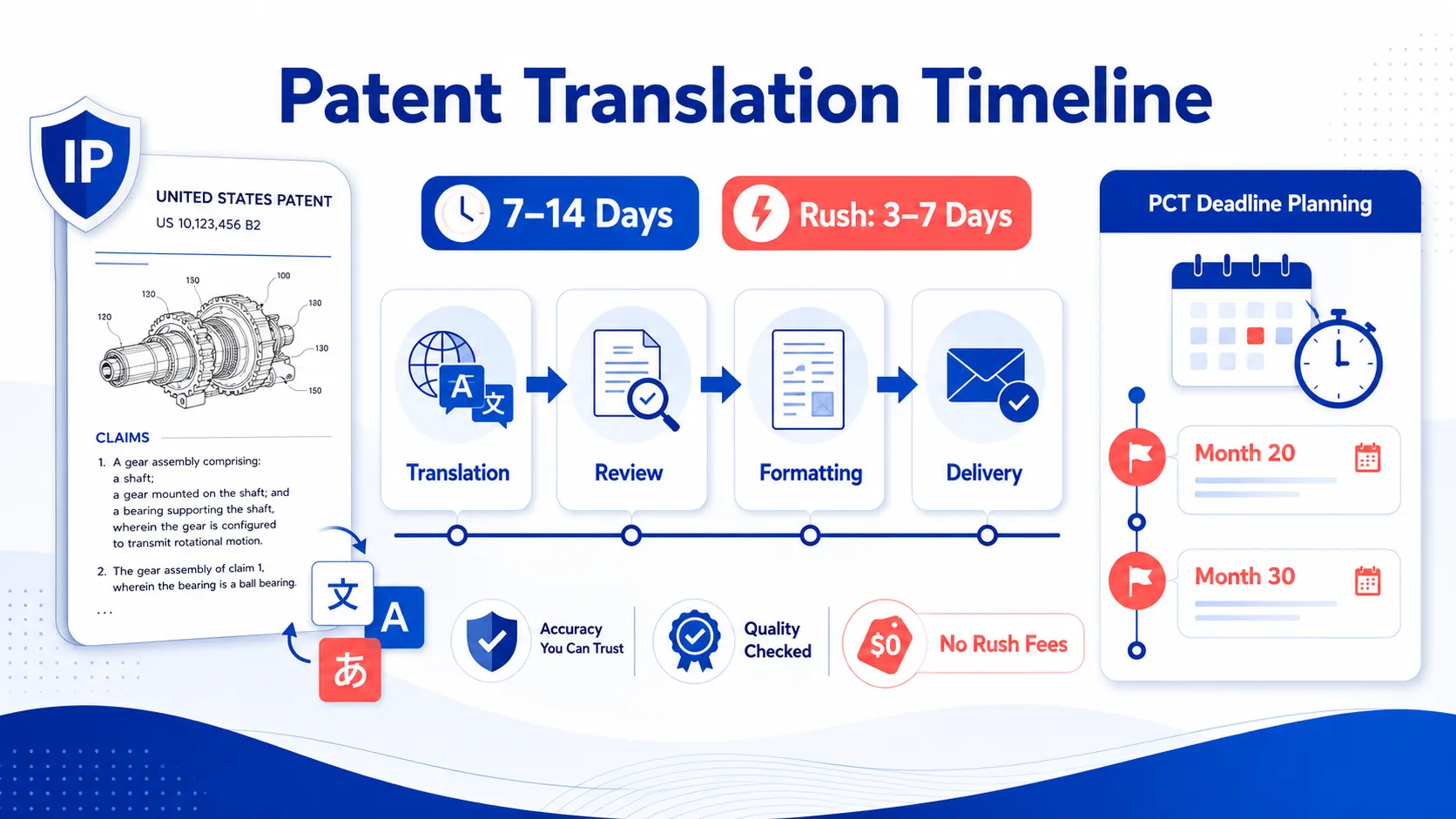
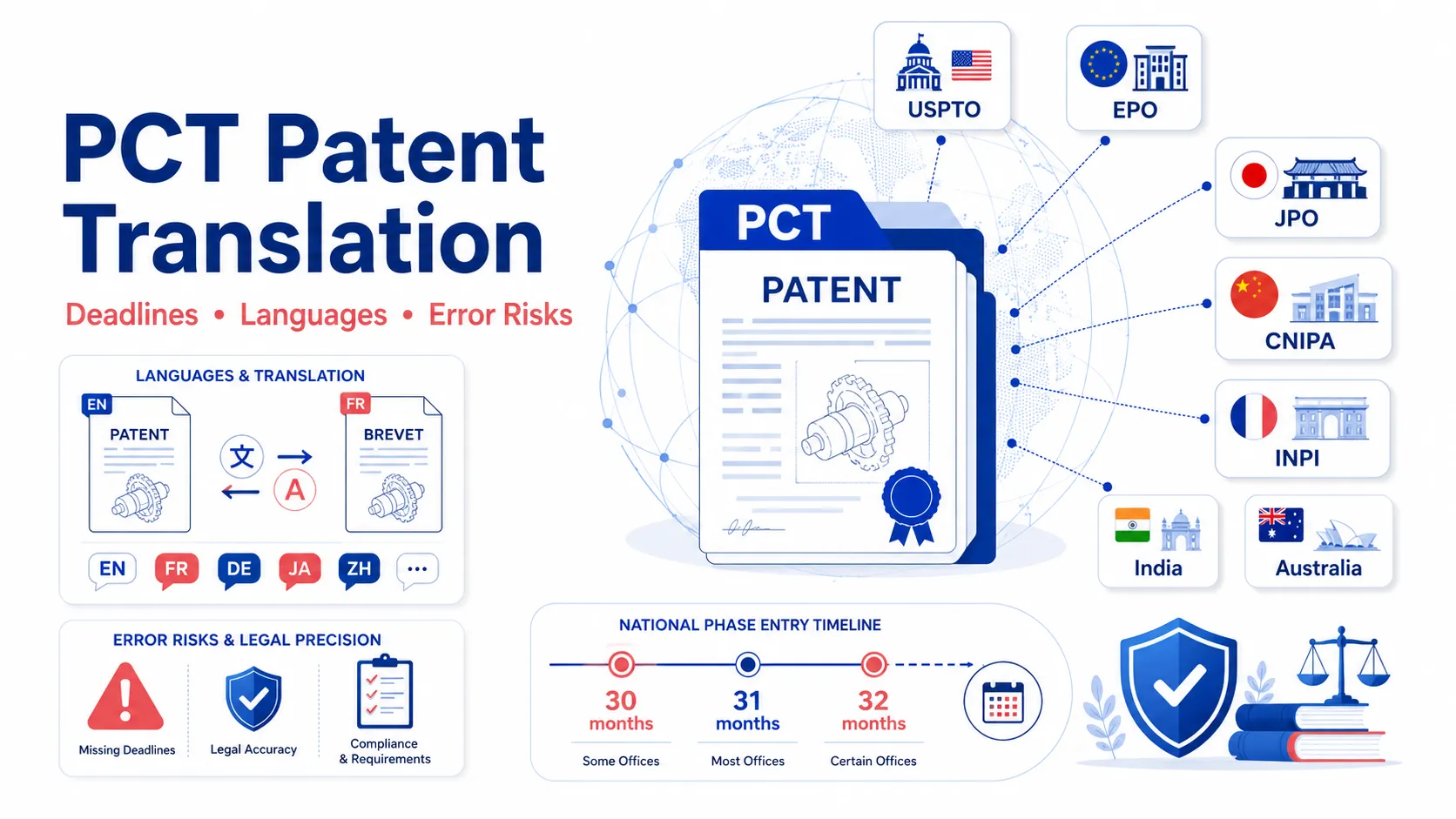
IP translation combines legal accuracy with technical expertise. Documents include patents, trademarks, copyright filings, IP litigation, licensing agreements, and trade secrets.
This type is specialized because it needs both legal training and deep technical knowledge (biotechnology, engineering, software). Technical errors can narrow patent scope or invalidate protection. High business value makes accuracy critical.
Corporate and Company Law Translation
Corporate translation covers articles of incorporation, bylaws, shareholder agreements, board resolutions, merger agreements, and annual reports. Multinational businesses constantly translate when establishing foreign subsidiaries or conducting cross-border transactions.
Immigration and Personal Legal Document Translation
Immigration documents include birth/marriage certificates, diplomas, police clearances, and affidavits. Immigration authorities typically require certified translations. Law firms and corporate HR departments handling international transfers need these at scale.
Financial and Banking Legal Translation
Financial documents include loan agreements, securities offerings, regulatory filings, AML policies, and insurance contracts. Precision with numbers is critical. A misplaced decimal can mean millions in difference.
Criminal Law and Law Enforcement Translation
Criminal documents include indictments, police reports, arrest warrants, and evidence. High sensitivity and confidentiality are paramount. Translation errors can violate due process rights.
How Do Legal Translation Types Differ in Risk and Requirements?
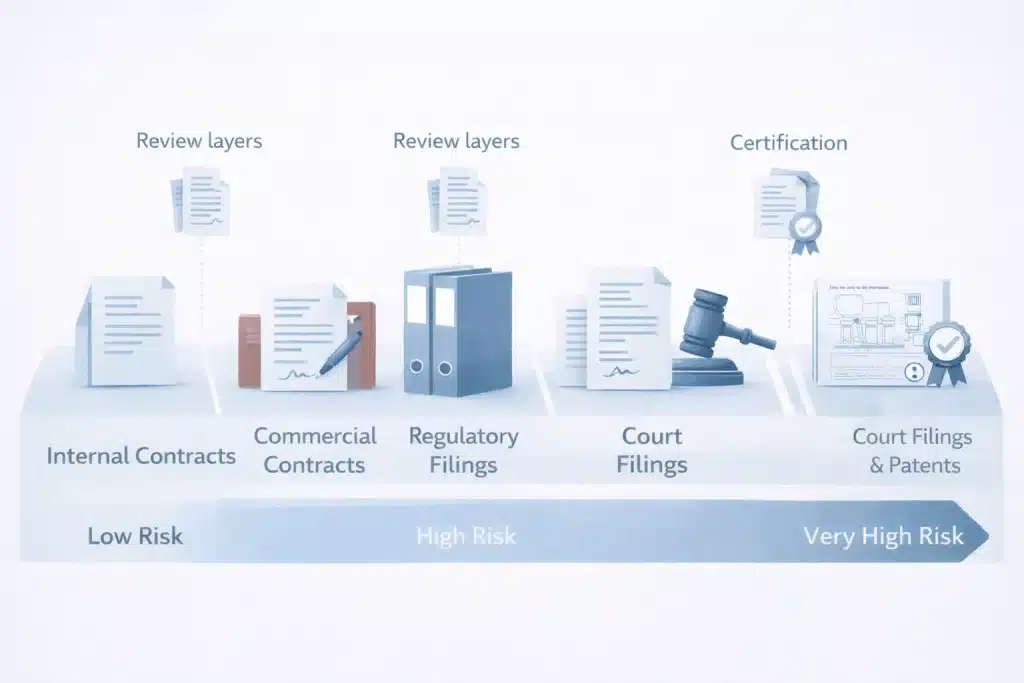
Not all legal translations carry the same consequences. Understanding risk levels helps you allocate resources appropriately and avoid both over-investment in low-risk translations and under-investment in high-risk ones.
| Document Type | Risk Level | Certification Usually Required | Subject Expertise Needed | Review Layers |
| Court filings | Very High | Yes (sworn/certified) | Legal + procedural | Translator + legal reviewer + QA |
| Commercial contracts | High | Sometimes (for registration) | Contract law | Translator + legal reviewer |
| Patents | High | Sometimes | Technical + IP law | Translator + technical expert |
| Regulatory filings | High | Sometimes | Regulatory framework | Translator + compliance expert |
| Corporate documents | Medium-High | Sometimes | Corporate law | Translator + reviewer |
| Compliance manuals | Medium | Rarely | Industry + compliance | Translator + subject reviewer |
| Immigration documents | Medium | Yes (certified) | Civil status rules | Translator + certification |
| Internal contracts | Low-Medium | No | General legal | Translator + reviewer |
Certified vs Non-Certified Legal Translations
Certified translation includes a signed statement from the translator or agency attesting to accuracy and completeness. Mainly courts, government agencies, and regulators often require certification for official purposes.
When certification is required:
- Court filings and litigation documents
- Immigration applications
- Regulatory submissions to government agencies
- Civil status documents (birth, marriage, death certificates)
- Official academic credentials
When certification may not be required:
- Internal contract review during negotiations
- Preliminary legal research and analysis
- Internal compliance materials (though accuracy remains critical)
- Due diligence document review
Certification requirements vary by jurisdiction. Some countries require state-authorized sworn translators; others accept certifications from professional translators with signed declarations.
Jurisdiction-Specific Terminology and Legal Systems
Civil law vs common law differences: These two major legal traditions organize law differently, creating translation challenges when moving between them.
Common law systems rely on case precedent and judicial decisions. Civil law systems rely on comprehensive legal codes. Concepts central to one system may not exist in the other.
Why literal translation fails: Translating “reasonable person” into languages without that specific legal standard requires finding functional equivalents that achieve similar legal meaning. Simply translating the words without legal context produces meaningless or incorrect results.
Regional variations within languages: Legal Spanish used in Mexico differs from legal Spanish in Spain or Argentina. Legal terminology reflects local legal systems, procedures, and historical influences. Professional legal translators specify which regional variant they’re using.
Who Needs Different Types of Legal Translation?
Actually it varies from industry to industry. For example:
Law firms handle international cases requiring certified translations of evidence, witness statements, and court orders. IP firms file patents in multiple countries needing technical translations.
Corporations manage contracts with international suppliers and partners. In-house legal departments need consistent terminology across translated materials and scalable high-volume processes.
Government agencies translate legislation, treaties, regulatory documents, and public communications. They prioritize accuracy and security clearances for sensitive materials.
How to Choose the Right Legal Translation Provider by Document Type
Match provider capabilities to your specific requirements using this framework:
Step 1: Identify document type and risk level — Do you need court filing? High risk, requires certification. If you need an Internal compliance manual then it means Lower risk. So you need accuracy but maybe not certification.
Step 2: Verify relevant legal expertise — Does the translator understand the specific legal domain (contract law, IP law, immigration law) relevant to your document?
Step 3: Confirm certification capabilities — Can they provide certified translations meeting your jurisdiction’s requirements?
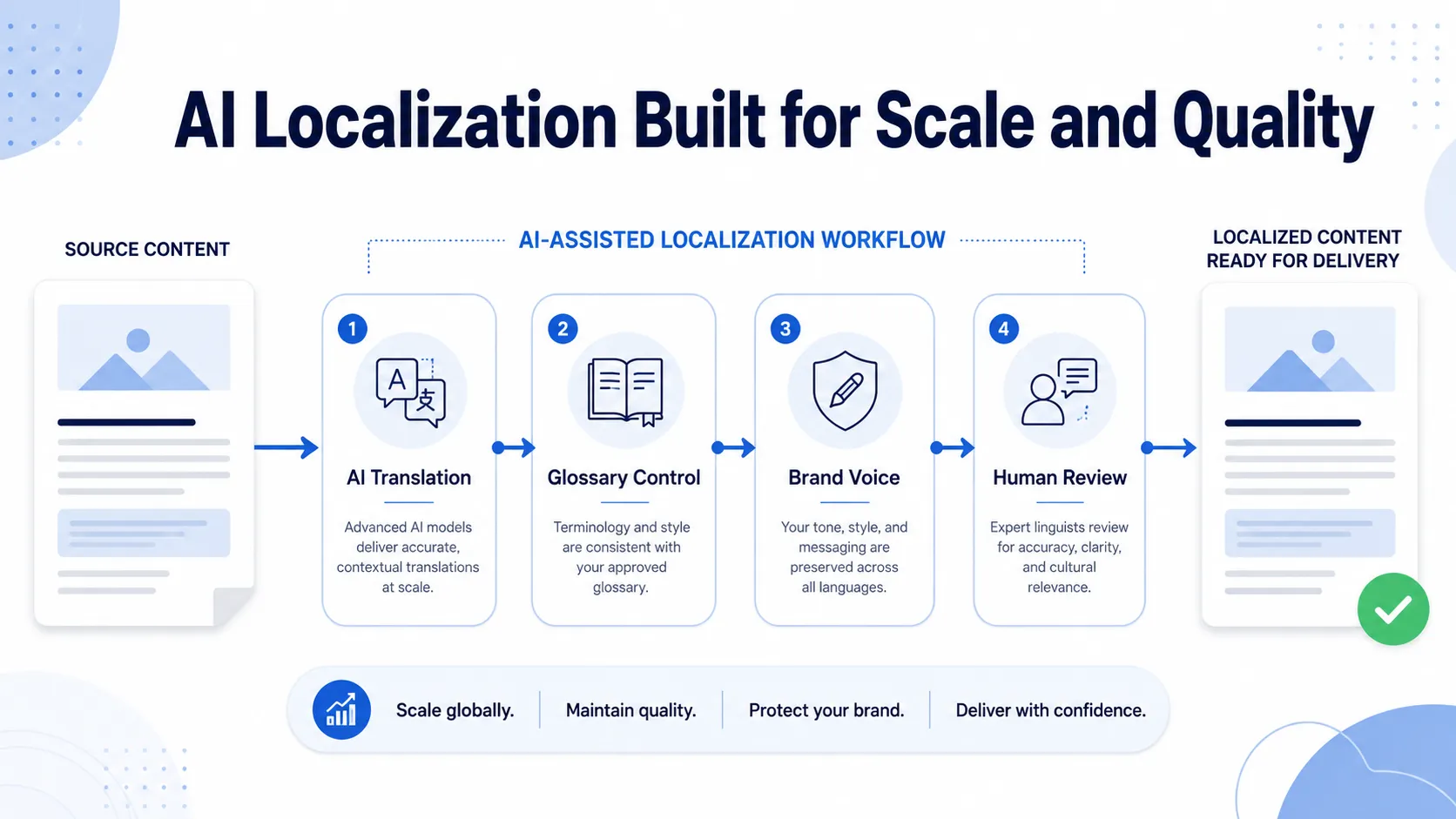
Step 4: Assess quality assurance process — What review layers do they use? Do they have legal experts reviewing translations?
Step 5: Evaluate confidentiality measures — How do they protect sensitive legal information? Do they sign NDAs? Use secure file transfer?
Step 6: Check language and jurisdiction specialization — Do they work in your specific language pair and understand both legal systems involved?
Questions to Ask Before Outsourcing Legal Translation
Due diligence questions for procurement teams:
- What legal translation specializations do your translators have?
- Do you provide certified translations meeting [specific jurisdiction] requirements?
- What quality assurance process do you follow for legal documents?
- Do you have subject-matter experts who review translations (lawyers, IP specialists, compliance professionals)?
- How do you ensure terminology consistency across multiple documents?
- What data security measures protect confidential legal information?
- Can you provide references from law firms or legal departments?
- What’s your typical turnaround time for [specific document type]?
- Do you maintain legal terminology databases for consistency?
- How do you handle rush requests for court deadlines?
Providers who answer specifically and provide evidence (certifications, security protocols, QA documentation) demonstrate professional capability.
Why Specialized Legal Translation Matters for Risk and Compliance
Generic translators, even skilled ones, lack the legal knowledge to translate legal documents safely. Here’s what goes wrong without legal translation expertise:
Contracts become unenforceable: Mistranslated obligations, incorrect liability language, or poorly adapted jurisdiction-specific terms can make contracts void or unenforceable.
Court proceedings get delayed: Rejected translations force retranslation and refiling, potentially missing critical deadlines and weakening legal positions.
Regulatory compliance fails: Inaccurate translations of regulatory requirements or compliance policies can result in violations, fines, and enforcement actions.
IP protection is lost: Patent translation errors can narrow protection scope, invalidate patents, or fail to secure protection in key markets.
Business relationships deteriorate: When parties sign contracts they can’t properly understand due to poor translation, disputes become inevitable.
The cost of professional legal translation is minimal compared to the cost of legal errors, litigation expenses, regulatory penalties, lost business value, or voided agreements.
Talk to a Legal Translation Specialist
Not sure which type of legal translation you need or what level of certification is required? Circle Translations provides specialized legal translation services across all major document categories and jurisdictions.
Our legal translators combine language expertise with subject-matter knowledge in contract law, litigation, regulatory compliance, intellectual property, and corporate governance. We provide certified translations meeting court and regulatory requirements worldwide.
Share these details for a consultation:
- Document type (contract, court filing, regulatory document, patent, etc.)
- Source and target languages
- Jurisdiction where documents will be used
- Certification requirements (if known)
- Timeline and urgency
- Volume and ongoing needs
We’ll recommend the proper translation approach, quality assurance level, and certification format for your specific requirements. Our goal is to ensure your legal documents maintain their legal effect across languages and jurisdictions.
Whether you’re a law firm handling international litigation, a corporate legal department managing global contracts, or a compliance team ensuring regulatory adherence, we provide the specialized legal translation expertise your documents require.
Frequently Asked Questions:
What Are the Main Types of Legal Translation?
Common types include contract translation, court and litigation documents, regulatory and compliance materials, intellectual property documents, corporate law records, and certified personal legal documents.
Is Contract Translation Considered Legal Translation?
Yes. Contracts are legally binding documents creating enforceable rights and obligations between parties. Contract translation requires legal translation expertise to preserve meaning, accurately convey obligations, and ensure enforceability across jurisdictions.
Which Legal Documents Usually Require Certified Translation?
Court filings, court judgments, immigration documents (visas, birth certificates, marriage certificates), civil status records, and regulatory submissions often require certified or sworn translations, depending on jurisdiction.
How is IP Translation Different From Other Legal Translation Types?
IP translation combines legal accuracy with technical expertise in fields like biotechnology, engineering, or software. Patent translators must understand inventions and legal language because technical errors can narrow or invalidate patent protection.
Do All Legal Translations Need a Lawyer to Review Them?
Not all, but high-risk documents benefit significantly from legal review. Court filings, regulatory submissions, high-value contracts, and IP dispute documents often warrant lawyer review or revision by legal subject-matter experts.
What Happens if a Legal Document is Translated Incorrectly?
Translation errors in legal documents can invalidate contracts, delay legal proceedings (when courts reject improper translations). Because regulatory non-compliance, narrow or void intellectual property protection, creates unintended liability exposure, or produces disputes between parties who understand obligations differently.