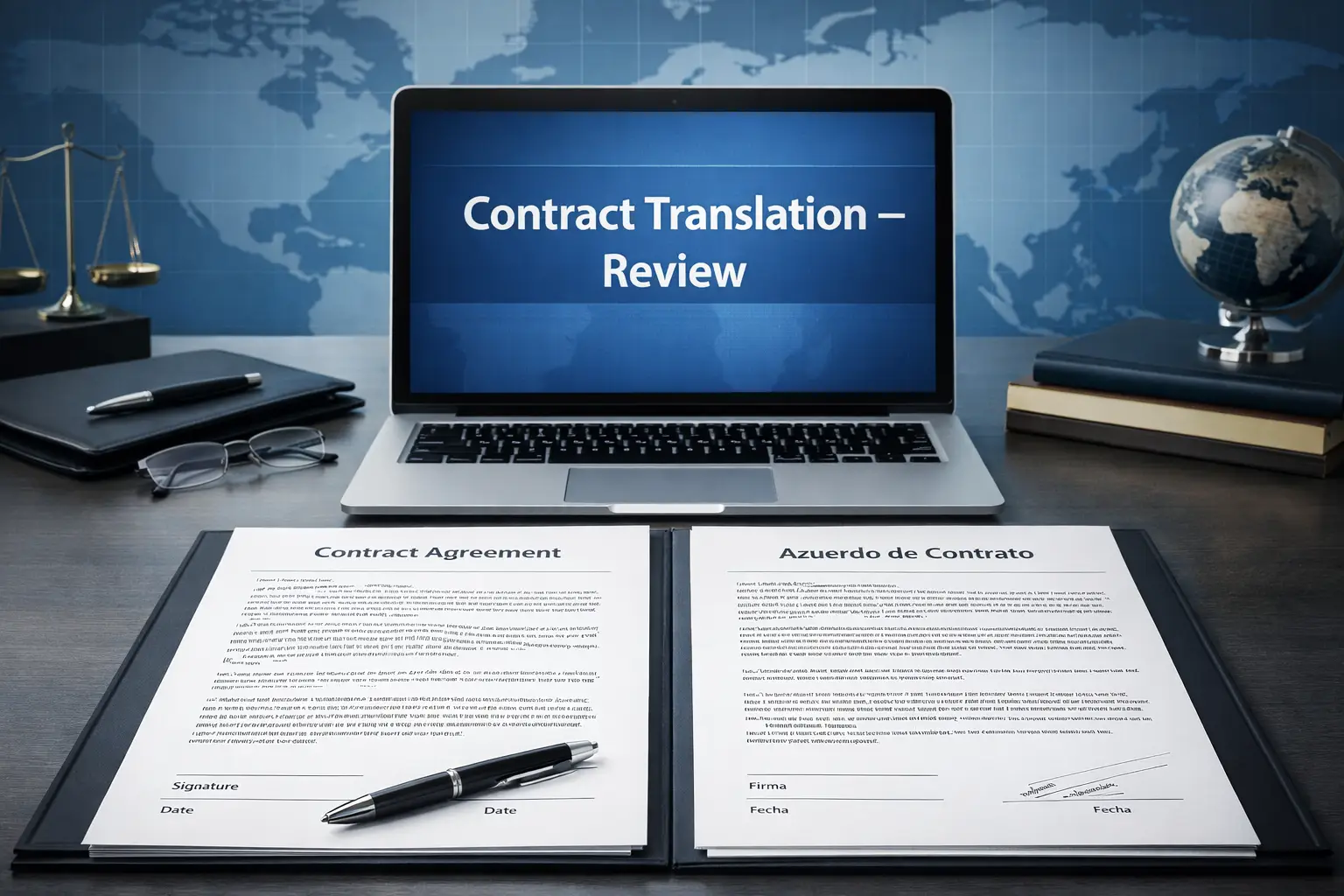
Expanding your business across borders is an exciting milestone. It means new markets, new partners, and new opportunities. However, it also means entering a world of different legal systems and languages.
To protect your interests, you need more than just a general translation; you need legal contract translation that ensures your agreements are clear, accurate, and enforceable in any jurisdiction.
Whether you are signing a supply agreement in Shanghai or an NDA in Berlin, the words on the page govern your professional relationships. Even a tiny change in meaning can lead to major disputes. Here we will walk you through everything you need to know about translating contracts for international operations, helping you manage risk and build stronger global partnerships.
What is legal contract translation?
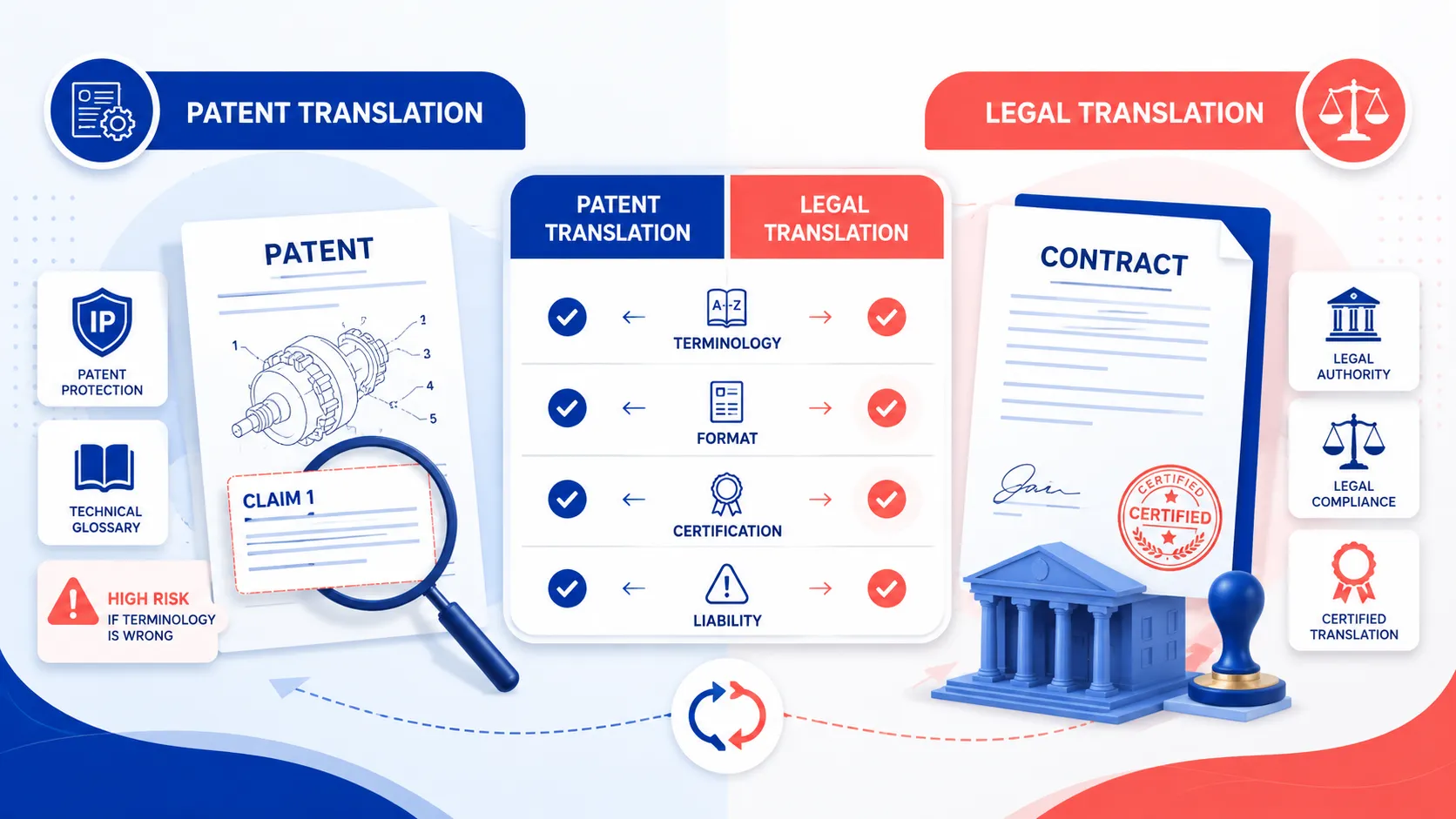
Legal contract translation is the process of adapting a legally binding document from one language to another while maintaining its original intent and legal force. It isn’t just about swapping words; it is about achieving functional equivalence. This means the translated version must produce the same legal effect in the target country as the original did in its home country.
Why is it required for international business?
If you want to start international business, contract translation is a pillar of risk management. When you translate contracts accurately, you ensure that all parties have a “meeting of the minds.” Without this, a contract might be considered void, or a crucial clause might be interpreted in a way you never intended.
Legal Validity and Accuracy
For an agreement to be valid, every party must understand what they are signing. Legal contract translation provides this transparency. It involves high-level terminology accuracy, ensuring that specific legal concepts, which often don’t have a direct 1:1 match in other languages, are explained or adapted correctly according to local laws.
Compliance and Interpretation
Using professional contract translation services helps you stay compliant with local regulations. Many countries require contracts to be in their official language to be recognized by local courts or government bodies. Proper interpretation of clauses prevents the “lost in translation” moments that lead to expensive litigation or regulatory fines.
Which contract types commonly require translation for international operations?
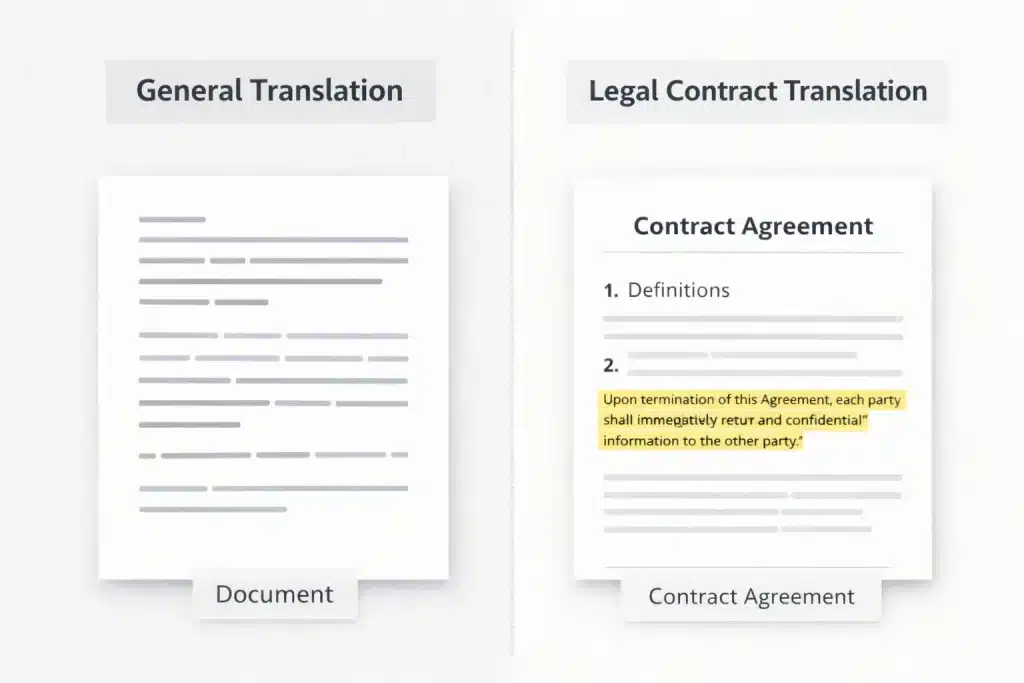
Almost any document that creates an obligation between two parties will eventually need translation if you are operating globally. Different departments within a B2B company, from HR to Procurement, rely on these translations daily.
Common Commercial Agreements
- Non-Disclosure Agreements (NDAs): Protecting your trade secrets starts with an NDA translation that is airtight in the target language.
- Master Service Agreements (MSAs) and SLAs: These define the long-term relationship and service standards between companies.
- Licensing and Distribution Agreements: Essential for SaaS companies or manufacturers expanding into new territories through local partners.
- Partnership and Joint Venture (JV) Contracts: Complex documents that outline how two entities will share profits, risks, and management.
Operational and Financial Documents
- Employment Contracts: To hire talent abroad, you must have contracts that comply with local labor laws.
- Procurement and Supply Agreements: Ensuring your supply chain is stable requires clear terms on delivery, quality, and payment.
- Loan and Finance Agreements: These often involve highly technical financial terminology and strict regulatory requirements.
In sectors like Life Sciences, Engineering, or IT, these contracts often contain technical annexes. In these cases, we use subject-matter experts (SMEs) who understand both the legal framework and the specific industry jargon.
Why legal precision matters: what can go wrong with inaccurate translations?
In the world of law, a misplaced comma or the wrong choice of a verb can change a “right” into an “obligation.” When legal contract translation is handled by non-experts or machine tools without review, the risks are substantial.
Unenforceable Clauses
If a translation is vague or uses the wrong legal terminology, a court in a foreign country may find a specific clause, or the entire contract, unenforceable. This leaves your business unprotected in the very moments you need the contract most, such as during a breach of duty.
Financial and Regulatory Penalties
Inaccurate agreement translation can lead to “breach of contract” claims simply because one party misunderstood their requirements. Beyond private disputes, if a contract involves regulated industries (like finance or healthcare), a bad translation can lead to heavy fines from local authorities for non-compliance.
High-Risk Areas to Watch
- Indemnity and Liability: Misunderstanding who pays for damages can bankrupt a project.
- Intellectual Property (IP) Rights: If the “transfer of ownership” isn’t translated perfectly, you might accidentally give away your most valuable assets.
- Governing Law and Jurisdiction: If this is unclear, you might find yourself fighting a legal battle in a country where you have no physical presence and don’t understand the court system.
How does legal contract translation work? (Process overview)
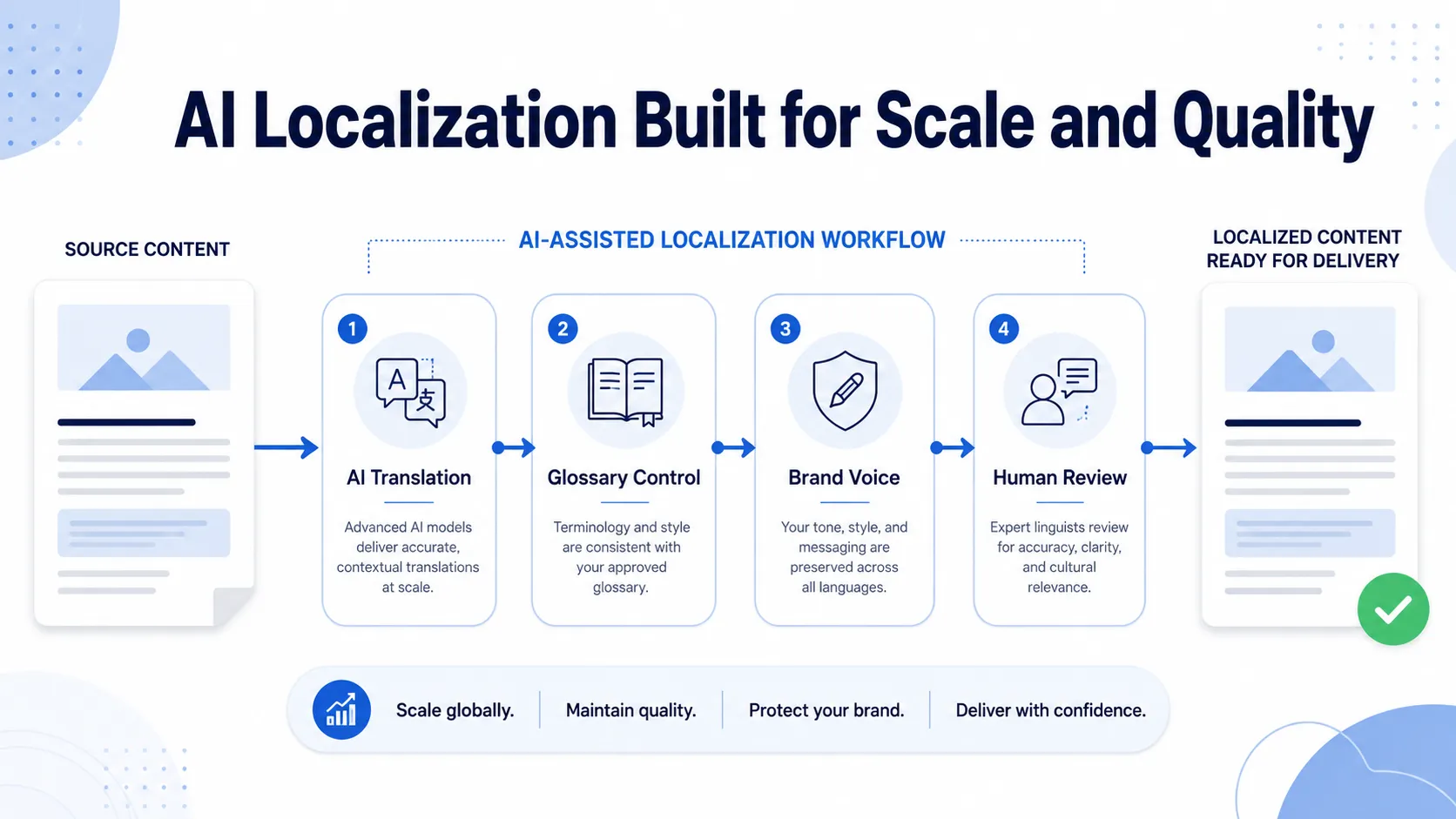
To ensure the highest level of accuracy, we follow a linear, multi-step process. This “dual-review” approach is designed to catch errors before they ever reach your desk.
- Intake and Assessment: We review the document to determine the legal system involved (e.g., Common Law vs. Civil Law) and the complexity of the terminology.
- Translator Assignment: We select a native linguist who is also a legal specialist.
- Legal SME Review: A second specialist, often someone with a background in law, reviews the translation to ensure “legal equivalence.”
- Terminology and Glossary Check: We ensure that terms like “Force Majeure” or “Termination for Convenience” are used consistently throughout the document.
- Formatting and DTP: Contracts often have complex layouts, tables, and signature blocks. Our Desktop Publishing (DTP) team ensures the translated file looks identical to the original.
- Quality Assurance (QA) and Certification: A final check for grammar and formatting. If you need a certified translation, we issue the necessary paperwork at this stage.
Who translates your contracts? (Roles & expertise)
Not every bilingual person is suited for legal translation. In fact, most aren’t. Legal language is a “language within a language.”
The Native Legal Translator
Our primary translators are native speakers of the target language who have 5 to 10+ years of experience in the legal field. Many hold degrees in law or have worked as paralegals. They understand the nuances of how an international contract translation should read to feel “natural” to a local lawyer.
The Role of the Project Manager (PM)
The PM acts as the bridge between your legal team and our linguists. They handle the secure transfer of files and ensure that your specific company “style” or preferred terminology is maintained across all projects. This is vital for B2B companies that have established their own internal legal glossaries.
Which formats and file types do B2B companies submit?
We understand that in a fast-moving business environment, contracts come in many shapes and sizes. Whether you are in the middle of a “redlining” session or dealing with an old scanned document, we can handle the format.
- Editable Formats: Microsoft Word (.docx) is the gold standard for contracts as it allows for easy “Track Changes” during negotiations. We also work with Google Docs and Excel for complex pricing schedules.
- Non-Editable Formats: We frequently receive PDFs or scanned images of signed contracts. Our team uses OCR (Optical Character Recognition) and DTP to recreate these as editable, clean documents in the target language.
- Presentation Decks: Sometimes, deal terms are outlined in PowerPoint. We translate these while keeping the visual layout intact for your board meetings.
How long does legal contract translation take? (Timelines & factors)
Timing is often critical in business deals. While we prioritize accuracy, we also understand the need for speed. Here is a general idea of what to expect:
| Document Type | Average Length | Estimated Turnaround |
| Simple NDA | 1–3 pages | Same day to 24 hours |
| Standard Service Agreement | 10–20 pages | 2–4 business days |
| Complex M&A or JV Contract | 50+ pages | 5–10 business days |
Factors Affecting Speed
The timeline can vary based on the language pair (rare languages may take longer), the complexity of the legal subject matter, and whether you require certification or notarization. For urgent “rush” projects, we can often assign multiple linguists to work simultaneously under a single unified glossary to maintain consistency.
Key cost factors in legal contract translation
When budgeting for legal contract translation services, it is helpful to understand what drives the price. Unlike general content, legal documents require a higher level of expertise and insurance.
Language Pair and Complexity
Common language pairs (like English to Spanish) are generally more affordable than rare pairs (like Icelandic to Vietnamese). Additionally, a highly technical contract, such as a patent licensing agreement, requires a more specialized (and thus higher-priced) expert than a simple office lease.
Volume and Formatting
The length of the contract is the primary factor. However, if your document is a “messy” scan that requires significant formatting work to make it readable, this may add to the project total.
Certification and Rush Fees
If you need a “sworn” or “certified” translation for a court filing, there is usually a per-page or per-document fee for the official stamp and signature. Similarly, requesting a 48-hour turnaround on a 30-page document will typically incur a rush surcharge.
How pricing works: per-word, per-page, or project-based?
Most professional agencies use the per-word model. This is the fairest way to price, as you only pay for the actual amount of content being translated. It makes it easy to compare quotes and scale your budget.
For certified legal translation, we sometimes use a per-page model. This is common for official government or court documents where the page count is fixed. For very large batches of contracts (such as during a merger), we can offer a fixed project fee to help your legal department manage its budget more predictably.
When do you need certified or sworn contract translations?
It is a common misconception that all business contracts need to be certified. In most B2B scenarios, like signing a distribution deal, a standard professional translation is sufficient.
However, you will likely need certification if:
- You are submitting the contract as evidence in a foreign court.
- You are providing documents for immigration or work visa purposes.
- A government body requires a “certified” version for a permit or license.
- Your bank requires it for anti-money laundering (AML) compliance.
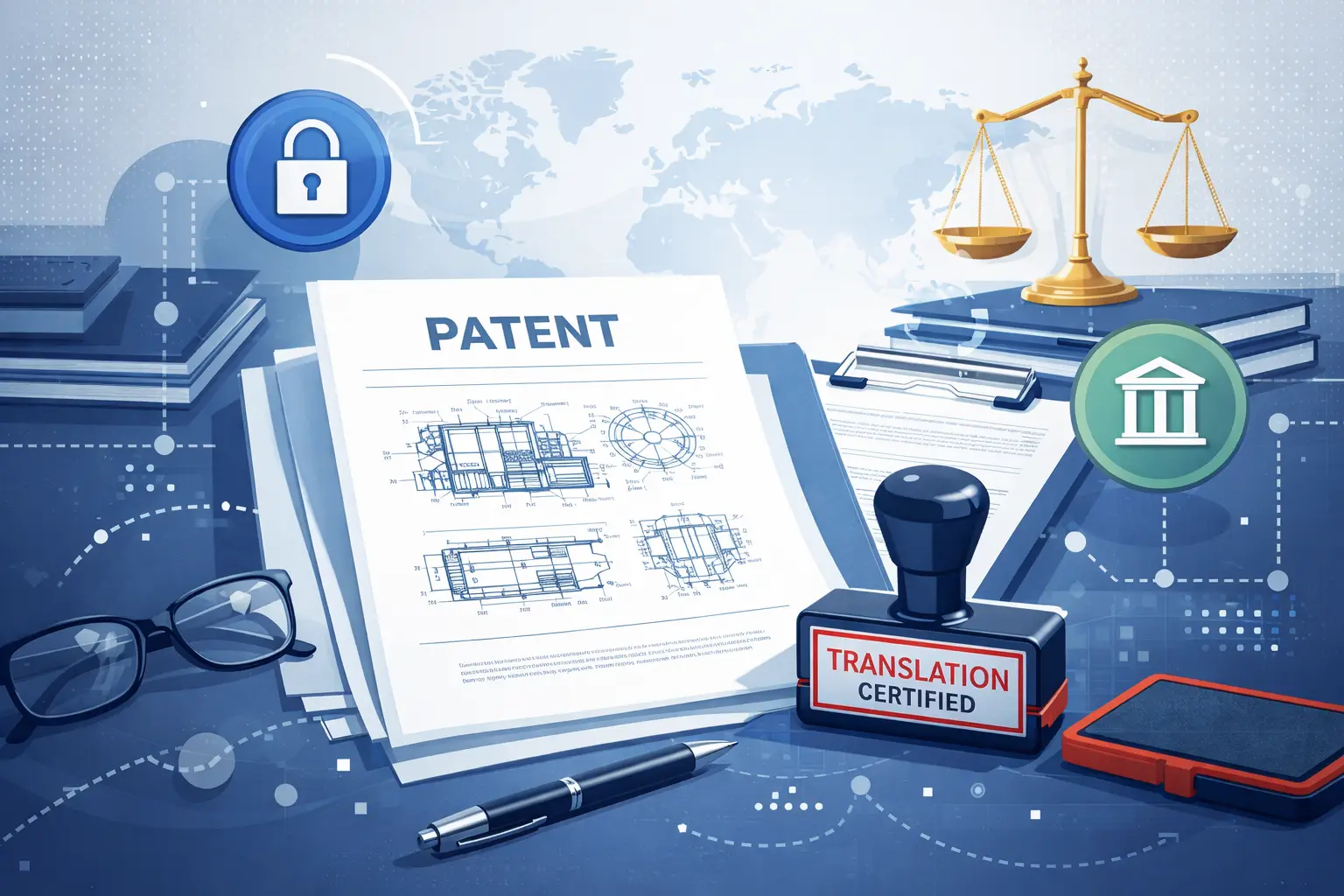
Certification is a formal statement by the agency or translator affirming that the translation is a true and accurate representation of the original.
Best practices for translating contracts for international business
To get the best results from your contract translation services, follow these simple best practices:
- Provide Editable Files: Sending a Word doc instead of a PDF saves time and reduces formatting costs.
- Define the Governing Law: Tell your translation team which country’s laws apply. This helps the translator choose the most appropriate terminology.
- Use a Glossary: If your company has a preferred way of translating certain terms (e.g., “The Company” vs. “The Provider”), share that with us.
- Share Reference Materials: If you have previously translated versions of similar contracts, sharing them helps ensure consistency across your legal library.
- Allow Time for Review: Legal translation is dense work. Giving the linguists an extra day can result in a much more polished final product.
How do companies maintain legal consistency across translated contracts?
Consistency is the key to a strong legal strategy. If you call a “clause” one thing in your NDA and something else in your MSA, it creates room for confusion.
Terminology Management
We use Translation Memory (TM) software. This tool “remembers” how we translated a phrase for you last time. If you have 50 different contracts, the TM ensures that the phrase “Indemnify and Hold Harmless” is translated identically in every single one. This not only improves quality but also reduces costs over time, as we don’t charge full price for repeating phrases.
Why choose our agency for legal contract translation?
At Circle Translations, we specialize in helping B2B companies bridge the linguistic gap. We don’t just translate words; we protect your business.
- Native Legal Linguists: We only work with experts who understand the “legalese” of both the source and target languages.
- Strict Confidentiality: We treat your contracts with the highest level of security. Every member of our team is under a strict NDA.
- 120+ Languages: We can support your expansion into almost any market on earth.
- Secure Portal: Upload your sensitive documents via our encrypted platform, ensuring they never sit in an unsecure email inbox.
- ISO-Aligned QA: Our processes are designed to meet the highest international standards for quality and accuracy.
Industries we support for contract translation
We provide specialized support for a wide range of sectors, including:
- Technology & SaaS: Licensing, SLAs, and EULAs.
- Finance & Insurance: Loan agreements and policy documents.
- Manufacturing: Supply chain and distribution contracts.
- Pharma & Healthcare: Clinical trial agreements and compliance docs.
- Real Estate: Lease agreements and purchase contracts.
Protecting your global interests starts with a conversation. Whether you need a single NDA translated or are managing a complex international merger, we are here to help.
Frequently Asked Questions
What is legal contract translation?
It is the specialized process of translating legally binding agreements so they maintain the same meaning and enforceability in another language and legal system.
Which contracts require translation for international business?
Any agreement that involves a party in a different country, including NDAs, MSAs, employment contracts, and licensing agreements.
Can I use machine translation for legal contracts?
We do not recommend it. Machine translation often fails to understand the context of legal clauses. While it can be used for a “quick look,” any final, signed agreement should be handled by a human expert.
Do translated contracts need to be certified?
Only if required by a court, government agency, or specific counterparty. Most B2B agreements are fine with a standard professional translation.
How long does legal contract translation take?
It depends on the length. A short NDA can be done in 24 hours, while a 20-page agreement typically takes 2–4 business days.
How do you keep translated contracts legally accurate?
By using a “dual-review” system where a second legal expert checks the work of the first translator for terminology and “functional equivalence.”
Which languages are most in demand for international contract translation?
We see high demand for English, Chinese, Japanese, German, French, Arabic, and Spanish.