Japanese document translation services provide professional Japanese↔English translation for contracts, compliance filings, supplier agreements, technical specifications, financial statements, and corporate documents.
They require native Japanese specialists because keigo, kanji compounds, and formal registers cannot be translated accurately using general tools or non-specialists.
Japanese is structurally complex: three scripts (kanji, hiragana, katakana), formal business language (keigo), and dense domain-specific terminology require trained translators with subject-matter expertise. In B2B contexts, legal, regulatory, supply chain, and technical, translation errors create direct legal, financial, and operational risk.
Businesses use Japanese translation for supplier contracts, PMDA/METI/FSA compliance, M&A due diligence, employment documentation, and technical manuals. Professional workflows include CAT tools, terminology control, OCR for scanned files, and certified translation for official use.
Japanese Business Documents That Require Professional Translation: Types, Uses, and Accuracy Stakes
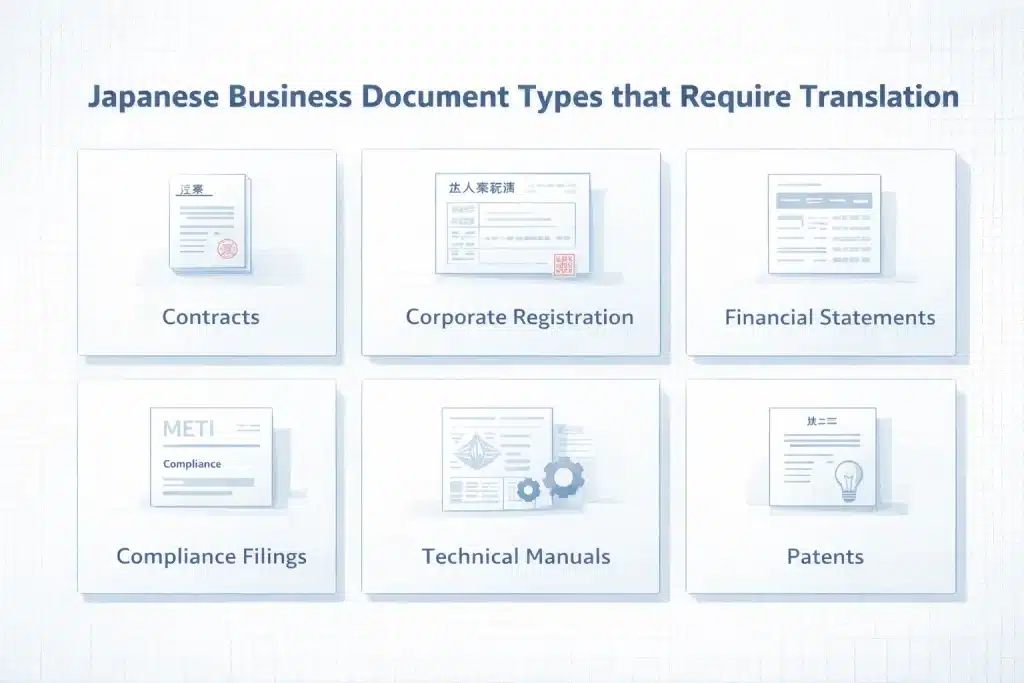
Japanese business documents require professional translation because each document type carries different legal, financial, or operational risk, and often requires certification and strict formatting accuracy.
Japanese B2B translation spans contracts, compliance filings, corporate records, and technical documents.
Each category has distinct terminology, formatting, and regulatory expectations that directly impact usability and legal validity.
B2B Document Types, Translation Requirements, and Turnaround
| Document Type | Direction | B2B Use Case | Certification Required? | Formatting Challenge | Typical Turnaround |
| Business contracts and agreements | JA→EN / EN→JA | Supplier agreements, distribution, JV | Sometimes | Keigo, clause structure, hanko blocks | 2–5 days |
| Corporate registration (登記事項証明書) | JA→EN | Due diligence, KYC, registration | Yes | Formal admin language, seals | 1–3 days |
| Financial statements (決算短信, 有価証券報告書) | JA→EN | M&A, reporting, banking | Sometimes | Tables, JP GAAP vs IFRS | 3–7 days |
| Compliance filings | JA↔EN | PMDA, METI, FSA, J-SOX | Depends | Regulated terminology | 3–7 days |
| Technical manuals/specs | JA→EN | Manufacturing, procurement | No | Kanji compounds, units | 3–7 days |
| HR/employment docs | EN→JA | Contracts, policies | Sometimes | Legal tone, keigo | 2–4 days |
| Purchase orders/shipping | JA↔EN | Trade, logistics | No | Tables, HS codes | 1–2 days |
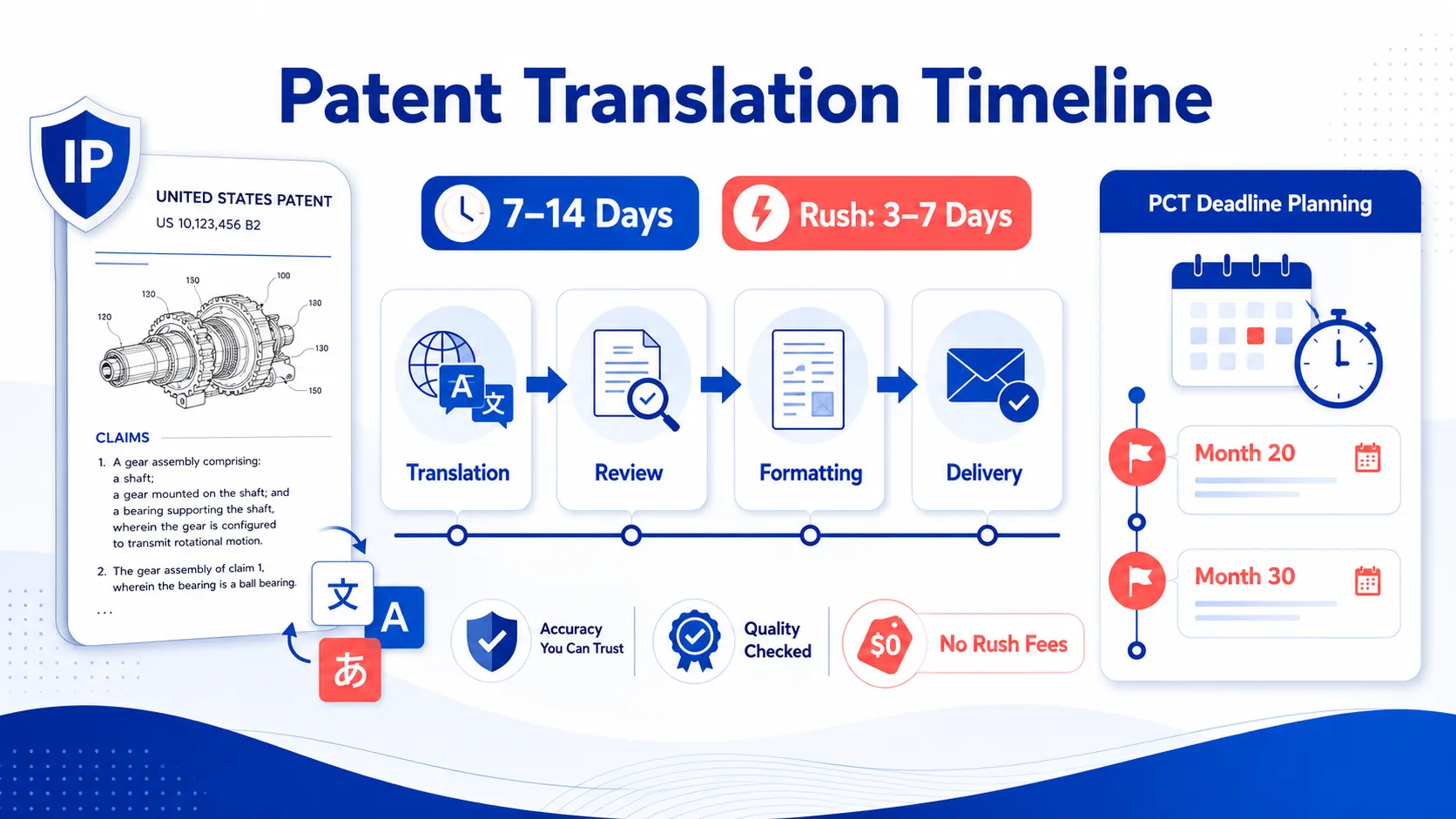
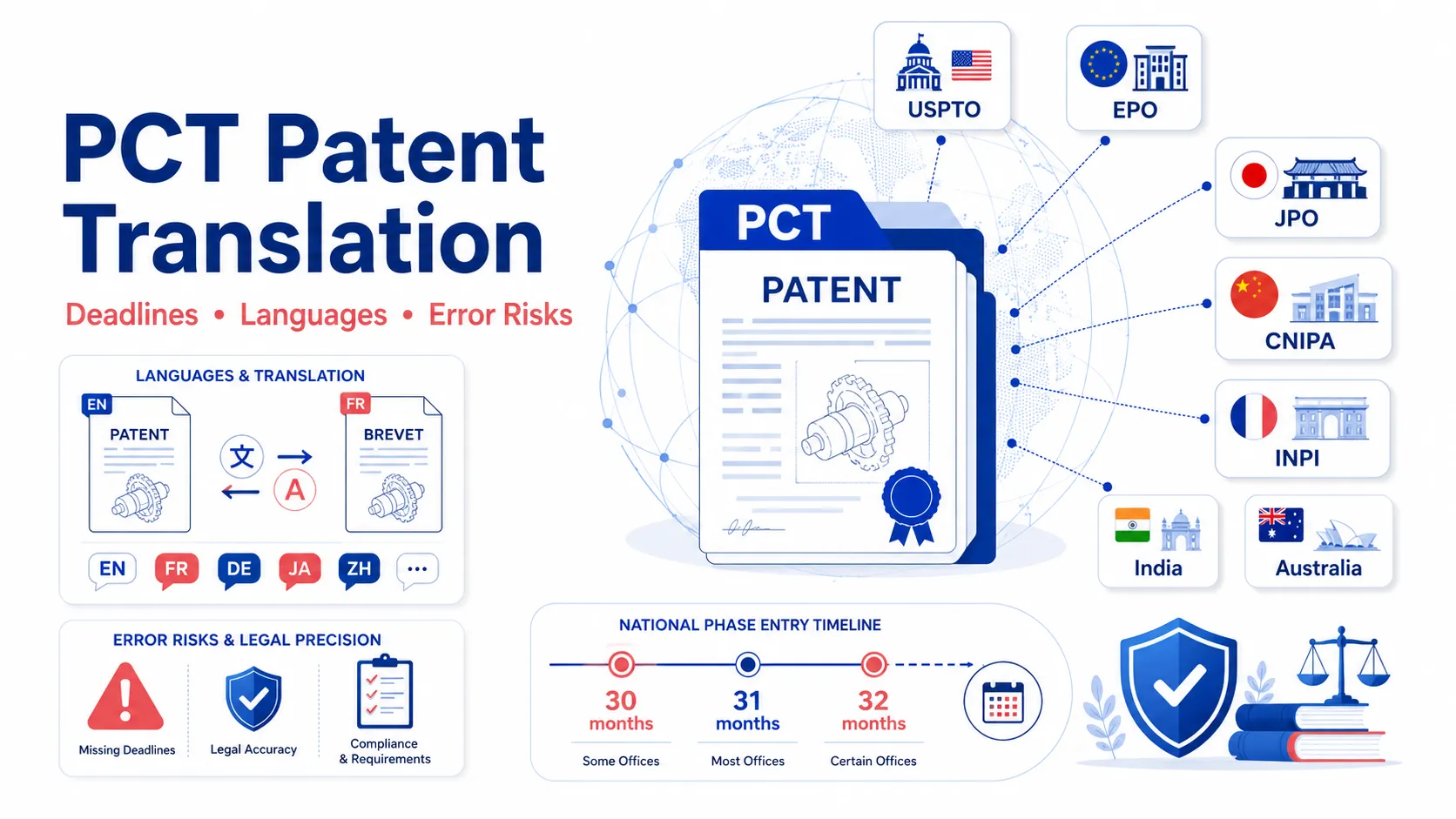
| Patent documents | JA↔EN | IP filings | Yes | Claim precision, JPO rules | 5–10 days |
| Real estate/investment | JA→EN | Property, J-REIT | Yes | Legal terms, tsubo vs sqm | 3–5 days |
| Board minutes/resolutions | JA→EN | Governance, M&A | Sometimes | Formal corporate style | 1–3 days |
Japanese Contract and Supplier Agreement Translation: Keigo, Clause Sequencing, and Hanko Blocks
Japanese contract translation requires mastery of keigo, structural differences in clause sequencing, and accurate handling of hanko seals because these elements determine legal meaning.
Japanese contracts use formal keigo (sonkeigo, kenjōgo, teineigo), which changes verb forms and hierarchy relationships across clauses.
Clause sequencing differs from English contracts, often moving from general principles to specifics, requiring restructuring without altering legal intent. Hanko (company seals) replace signatures and must be explicitly identified in translation.
Terms like 業務委託契約 and 請負契約 have no direct equivalents and require precise legal interpretation to avoid contractual risk.
Japanese Compliance and Regulatory Document Translation: PMDA, METI, FSA, and J-SOX Requirements
Regulatory Japanese translation requires strict adherence to authority-defined terminology because deviations lead to rejection or compliance failure.
PMDA submissions require MedDRA-aligned terminology for pharmaceuticals and devices. METI filings demand correct terminology for product safety certifications such as PSE and PSC.
FSA financial disclosures must follow Japanese reporting vocabulary for securities filings. J-SOX documentation requires alignment with JICPA standards for internal controls.
Free or inconsistent terminology invalidates submissions and creates regulatory risk.
Japanese Corporate Registration and Due Diligence Documents: Touki Jikou Shomeisho, Articles of Incorporation, and M&A Documentation
Corporate Japanese documents require certified, legally accurate translation because they are used for KYC, M&A, and cross-border compliance decisions.
The 登記事項証明書 (corporate registry extract) confirms legal entity data and requires certified translation for banking and registration. 定款 (articles of incorporation) define governance and shareholder rights, requiring legal precision.
M&A documentation, NDAs (秘密保持契約), share purchase agreements (株式譲渡契約), and board resolutions,demands senior translators with transaction experience because errors directly affect deal execution and legal interpretation.
Japanese Script, Formatting, and Document Structure: Why Japanese Documents Are Harder to Translate Than Most
Japanese documents are harder to translate because they combine three writing systems, complex formatting (including vertical text), and dense domain-specific terminology that requires specialist interpretation.
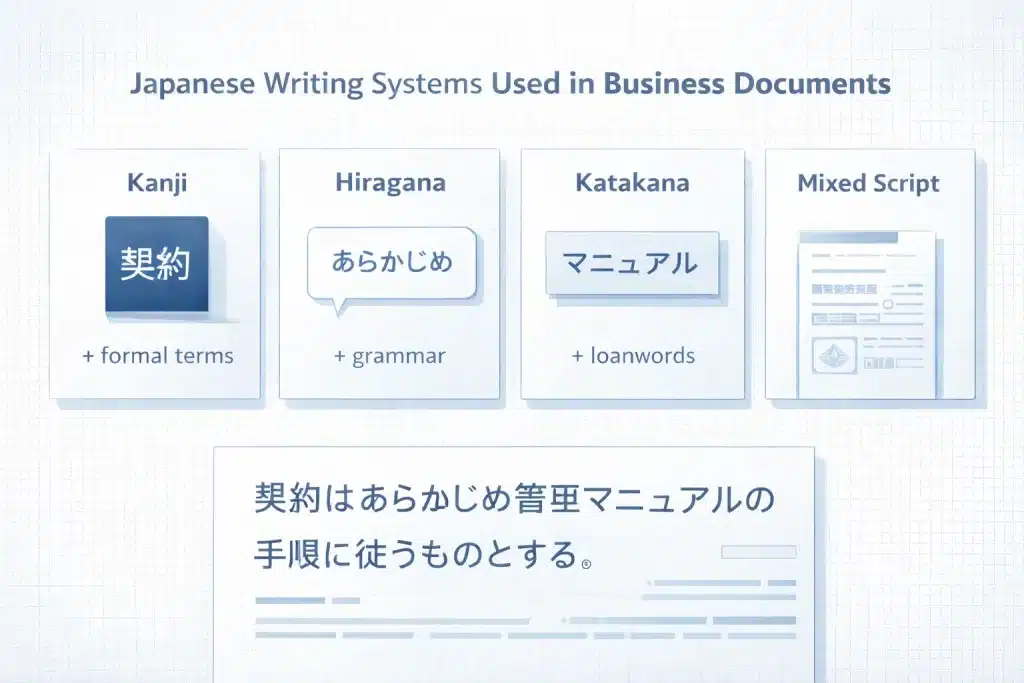
Japanese translation is not a word-for-word process. Translators must parse mixed scripts, reconstruct sentence structure, and rebuild layouts while preserving legal and technical meaning.
Japanese Script Types and Translation Implications
| Script | Name | Use in documents | Translation challenge |
| 漢字 | Kanji | Core vocabulary; formal and technical terms | Multiple readings; domain-specific compounds |
| ひらがな | Hiragana | Grammar, verb endings | Required to interpret sentence structure |
| カタカナ | Katakana | Loanwords, product names | Non-obvious meanings; technical ambiguity |
| 漢字仮名交じり | Mixed script | All formal documents | Requires simultaneous parsing of all scripts |
| 縦書き | Tate-gumi (vertical) | Legal docs, certificates | Layout reversal; reconstruction needed |
Kanji Compound Terminology and the Jukugo Problem in Japanese Business Documents
Kanji compounds (jukugo) require domain-specific translation because their meaning cannot be derived from individual characters.
Examples include 法人格 (“legal personality”), 独占禁止法 (“Antimonopoly Act”), 品質管理 (“quality control”), and 知的財産権 (“intellectual property rights”). Machine translation often splits these into literal components, producing incorrect outputs.
In contracts and compliance documents, this changes legal meaning. Professional workflows solve this with termbases inside CAT tools, ensuring consistent, approved translations across all documents.
Japanese Document Formatting: Vertical Text, Tate-gumi, Furigana, and Layout Reconstruction
Japanese document formatting requires post-translation reconstruction because layout, direction, and annotation systems differ from Western formats.
Vertical text (tate-gumi) runs top-to-bottom and right-to-left, requiring horizontal restructuring in English. Furigana indicate pronunciation and may signal non-standard readings that affect meaning.
Japanese uses character counts, not word counts, and expands during translation (2,000 characters → 800–1,200 English words). Scanned documents require OCR plus manual correction, especially for kanji variants, handwritten notes, and hanko seals.
How to Translate a PDF Document from Japanese to English: Professional vs Free Tool Comparison
Professional translation uses a 5-step workflow with human review, while free tools produce unverified output with 90–95% accuracy at best and no accountability.
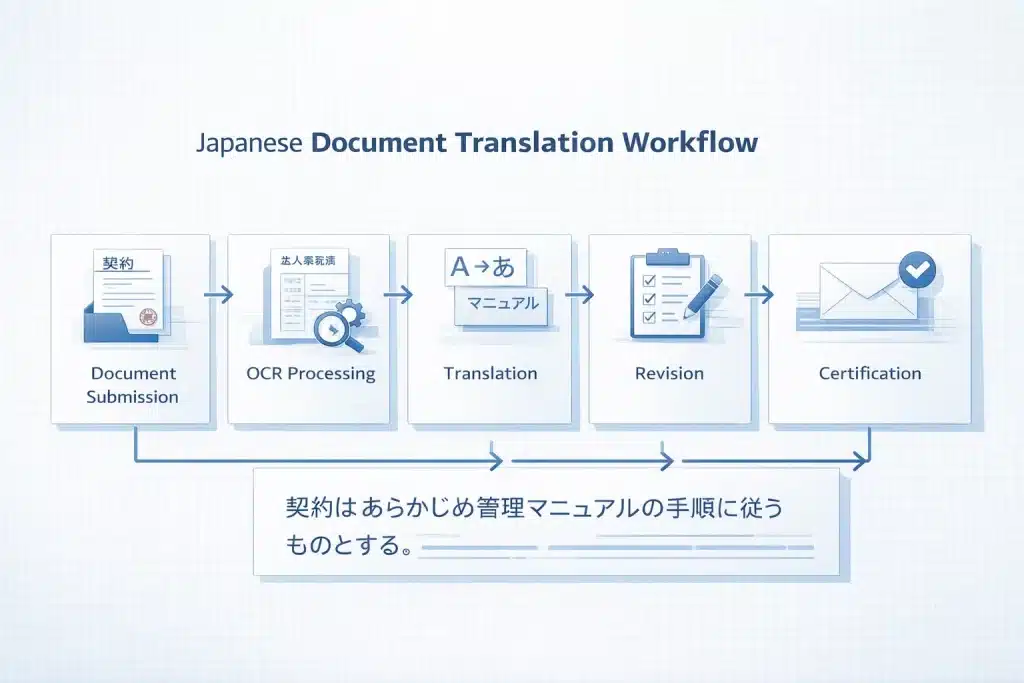
Free tools (Google Translate, DeepL, Smallpdf) limitations:
- Misinterpret keigo and formal register
- Fail on kanji compounds and legal terminology
- Break formatting in tables and vertical layouts
- Provide no QA, revision, or certification
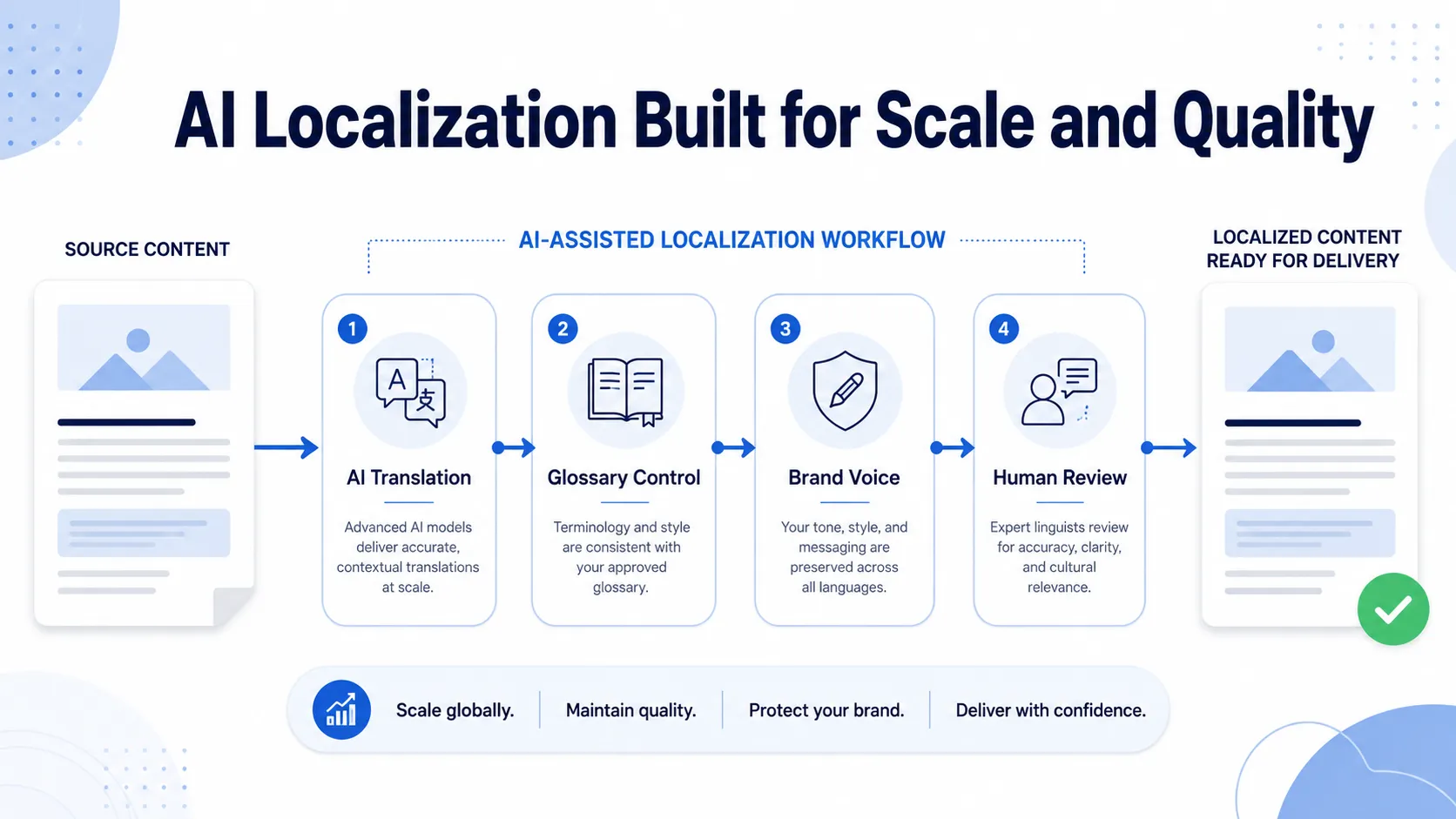
Professional workflow (5 steps)
- Submit document (PDF/Word; specify use case and deadline)
- Assessment (word/character count, OCR needs, quote in <1 hour)
- Translation by specialist (legal, technical, financial) using CAT tools + termbase
- Revision + QA (second linguist, terminology checks, formatting validation)
- Delivery (same format; certified translation if required)
Business implication: free tools are suitable for internal gist only, while contracts, compliance filings, and corporate documents require 99%+ accuracy with human review.
Certified Japanese Document Translation: When It Is Required, What It Includes, and How to Get It
Certified Japanese translation is required when documents are submitted to authorities, courts, or financial institutions, and it includes a signed statement confirming accuracy and completeness.
Certified translation ensures that Japanese documents are legally accepted in cross-border business, regulatory, and immigration processes. Misunderstanding certification leads to rejected filings and delays.
What Certified Translation Means for Japanese Documents and When Businesses Need It
Certified translation is a signed declaration of accuracy, not a legal validation of the document itself.
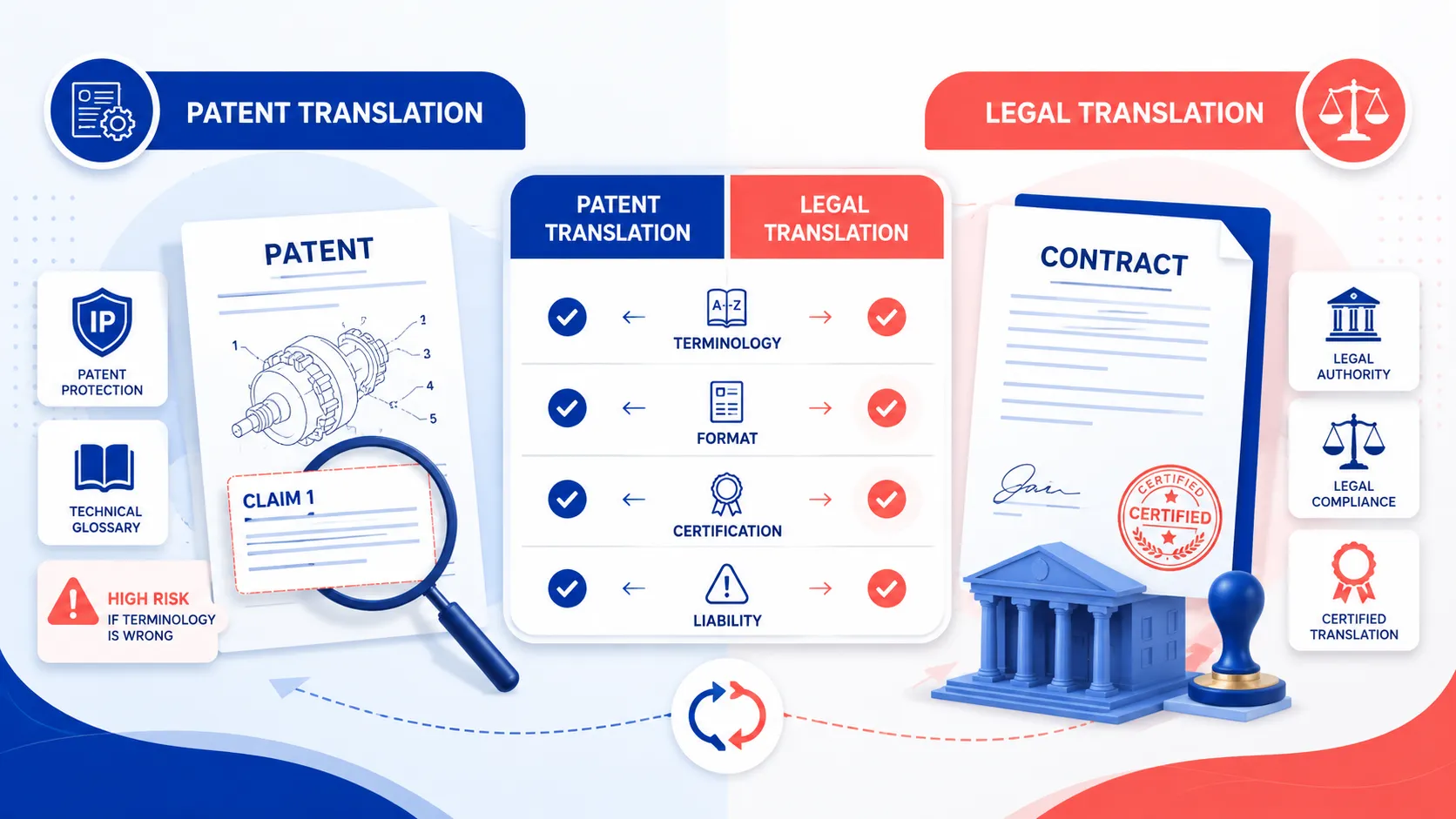
A certified translation includes a statement from the translator or agency confirming the translation is complete and accurate. It is required for USCIS, UKVI, courts, and most administrative submissions.
It is not the same as notarisation (identity verification), sworn translation (court-authorised translators), or apostille (authentication of the original document).
B2B use cases include corporate registry extracts (登記事項証明書), patent filings, financial statements, employment contracts, and court documents, where acceptance depends on formal certification.
Japanese Apostille, Notarisation, and Official Legalisation: Document Authentication for Cross-Border Use
Apostille and notarisation authenticate documents, while certified translation ensures the content is accurately translated.
Japan issues apostilles through the Ministry of Foreign Affairs (MOFA), confirming the authenticity of official signatures or seals. The standard workflow is: obtain the original document, apply for apostille, then commission certified translation.
Notarisation adds identity verification of the translator’s signature and is required in some jurisdictions. Countries outside the Hague Convention require full legalisation via embassy authentication. Mixing these steps causes rejected submissions.
Japanese Translation for USCIS, UK Visas, and Official Immigration Submissions: What Authorities Accept
USCIS and UKVI require certified Japanese translations with a signed accuracy statement, and documents without certification are rejected.
USCIS requires a full English translation plus a certification confirming translator competence and accuracy. UKVI requires the same, with clear translator details and signature.
In B2B contexts, this applies to employee relocation, expatriate assignments, and HR documentation such as koseki tohon (family register), contracts, and academic records. Standardised certified translation ensures acceptance without rework or delays.
Japanese Document Translation Pricing, Turnaround Times, and What Affects Cost
Japanese translation costs $0.18–$0.40 per word and takes 1–15 days depending on document type, complexity, and certification requirements.
Pricing is higher than European languages due to script complexity, limited translator supply, and mandatory two-stage review for quality assurance.
Japanese Translation Pricing Reference
| Service | Price range | Unit | Notes |
| Japanese→English translation | $0.18–$0.28 | Per English word | Standard business documents |
| English→Japanese translation | $0.18–$0.30 | Per source word | Native JP output required |
| Certified translation | $0.20–$0.35 + $25–$50 | Per word | Certification included |
| Scanned documents (OCR) | +$30–$80 | Per document | Based on scan quality |
| Rush (24–48h) | +25–50% | Per word | Subject to availability |
| Technical/legal/financial | $0.22–$0.40 | Per word | Specialist translators |
| Patent translation | $0.25–$0.45 | Per word | JPO compliance required |
Why Japanese Translation Costs More Than European Language Pairs: Translator Availability and Script Complexity
Japanese translation costs more because supply is limited, translation speed is lower, and quality assurance requires two linguists.
Qualified Japanese translators with legal or technical expertise are scarce. Productivity is lower (1,500–2,000 words/day vs 2,500–3,500 for European languages) due to kanji parsing and sentence restructuring.
Two-stage review (translator + reviser) is standard for accuracy. Pricing is based on character count or English output, not Japanese “word” count.
Japanese Translation Turnaround: Standard, Rush, and Scanned Document Timelines by Document Type
Turnaround ranges from 1–2 days for short documents to 7–15 days for large or complex projects, with rush options available.
- 0–500 words: 1–2 days
- 500–2,000 words: 2–4 days
- 2,000–5,000 words: 4–7 days
- 5,000+ words: 7–15 days
Rush delivery: 24h (≤1,500 words), 48h (≤3,000 words), or same-day for short texts. Scanned documents add 0.5–1 day for OCR verification. Certification adds no time; notarisation adds 1–2 days.
Translate Scanned Japanese Documents: OCR, Handwritten Content, and Hanko Stamp Handling
Scanned Japanese documents require OCR plus manual verification because automated recognition is unreliable for kanji, handwriting, and seals.
OCR errors occur due to similar kanji shapes and mixed scripts. Handwritten content (including cursive 草書) requires manual transcription.
Hanko seals must be interpreted and rendered as text (e.g., “[Company seal: Representative Director]”).
Business implication: scanned Japanese documents always require human validation before translation to ensure legal and operational accuracy.
Commission Japanese Document Translation Built for B2B Accuracy — Circle Translations
Japanese document translation requires controlled terminology, specialist translators, and structured QA, not raw machine output.
Circle Translations delivers:
- Native Japanese subject-matter specialists (legal, technical, financial, regulatory)
- Keigo and formal register accuracy for contracts and compliance
- Termbase-controlled kanji compound consistency across projects
- Certified translation with optional notarisation (1–2 days)
- OCR + manual verification for scanned documents and hanko handling
- Full format preservation (PDF, Word, Excel)
- Two-stage review (translator + reviser, ISO 17100 aligned)
- 24–48h rush delivery and same-day for short files
- NDA-secured workflows for sensitive documents
- English→Japanese localisation for outbound business use
Need Japanese Business Documents Translated With Legal Precision?
Circle Translations assigns native Japanese legal specialists to contracts, compliance documents, supplier filings, and certified business submissions — with NDA coverage and accuracy you can submit with confidence.
Japanese Document Translation — Frequently Asked Questions
How do I translate a document from Japanese to English professionally?
Submit the document to a professional provider, define purpose and deadline, and receive a translation completed by a specialist and reviewed by a second linguist. The workflow includes OCR if needed, CAT tool translation with termbase, QA checks, and delivery in the original format with certification if required.
Can I use Google Translate for Japanese business documents?
Google Translate is only suitable for rough understanding and not for business use. It fails on keigo, legal phrasing, and kanji compounds, creating risk in contracts and compliance documents; use it only for internal gist-reading, never for official or operational decisions.
What is the difference between certified and notarised Japanese translation?
Certified translation confirms accuracy, while notarised translation verifies the translator’s identity. Certified translations include a signed statement and are required for most authorities, while notarisation adds a notary layer; apostille separately authenticates the original document.
How much does certified Japanese document translation cost?
Certified Japanese translation costs $0.20–$0.35 per word plus a $25–$50 certification fee. A typical one-page document costs $75–$165, with higher rates for technical/legal content and surcharges for rush or notarisation.
How do I translate a scanned Japanese PDF or Word document?
Use OCR with human verification, then translate and review the corrected text. Japanese OCR requires manual correction for kanji errors, handwriting, and hanko stamps before translation, adding 0.5–1 day to turnaround.
What Japanese documents are required for doing business in Japan?
Key documents include corporate registry extracts, contracts, financial statements, and compliance filings. Examples include 登記事項証明書, 定款, supplier agreements, and PMDA/METI filings, typically requiring certified translation for cross-border use.
How long does Japanese document translation take?
Japanese translation takes 1–7 days for most documents and up to 15 days for large projects. Short texts take 1–2 days, medium 2–4 days, and longer documents 4–7 days, with 24–48h rush options and slight delays for scanned files.
Do I need a Japanese translator or can I translate documents myself?
Professional translators are required for any business, legal, or regulatory document. Japanese complexity (keigo, legal structure, kanji compounds) makes self-translation unreliable and risky; only informal content can be handled without specialists.
What is the difference between Japanese to English and English to Japanese translation?
JA→EN is used to understand Japanese documents, while EN→JA is used for official communication in Japan. EN→JA requires native Japanese output and precise keigo, making it slightly more complex and often higher cost.