Translation isn’t simply paperwork for legal departments, compliance staff, or procurement teams. Often, it becomes part of how risks get handled. What seems like clerical work can shape outcomes behind the scenes.
One wrong word in a contract translation might cost a firm everything it owns. Shifting documents between languages means shifting laws, too, not only letters on paper. Think twice before calling it simple word swapping.
Legal duties travel across borders differently than people do. An error in how “indemnity” reads could mean disaster hiding in the fine print.
So, firms aren’t simply after translation. Instead, they want strong legal support from partners who deliver precision, keep data secure, and build trust. Only a few meet that bar.
What you’re reading isn’t simply a roll call of companies. It’s a guide shaped by how the translation market actually works in 2026.
What makes a legal contract translation service “best” in 2026?
By 2026, just “speaking well” won’t cut it. Too much rides on the outcome.
Providers who rank highest right now are measured by tough standards. Performance gaps show up fast under pressure. Only those delivering perfection every single day stay at the top. The rules don’t bend; they tighten.
- Linguist Qualifications: Top teams skip generalist linguists when handling agreements. Instead, they pick people trained in both law and language. These experts know that words like “shall” carry more weight than “may.” A contract is built on precise meanings that only bilingual legal experts fully understand.
- Legal SME Review: Subject Matter Experts (SMEs) are brought in to review highly technical content. Expert eyes scan the work to make sure nothing slips through.
- Accuracy Levels: Getting it right matters most. Mistakes aren’t allowed, so checks happen again and again. Multiple people review each step, sometimes more than once, just to be sure.
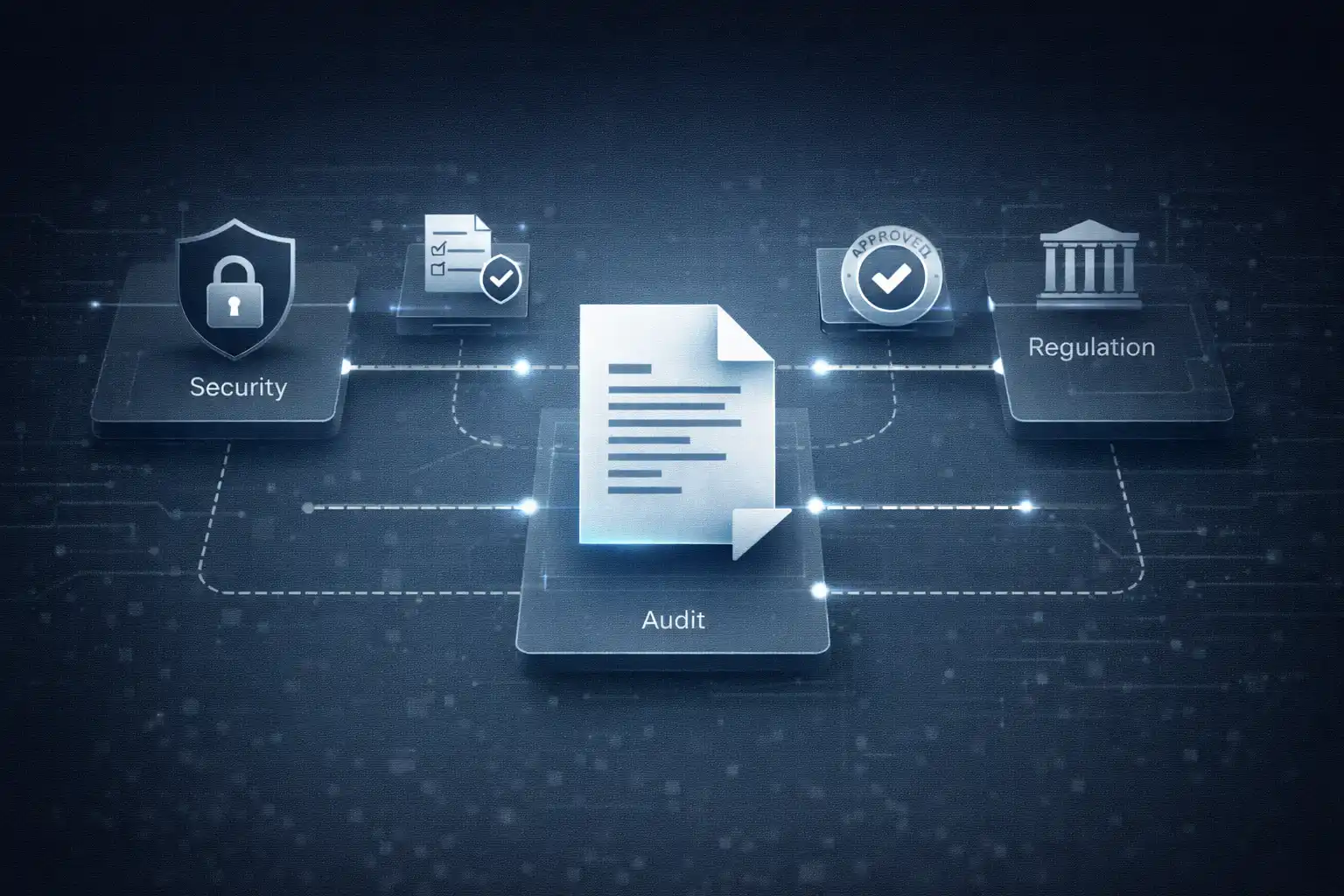
- ISO Certifications: If a vendor does not hold ISO 17100 (Translation Services) and ISO 27001 (Information Security), they generally aren’t considered for enterprise legal work.
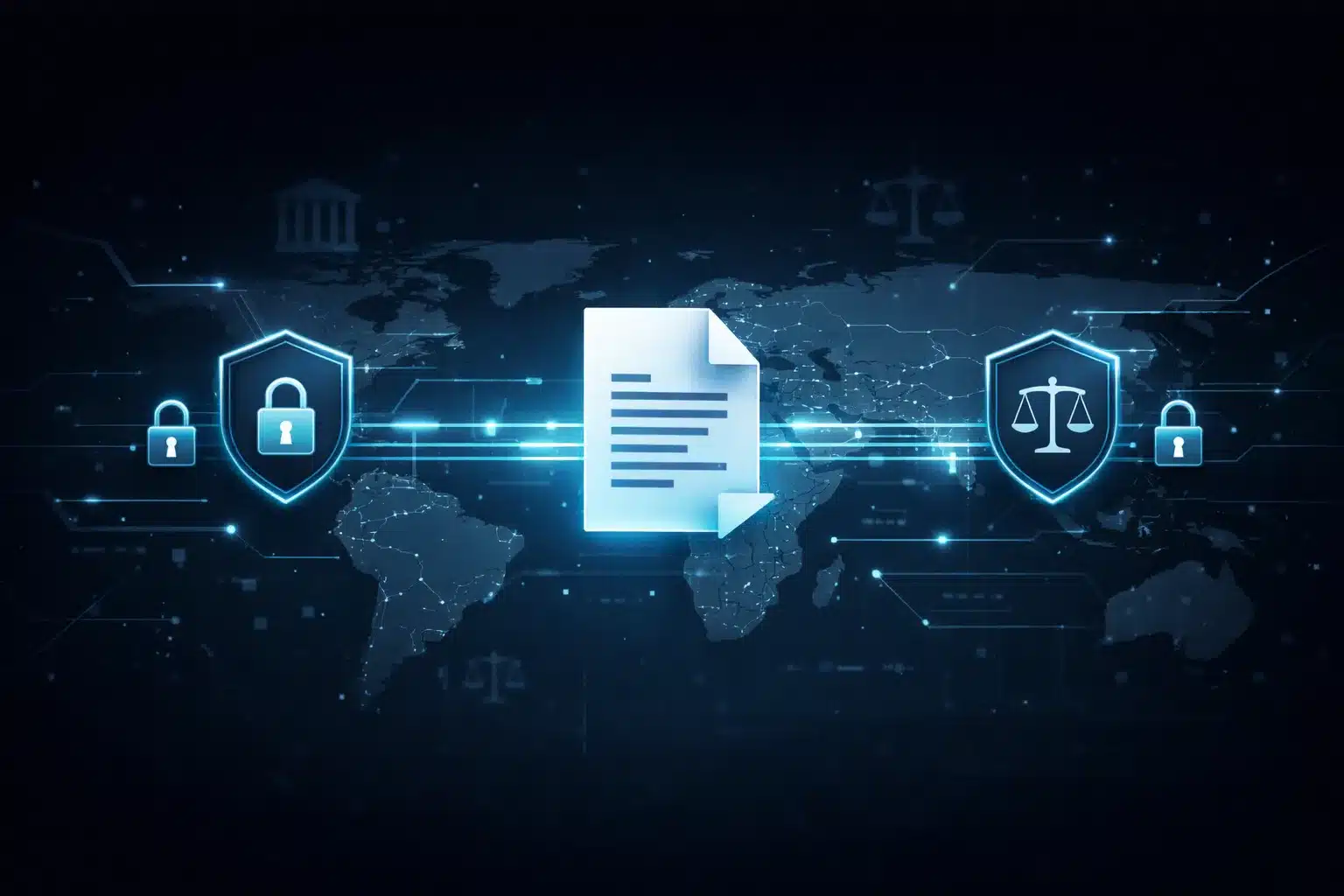
- Confidentiality: Security is non-negotiable. Features like role-based access control and encrypted portals are now standard.
In 2026, legal teams expect:
- ISO 17100 Workflows: A guarantee that every document is translated by one person and revised by a second, equally qualified person.
- Secure Portals: No more emailing sensitive contracts as attachments.
- Encrypted Delivery: Files are encrypted both in transit and at rest.
- Smart Tech: The use of AI to assist, but never replace, human legal experts.
Which quality standards matter most for legal contracts?
Getting things right goes beyond proper sentences; it ties directly to legal rules.
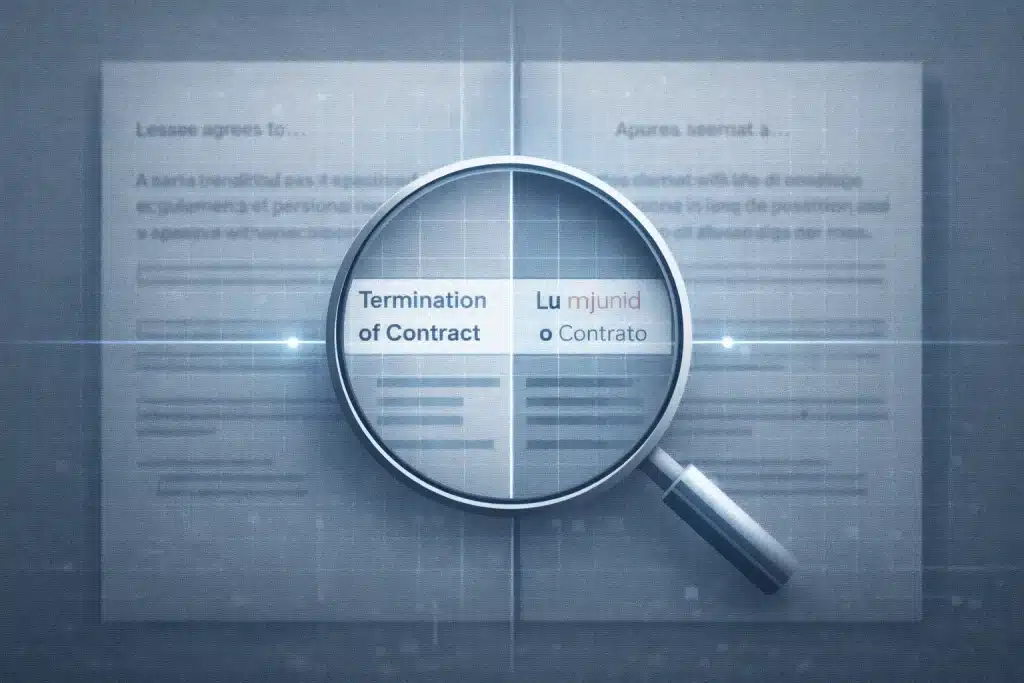
One wrong letter can twist the meaning beyond repair. When paperwork mislabels “Termination,” consequences unfold quietly, then fully. Agreements rest on precise words; slip once, and the foundation cracks.
Key areas where accuracy is non-negotiable include:
- Contract-Sensitive Elements: Clauses regarding indemnity, governing law, and dispute resolution must be perfect within the legal framework.
- Consistency: Terms like “Lessee” and “Lessor” must never be confused.
- Formatting: The translated contract should match the original exactly to facilitate side-by-side comparison.
This is exactly what makes certified legal translation essential. It must be backed by tight quality checks every step of the way. Only then can you get a document fit for courtroom use.
How do confidentiality and security influence vendor selection?
For law firms and corporate counsel, data security is everything.
Handling sensitive material like business strategies, internal staff records, or negotiation demands constant care. What sits inside those files can change outcomes. A single leak risks trust, reputation, and even operations.
In 2026, leading service providers guard secrets tightly.
- NDAs: Each translator signs confidentiality papers (Non-Disclosure Agreements) just as clients do.
- Secure Platforms: Working on locked-down platforms keeps files under control. Only the assigned document shows up for each translator.
- No Trace: Access vanishes once the job ends. Copying files to private devices? Not an option. Uploading anywhere outside the system? Blocked completely.
A provider who fails to clarify how they encrypt data or handle its removal shouldn’t manage legal contracts. Their lack of transparency signals unsuitability for such responsibilities.
Do AI-assisted workflows work for legal contracts in 2026?
This is the most common question we hear: Is it possible for artificial intelligence to handle translating a contract?
It depends on the document.
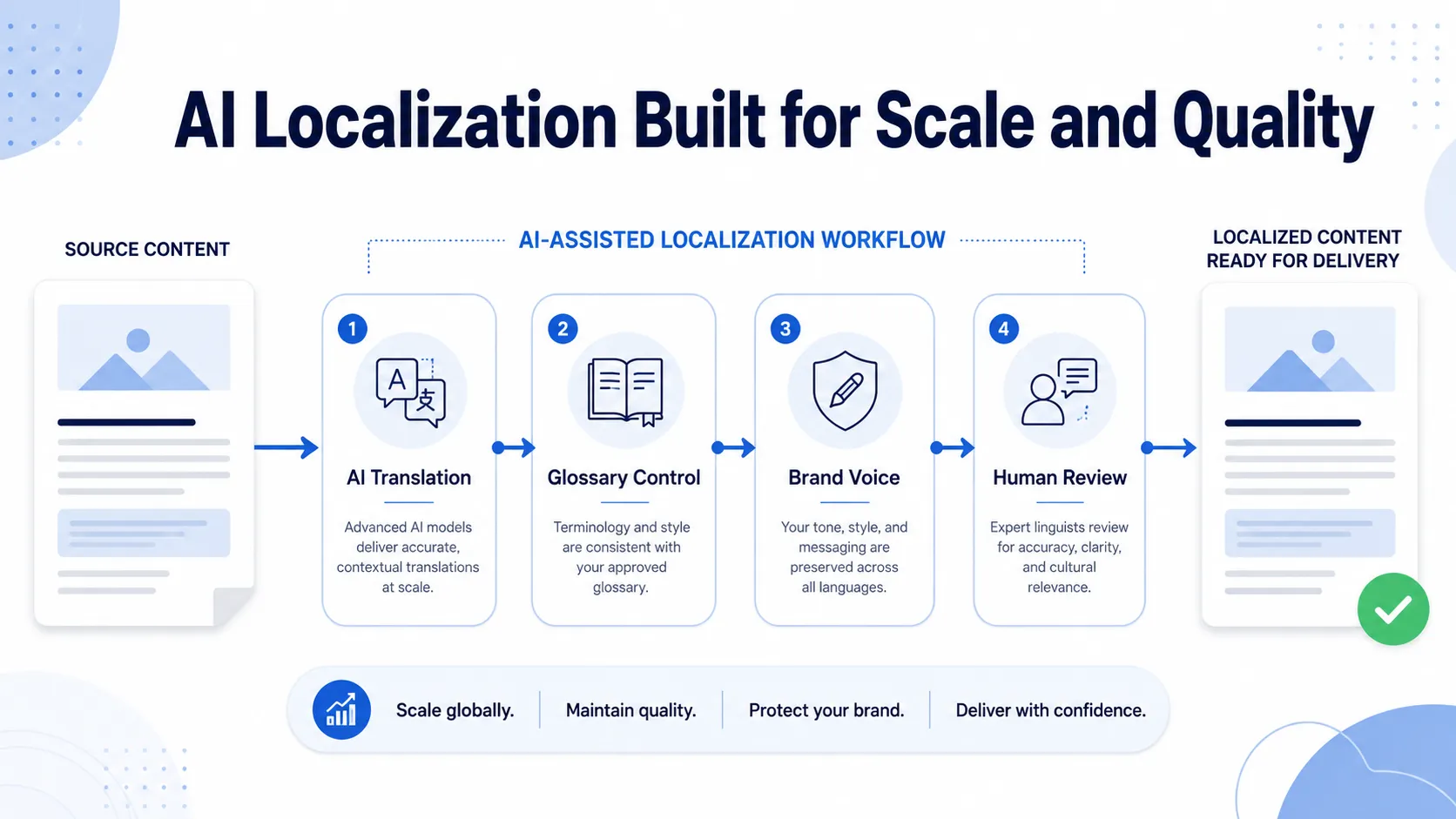
For routine papers, say, standard non-compete deals or straightforward supplier agreements, leaning on AI first, then bringing in a human to edit, works well enough. Efficiency shows up most where tasks repeat often. Costs stay low, but human eyes still check what machines draft, just to be sure.
However, for critical texts, court filings, and M&A deals, only a human should handle the translation. Machines often fail to grasp the “spirit” of the law. Correct wording does not always mean correct interpretation.
The best results come from tools handling repetition, while people handle the nuance. Machines keep things steady; folks bring skill where it counts.
Best legal contract translation services in 2026 (market-reviewed)
Focusing on service types makes more sense than just listing companies. Picking the right provider means seeing how well they fit what you actually require.
This year, five types of service providers lead the field.
1. Best for regulated industries (finance, healthcare, energy)
These services are built for sectors where the law overlaps with strict industry regulations.
- Key Attributes: They employ linguists who are experts in both law and the specific industry (e.g., a linguist who understands FDA regulations for a pharmaceutical contract).
- Why it matters: A generalist might handle the legal terms fine, yet still overlook the precise wording needed by banking watchdogs or medical oversight bodies.
- Best for: Clinical trial agreements, banking compliance documents, and energy sector procurement.
2. Best for cross-border commercial contracts
These are the generalist powerhouses of the corporate world. Speed ties closely to smart choices here.
- Key Attributes: They offer fast turnaround times and have large teams of bilingual legal SMEs. Long partnerships mean better control over word choices, staying consistent through every update.
- Why it matters: When you are launching a product in 20 countries, you need distribution agreements that are legally sound in every jurisdiction but also commercially viable.
- Best for: M&A due diligence, licensing agreements, distribution contracts, and terms of service.
3. Best for certified & sworn contract translations
These are niche providers focused on officialdom. They handle documents that must be presented to a court, notary, or government body.
- Key Attributes: They provide sworn statements, notarization, and physical stamps. They understand the specific formatting rules of different court systems (civil law vs. common law).
- Why it matters: Courts frequently dismiss regular translations. To show it’s legitimate, a certified version is necessary.
- Best for: Immigration papers, employment contracts for visa applications, affidavits, and court evidence.
4. Best for large-volume contract processing
These services cater to global enterprises that have a constant stream of legal documents.
- Key Attributes: They rely heavily on Translation Memory (TM) technology. This software “remembers” every sentence translated. If you update a standard contract, you only pay to translate the new parts.
- Why it matters: Costs drop fast because routine sections, say, a privacy notice, stay identical when moved into different papers. Consistency locks in with each version.
- Best for: HR agreements for global staff, procurement vendor lists, standard user agreements.
5. Best for AI-supported legal workflows
These are tech-forward agencies that use vetted AI engines followed by expert human review.
- Key Attributes: Speed and lower cost. They use private, secure AI engines (never public ones) to generate a first draft, which is then heavily edited by a lawyer-linguist.
- Why it matters: It allows legal teams to process massive amounts of text, like during discovery in a lawsuit, quickly and affordably, identifying key documents for full human translation later.
- Best for: eDiscovery, internal document review, low-risk internal memos.
What types of contracts need specialist translation?
Not all contracts are created equal. Some carry significantly higher risks if mistranslated.
- NDAs (Non-Disclosure Agreements): Essential for protecting IP during negotiations.
- Supply Agreements: Defining strict deliverables and timelines.
- Partnership Agreements: Detailing profit sharing and exit strategies.
- IP Agreements: Transferring ownership of patents or trademarks.
- Employment Contracts: Adhering to local labor laws, which vary widely by country.
- Licensing Agreements: Granting rights to use software or media.
Which contracts are the highest risk if mistranslated?
Facing blame carries the heaviest consequences.
A single error in translating a warranty or indemnity section might leave your business liable for costs you didn’t sign up for.
When it comes to “Governing Law,” precision matters. Vague wording can spark disputes over jurisdiction, dragging you into expensive fights over courtroom location before the real case even begins.
Which industries require contract-specific expertise?
- Finance: Loan agreements and investment contracts require knowledge of local banking laws.
- Insurance: Policy wordings must be precise to avoid coverage disputes.
- Healthcare: Contracts often involve patient data privacy (GDPR/HIPAA).
- Manufacturing: Supply chain contracts need technical accuracy regarding specifications.
- Real Estate: Leases and deeds must adhere to local property laws.
Pricing: How much do legal contract translation services cost in 2026?
Pricing for legal translation is rarely a flat fee. It depends on several moving parts. Generally, you can expect:
- Per-Word Rates: The standard model. Legal translation usually commands a higher rate than standard business text due to the expertise required.
- Per-Page Rates: Common for certified or sworn translations (e.g., birth certificates or short court orders).
- Hourly Rates: Often applied for legal review, editing, or transcreation services.
What affects contract translation pricing the most?
- Complexity: A standard lease is cheaper than a patent litigation file.
- Language Pair: Rare languages cost more than common pairs like English-Spanish.
- Urgency: “Rush” jobs often incur a surcharge of 20-50%.
- Certification: Notarization or swearing in court adds administrative costs.
- Volume: Large projects often qualify for discounts, especially if there are many repeated phrases (leveraging Translation Memory).
How to reduce cost without losing accuracy?
Legal teams can control costs by being organized.
- Use Editable Files: Sending a clean Word document is cheaper than sending a scanned PDF that needs to be re-typed.
- Avoid Rush Fees: Plan ahead so you don’t need overnight delivery.
- Standardize Terminology: Provide a glossary of your preferred terms. This saves the translator time and reduces questions.
- Leverage TM: Ensure your vendor uses Translation Memory so you aren’t paying to translate the same disclaimer clause ten times.
Vendor selection checklist for 2026
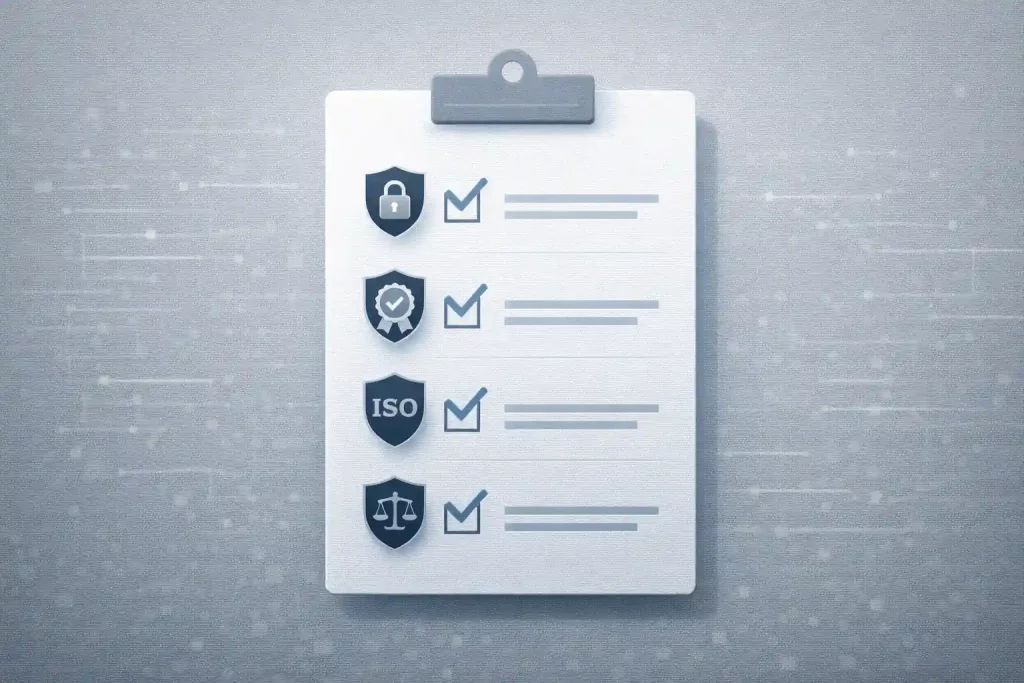
If you are evaluating new partners this year, use this checklist to ensure they meet the standard.
- Do they hold ISO 17100 and ISO 27001?
- Do they have dedicated legal linguists, or do they use generalists?
- Is their portal encrypted? Do they delete data after delivery?
- Do they carry professional indemnity insurance?
- Is the quote clear, or are there hidden fees?
- Can they provide case studies from other law firms or corporate legal departments?
What should legal teams ask before selecting a vendor?
Before you sign, ask these questions:
- “Who exactly will be translating our files? Can we see their credentials?”
- “How do you handle data security for highly sensitive merger documents?”
- “Do you use Machine Translation? If so, is it a private engine or a public one?”
- “What is your process for handling revisions if we have feedback?”
- “Do you have experience with the specific jurisdiction (e.g., Brazil, China, Germany) involved in this contract?”
- “Can you provide a certified translation that will be accepted in court?”
- “How quickly can you scale up if we have a sudden influx of discovery documents?”
- “What is your policy on data retention and deletion?”
Need a legal translation partner you can trust?
At Circle Translations, we combine subject-matter expertise with enterprise-grade security. Get a quote today and ensure your contracts are secure, accurate, and enforceable worldwide.
Frequently Asked Questions
What makes a legal contract translation service reliable?
Reliability comes from expert humans, strict checking processes (ISO standards), and strong security. You need to know the legal meaning stays the same.
Do I need a certified translation for contracts?
Only for courts, government agencies, or banks. For standard business deals, a professional translation is usually enough.
Can AI translate legal contracts accurately?
AI is getting better, but don’t rely on it for binding contracts. It can miss legal nuance. Use a hybrid approach: AI for the first draft, humans for the final review.
How long does it take to translate a contract?
A standard 5-10 page contract takes 2-3 days. Complex or massive files take longer. Rush options are available.
How do vendors protect confidential contract data?
Top vendors use NDAs, encrypted portals, and secure servers. They never use public tools that might steal your data.
What affects legal contract translation cost the most?
Word count, rare languages, technical difficulty, and rush deadlines are the main factors.
How do I choose the best service for my contract type?
Pick a vendor that knows your industry (like finance or medical). Check their certificates and ask about security.