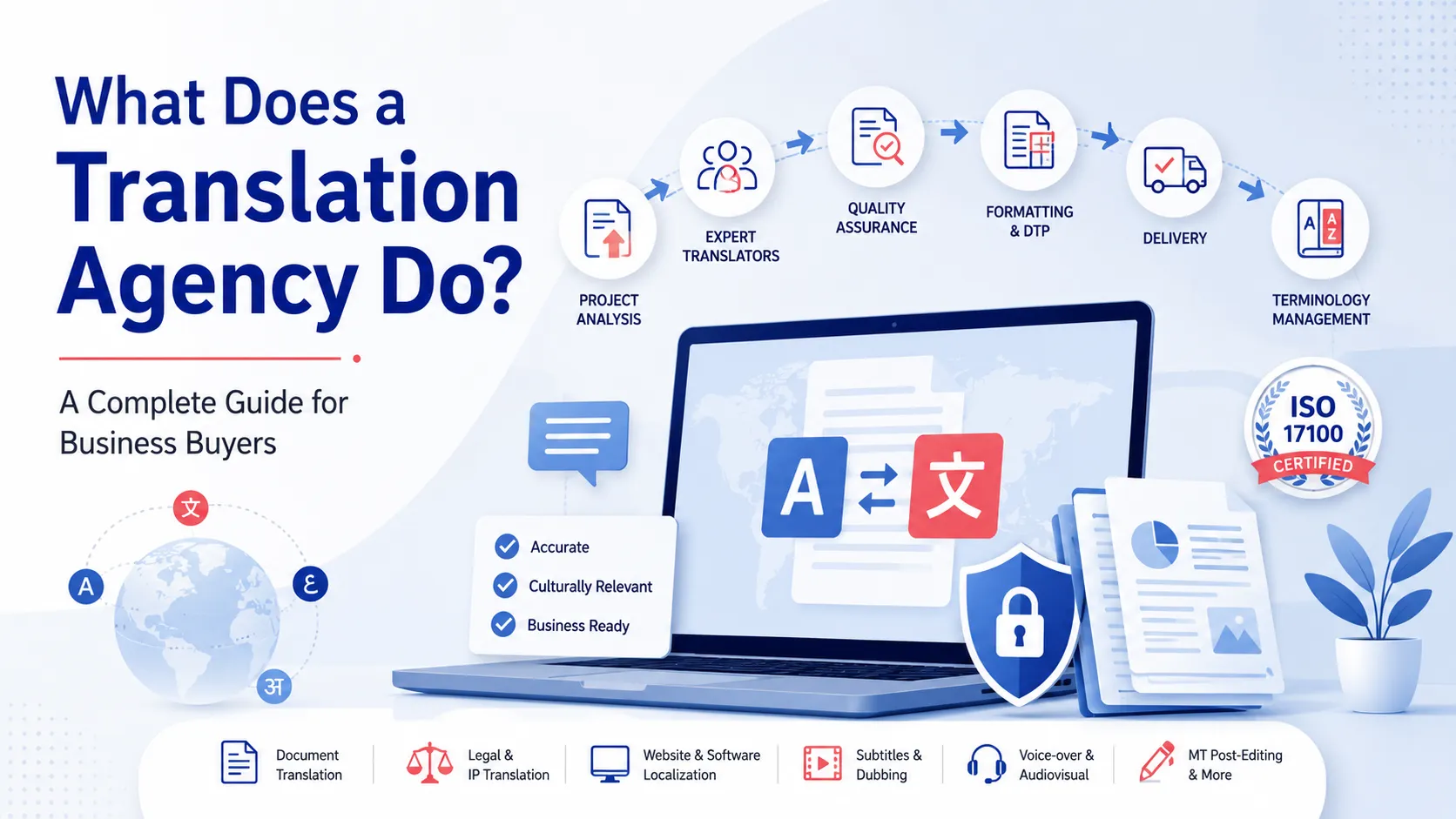
When most people think about what a translation agency does, they picture a straightforward word-for-word conversion from one language to another. The reality is considerably more structured and considerably more valuable than that simple description suggests.
A professional translation agency manages the entire lifecycle of making your content work in another language. That includes upfront planning, specialist translator allocation, independent quality review at multiple stages, formatting, delivery, and ongoing terminology management across your entire content portfolio.
This guide explains what a translation agency actually does, how the professional workflow is structured, what services are typically available, and what business buyers should expect when engaging one for the first time.
The Full Scope of Services a Professional Agency Covers
One of the most common surprises for first-time buyers is how broad the service range of a full-service translation agency actually is. Understanding this scope helps you assess whether an agency can cover your complete requirement under a single managed workflow, or whether you will need to coordinate multiple providers.
Written Translation and Document Services
- Professional document translation across all content types, from contracts and compliance documents through to product descriptions and corporate communications
- Legal translation for contracts, regulatory filings, court documents, and jurisdiction-specific compliance materials
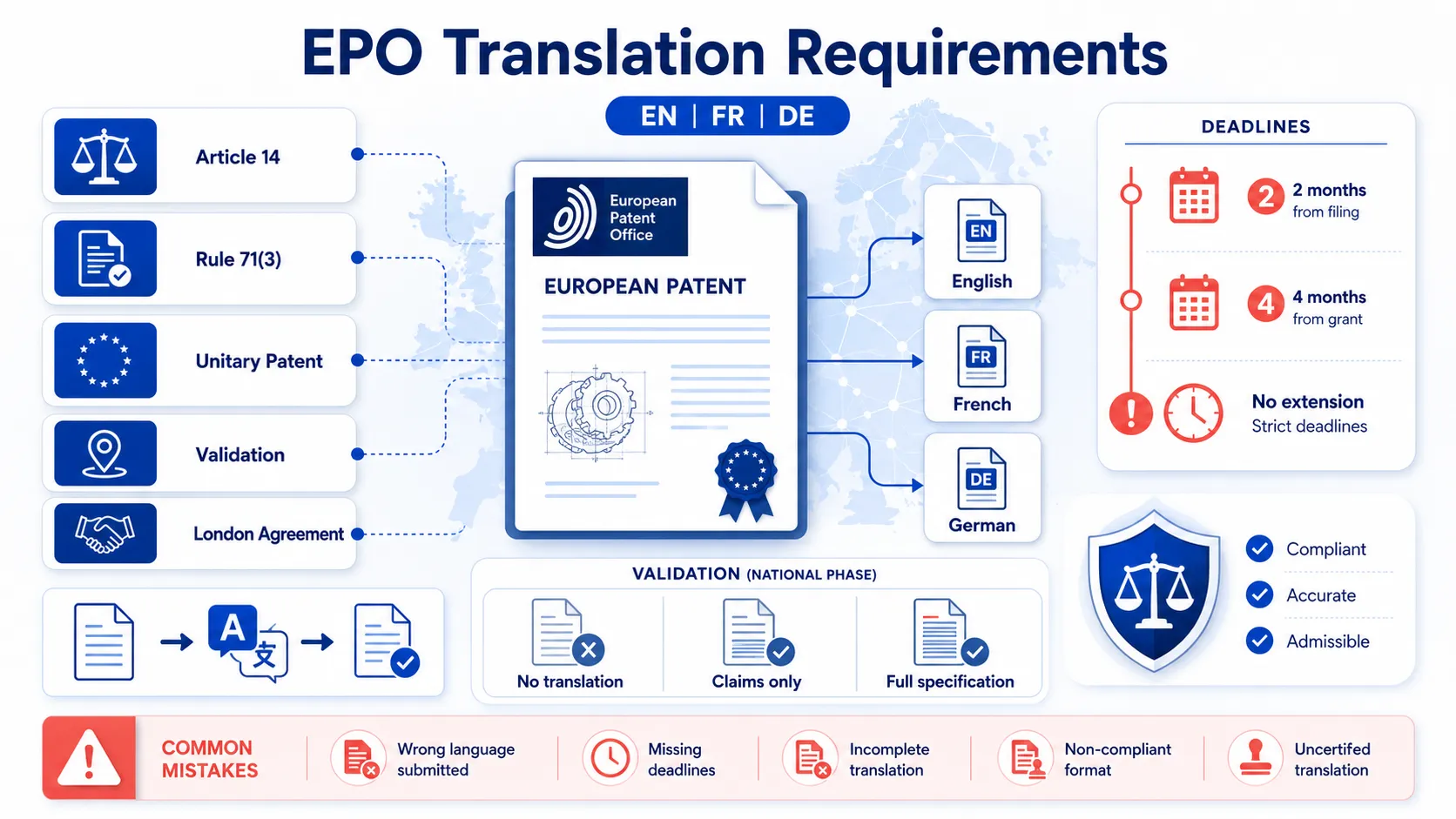
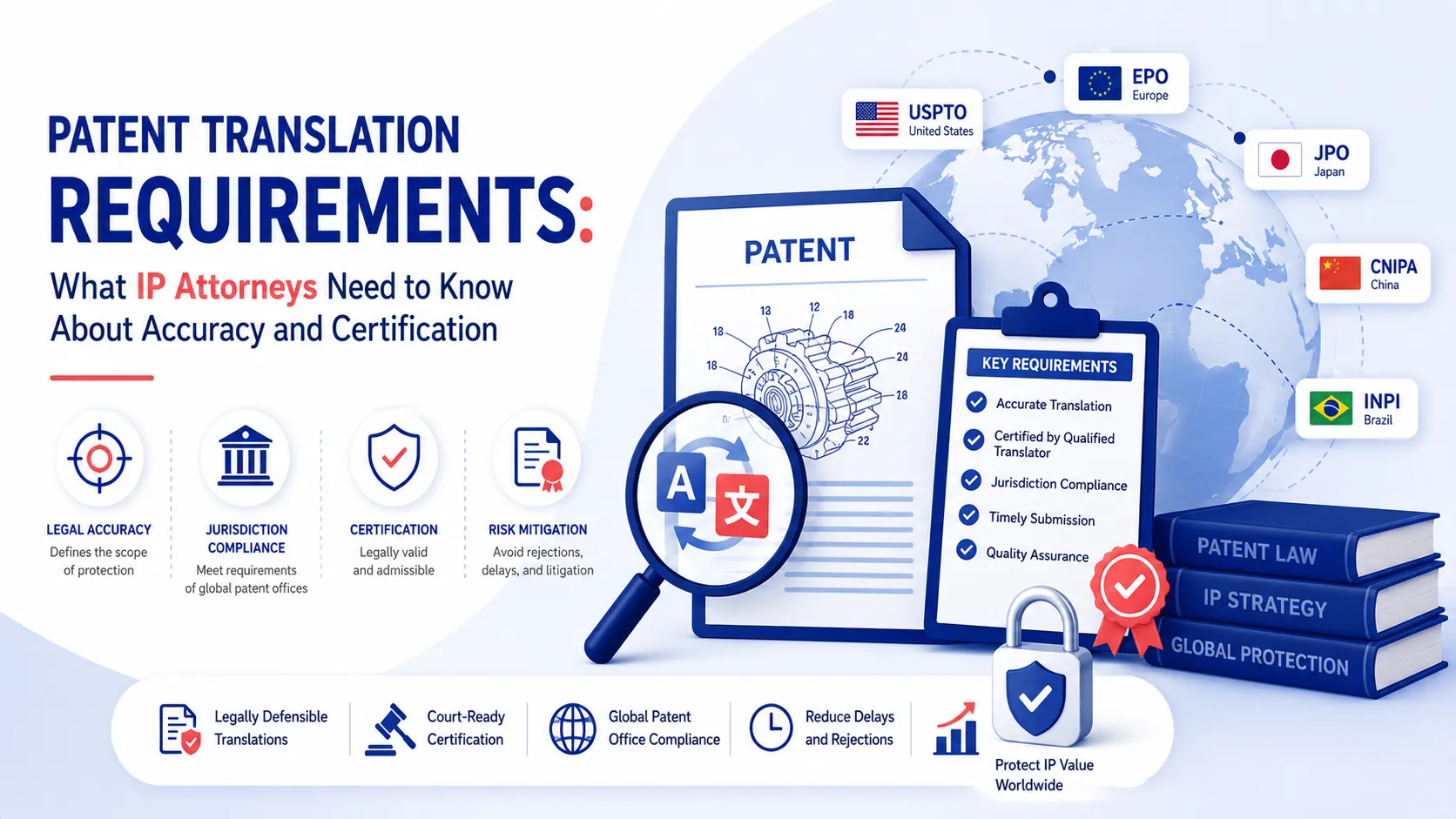
- Patent and intellectual property translation for applications, publications, written complaints, certificates, and IP documentation requiring precise technical and legal terminology
- Certified and notarized translation for documents required by government bodies, immigration authorities, or legal proceedings
Technical and Specialised Content
Businesses with complex documentation needs require linguists who understand the subject matter they are working with, not just the language. Professional agencies maintain specialist linguist pools across fields including engineering, manufacturing, healthcare, automotive, finance, and energy.
For companies that produce installation guides, engineering specifications, operating manuals, safety handbooks, and scientific reports, dedicated technical translation services ensure that terminology is accurate, consistent, and appropriate for the target audience in every language. A technically incorrect manual in a foreign market is not just a quality problem. It can be a compliance and safety liability.
Localization and Digital Content
- Website translation and localization adapting your pages, navigation, product descriptions, and calls to action for specific markets and regional audiences
- Software and application localization including user interface strings, error messages, onboarding flows, and help documentation
- Marketing localization and transcreation adapting creative concepts, tone, cultural references, and messaging rather than translating them literally
Audiovisual and Media Services
- Subtitle translation for corporate video, YouTube content, promotional films, training materials, and streaming media
- Voice-over services managed remotely across multiple languages and accents, ensuring the correct tone and emotional delivery for each audience
- Film translation and dubbing for productions requiring full dialogue replacement with synchronised voice actors
- Closed captioning for accessibility-compliant video content meeting regulatory and platform requirements
Supporting Services
- Desktop Publishing (DTP) reformatting translated documents so layouts match the source material, accounting for the text expansion or contraction that almost always occurs across language pairs
- Proofreading and editing available as standalone services for content that has been translated elsewhere
- Machine Translation Post-Editing (MTPE) where qualified human linguists review and correct AI-generated translation outputs to publication standard
- Corpus translation for large structured datasets used in AI model training or linguistic research
- Transcription converting spoken audio or video content into written text as part of a broader localization workflow
- Annotations and data collection supporting AI and machine learning applications that require multilingual labelled datasets
Circle Translations provides this complete range of services under a single managed workflow. A client launching a product across five markets who needs translated documentation, a localised website, and dubbed demo videos does not need to manage three separate vendors. That consolidated accountability is one of the core operational advantages of working with a professional agency.
How the Professional Translation Workflow Actually Operates
Understanding how a professional agency structures its workflow helps buyers evaluate what they are actually paying for and ask the right questions before signing a contract. Quality translation is not a single-step task. It is a systematic, multi-stage process where each stage addresses risks that the previous stage introduces.
Stage 1: Planning and Project Preparation
Every project begins before a single word is translated. A project manager reviews the source content, assesses its complexity, identifies the subject-matter expertise required, and assigns linguists accordingly. Reference materials are prepared during this stage: client-specific glossaries, industry terminology databases, and Translation Memory assets from previous projects are loaded into the working environment before translation begins.
This preparation phase has a direct effect on output quality. A legal document with inconsistent terminology in the source language will produce worse translation if those inconsistencies are not identified and addressed before the project starts. Professional agencies catch these issues in planning so they do not compound during translation.
Stage 2: Translation by a Qualified Subject-Matter Specialist
Translation is performed by a qualified linguist working into their native language, selected based on their verified expertise in the specific content domain. Subject-matter matching is not optional for professional quality. A financial regulation document goes to a translator with finance expertise. A pharmaceutical submission goes to a linguist with healthcare knowledge. A technical engineering manual goes to someone who understands the field being described.
During this stage, the translator works within a professional CAT (Computer-Assisted Translation) environment, accessing the client’s glossary, Translation Memory matches, and any style guidelines provided. Once the first draft is complete, the translator conducts an initial self-review before passing the work to the independent editing stage.
Stage 3: Independent Editing and Bilingual Review
This is the stage that most clearly distinguishes professional agency output from single-translator workflows. A second qualified linguist, entirely independent of the original translator, reviews the target text against the source document. This bilingual revision checks that the meaning, terminology, tone, and nuance of the original have been fully preserved, and corrects any errors in accuracy, fluency, or consistency.
The key word here is independent. The second reviewer must have had no involvement in the original translation for this stage to add genuine quality value. An agency that assigns the same translator to review their own work is not running a genuine quality control process.
Stage 4: Proofreading as a Final Monolingual Check
Following the bilingual revision, a proofreading pass is conducted as a monolingual review of the target language content. This stage assesses whether the translated text reads naturally, correctly, and fluently in the target language, entirely independent of what the source text says. It catches grammatical errors, punctuation issues, and unnatural phrasing that bilingual review can miss when the reviewer’s focus is on source-to-target accuracy.
Together, these three stages form the TEP (Translation, Editing, and Proofreading) process, which is the professional standard for quality-controlled translation delivery. ISO 17100:2015, the international standard for translation service providers, formalises the dual-control requirement at the heart of TEP and sets minimum competency standards for every person involved in the workflow. Agencies certified to ISO 17100 have had these processes externally audited and verified, not self-reported.
Stage 5: Desktop Publishing
For documents where visual presentation matters, such as technical manuals, product catalogues, brochures, and annual reports, a DTP specialist adjusts the layout of the translated content to match the original design. This step exists because translated text almost never occupies the same space as the source. German text typically expands by 20 to 30 percent relative to English. Chinese text may compress significantly. Without professional DTP, well-designed source documents produce poorly formatted translated versions that undermine brand credibility.
Stage 6: Final Verification and Delivery
The project manager conducts a final check before delivery, confirming that all deliverables meet the agreed specification, that formatting is consistent, and that every language in a multi-language project has been completed to the same standard. Translated content is delivered in the agreed format with the project remaining open for client feedback and revisions.
Circle Translations follows this structured approach across every project, with dedicated project managers providing daily progress updates and 24/7 support throughout. Clients are never left waiting in silence for a delivery they cannot track.
The Technology That Professional Agencies Use
A professional translation agency uses a specific set of tools that are entirely distinct from consumer-facing machine translation products like Google Translate. Understanding this technology helps buyers assess the quality infrastructure of any agency they are evaluating.
CAT Tools and Translation Memory
Computer-Assisted Translation tools are professional working environments for human translators, not automatic translation engines. Platforms such as SDL Trados, memoQ, and Phrase allow translators to work with formatted documents, maintain consistent terminology across segments, and apply Translation Memory matches in real time.
Translation Memory stores every approved translated segment from previous projects. When matching or similar content appears in new work, the TM presents the stored translation for review rather than starting from scratch. This delivers two important benefits for clients:
- Consistency: The same term, phrase, or product name is always handled the same way across your entire document portfolio, regardless of which linguist works on a given project
- Efficiency over time: Repeat content from previous projects reduces the new work required, which lowers both cost and turnaround time for clients with ongoing translation needs
TM matches are categorised by similarity percentage, with context matches (100 percent identical) attracting the strongest benefit and fuzzy matches (75 to 99 percent similar) benefiting proportionally. For organisations with large volumes of recurring content, such as product documentation that is updated regularly or legal templates used across multiple jurisdictions, a well-maintained TM is a compounding asset that becomes more valuable over time.
Client-Specific Glossaries and Terminology Databases
A professional agency builds and maintains a terminology database specific to your account. This glossary ensures that branded product names, proprietary terminology, regulatory vocabulary, and internal naming conventions are handled consistently across every project, regardless of who translates it. For industries like healthcare, legal, and manufacturing where terminology carries precision requirements, a verified glossary is not a convenience feature. It is a quality requirement.
Translation Versus Localization: Why the Distinction Matters
These two terms are frequently used interchangeably in client briefs, but they describe meaningfully different services with different outcomes. Knowing which one your content requires affects both the quality of the result and the accuracy of the brief you provide.
Translation converts written text from one language to another while preserving the meaning, tone, and structure of the source. It is the appropriate service for legal filings, patent applications, technical documentation, and official records where fidelity to the source is the primary requirement.
Localization is a broader adaptation process. In addition to translating the text, localization adjusts:
- Date, time, currency, and measurement formats for the target region
- Visual elements including images, colours, and icons that carry different meanings across cultures
- Layout and design to accommodate languages that expand, contract, or read differently from the source
- Cultural references, idiomatic expressions, and tone that would not transfer meaningfully with a direct translation
- Compliance-specific language and legal disclaimers required in the target market
For businesses building a multilingual online presence, professional website localisation services cover all of these dimensions, adapting not just the text but the entire user experience so that international visitors engage with content that feels designed for them rather than converted from somewhere else.
Major brands have demonstrated what happens when this distinction is ignored. Coca-Cola adapted its name to “Kekou Kele” in China to convey the meaning “delicious happiness.” KitKat replaced its international slogan in Japan with “Kitto Katsu,” meaning “Surely Win,” to align with local consumer sentiment. Neither of these was a translation decision. Both were localization decisions that required cultural intelligence, not linguistic conversion.
The practical rule for B2B buyers is straightforward: if your content needs to be accurate, translation is the right service. If it needs to resonate, convert, and feel native to its audience, localization is what the project actually requires.
What Confidentiality and Data Security Look Like in Practice
This is the area that procurement teams most frequently under-examine when selecting a translation agency. Translation involves moving sensitive content through a network of linguists, project managers, and technology platforms. Without formal security controls, that movement introduces real data risk.
Professional agencies address this through several standard mechanisms:
- Non-disclosure agreements signed by all translators and external linguists as a mandatory condition of engagement
- Encrypted file transfer protocols for all document submission and delivery
- Secure project management platforms that restrict access to source materials and prevent files from being downloaded to unmanaged personal devices
- Restricted data access ensuring that only the linguists assigned to your project can view your content
Circle Translations implements all of these safeguards as standard practice. For clients handling legal contracts, patent applications, financial documents, or medical records, this formal security infrastructure is a baseline procurement requirement. When evaluating any agency, it is worth asking specifically whether confidentiality policies extend to the full external linguist network and not just the agency’s internal staff, since the answer reveals a great deal about the actual security of the workflow.
What to Expect When You First Engage a Translation Agency
For organisations approaching a professional language service provider for the first time, understanding the typical engagement process reduces friction and sets realistic expectations from the outset.
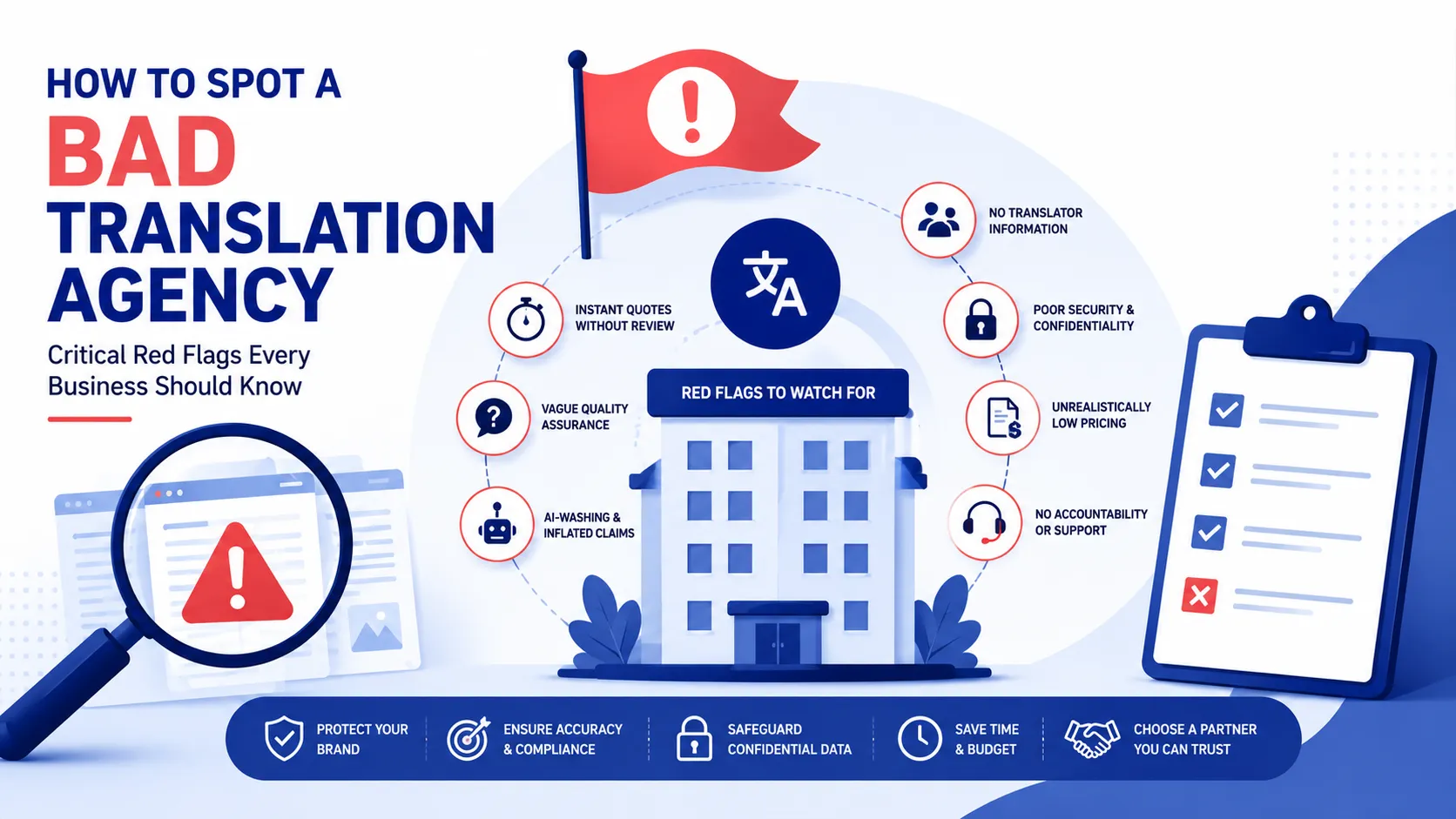
A professional agency will request your source files, a description of the content type and its intended purpose, your target languages, and your delivery deadline before providing a proposal. Agencies that generate instant automated quotes without reviewing the files are applying a generic rate to content they have not assessed, which is a consistent indicator of an underdeveloped quality process.
Circle Translations follows a structured three-step onboarding: the agency prepares a detailed proposal based on your specific project materials; both parties discuss scope, options, and any questions; and work begins once the agreement is confirmed in writing. Every project is assigned a dedicated project manager who provides regular updates throughout and remains available via chat and phone support around the clock.
The most useful information you can provide when requesting a quote includes: the source files or an accurate word count, the intended use of the content (marketing, legal, technical, or regulatory), the target languages and any regional variants, existing glossaries or style guides, the required delivery format, and your deadline. The more context you supply upfront, the more accurate the proposal and the fewer revisions you will need after delivery.
Conclusion
A professional translation agency does far more than translate text. It manages the complete process of making your content work in another language, from specialist linguist allocation and structured multi-stage quality review through to DTP, terminology management, and long-term consistency across your entire content portfolio.
For businesses entering international markets, managing multi-language content at volume, or operating in regulated industries where accuracy carries legal and financial consequences, this end-to-end capability is the practical difference between content that performs in new markets and content that creates problems.
Circle Translations brings this full-service model to over 900 businesses globally across 74 languages and 124 language combinations, with a 99.97% on-time delivery rate, no rush fees, and a dedicated project manager on every project. Whether your next requirement involves technical documentation, website localisation, patent translation, or audiovisual content, the team can provide a detailed, transparent proposal based on your actual files and requirements.
Frequently Asked Questions
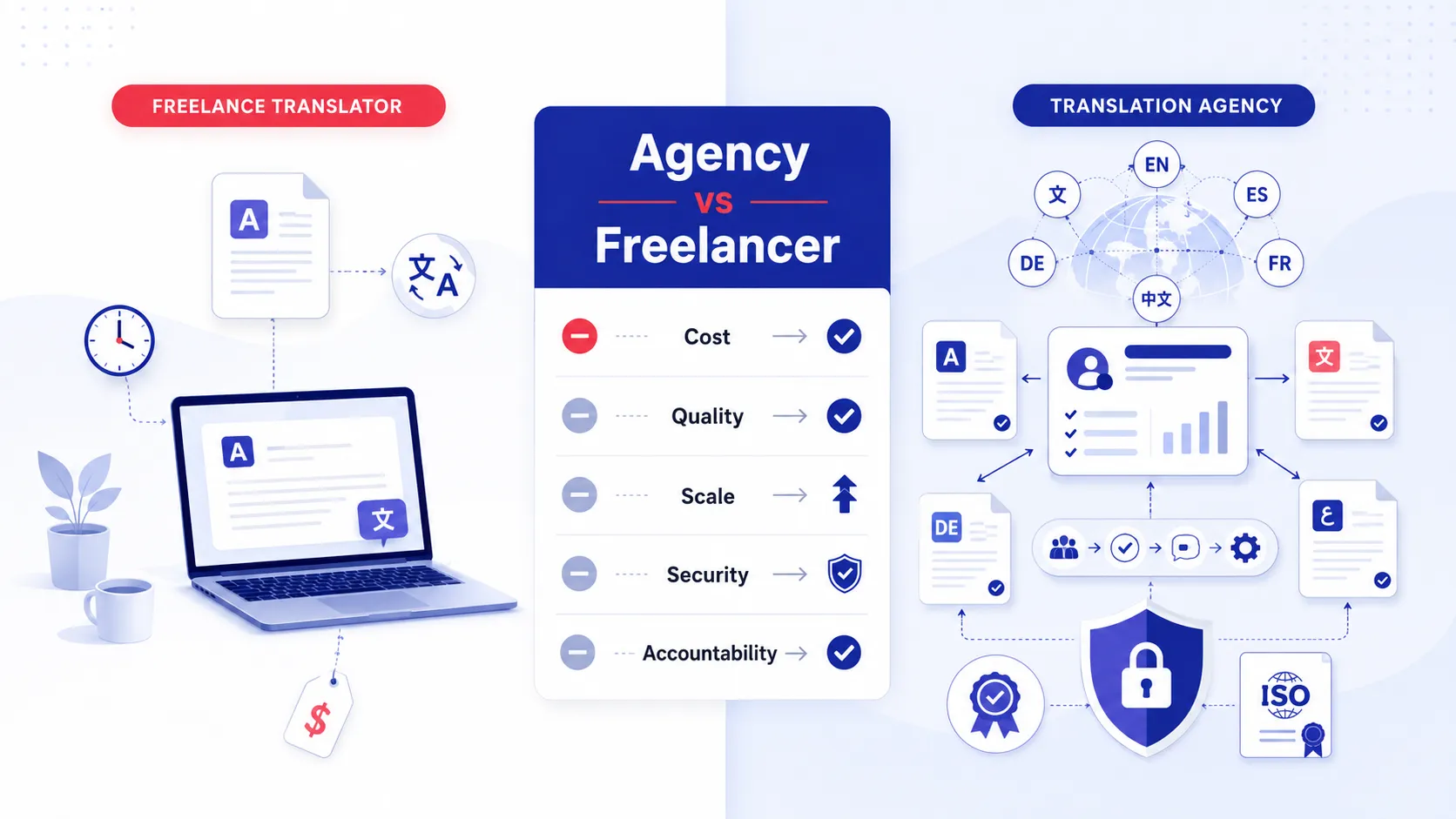
1. What does a translation agency do differently from a freelance translator?
A professional agency manages the full project lifecycle including planning, specialist translator allocation, independent editing, proofreading, DTP, and terminology management, while a freelance translator performs only the translation itself. For complex, multi-language, or regulated content, the agency’s structured infrastructure and formal accountability provide consistency and risk protection that a freelance arrangement cannot replicate. Agencies also maintain Translation Memory assets that reduce costs and improve consistency across your entire content portfolio over time.
2. What is the TEP process and why does it matter?
TEP stands for Translation, Editing, and Proofreading, and it is the professional standard for quality-controlled translation delivery. Each stage is performed by a separate, independent linguist, which ensures that errors introduced at any stage are caught before delivery. ISO 17100:2015 certification confirms that an agency runs a genuine TEP process that has been externally audited rather than self-reported.
3. How long does a professional translation project take to complete?
Turnaround time depends on word count, language pair, content complexity, and the number of languages required. Professional agencies provide realistic delivery estimates based on the actual project files and send regular progress updates throughout. Agencies that operate without rush fee policies, like Circle Translations, can often accommodate urgent timelines without the surcharges that most providers apply.
4. What is Translation Memory and how does it benefit my organisation over time?
Translation Memory stores every approved translated segment and automatically applies it to matching content in future projects, ensuring consistent terminology and reducing the volume of new work required. For organisations with recurring or structured content such as product documentation, legal templates, or software strings, TM assets compound in value over time, improving both quality consistency and cost efficiency across the full content portfolio.
5. What is the difference between translation and localization?
Translation converts text from one language to another while preserving source meaning and structure, making it appropriate for legal filings, patents, and technical documentation. Localization is a broader cultural and functional adaptation that adjusts formatting conventions, imagery, tone, cultural references, and compliance requirements so that content feels genuinely native to the target market rather than simply converted from the source.
6. How does a translation agency protect confidential business documents?
Professional agencies require all linguists to sign non-disclosure agreements, use encrypted file transfer protocols, and manage document access through secure platforms that prevent files from being downloaded to unmanaged devices. When handling sensitive commercial content, always confirm that confidentiality policies extend explicitly to the external linguist network and not only to the agency’s internal staff, since this is where most data risk actually resides.
7. What is ISO 17100 and why should I ask about it when evaluating an agency?
ISO 17100:2015 is the international quality standard for translation service providers, requiring verified translator qualifications, mandatory independent review of every translation, and documented project management processes. Agencies certified to this standard have had their workflows externally audited rather than self-assessed, giving procurement teams a credible quality benchmark rather than an unverifiable marketing claim.
8. What information should I provide when requesting a translation quote?
Provide the source files or an accurate word count, the content type and intended use, target languages and any regional variants required, an existing glossary or style guide if one exists, the required delivery format, and your deadline. Sharing examples of previously translated content you consider high quality also helps the agency align with your expected terminology and tone from the outset, reducing revision rounds later.