The global translation market reached approximately 42 billion dollars in 2024. Behind that number is a straightforward commercial reality: 76 percent of consumers prefer to buy products in their native language, which means the quality of your translated content has a direct effect on conversion, trust, and international revenue.
What the headline figure does not capture is how often the sourcing decision that precedes that content gets made too quickly. Procurement and operations managers regularly choose between a freelance translator and a professional translation agency based on cost per word alone, without fully accounting for the quality, continuity, and accountability differences between the two models.
The consequences of that shortcut can be significant. A Portuguese “delete account” button mistranslated as “restore account” cost one company thousands of lost users and an expensive trust recovery campaign. In legal, healthcare, and regulated industries, errors carry consequences that no revision or apology can reverse.
This guide breaks down the translation agency versus freelance translator comparison honestly, covering the real cost structures, quality implications, technology infrastructure, and risk profiles of each model so your team can make a properly informed decision.
The Four Translation Sourcing Models
Before comparing the two primary options in detail, it helps to understand the full range of models available to businesses.
In-house translators are full-time employees dedicated to your organisation. The median annual salary for translators in 2024 was approximately 59,440 dollars, but the true employment cost including benefits, equipment, and office infrastructure runs 1.25 to 1.4 times that figure. This model works well for organisations with consistently high volumes in one or two language pairs where brand voice and institutional knowledge outweigh cost flexibility.
Freelance translators are self-employed professionals who work across multiple clients. They are typically highly specialised, work into their native language, and offer direct communication without intermediary layers.
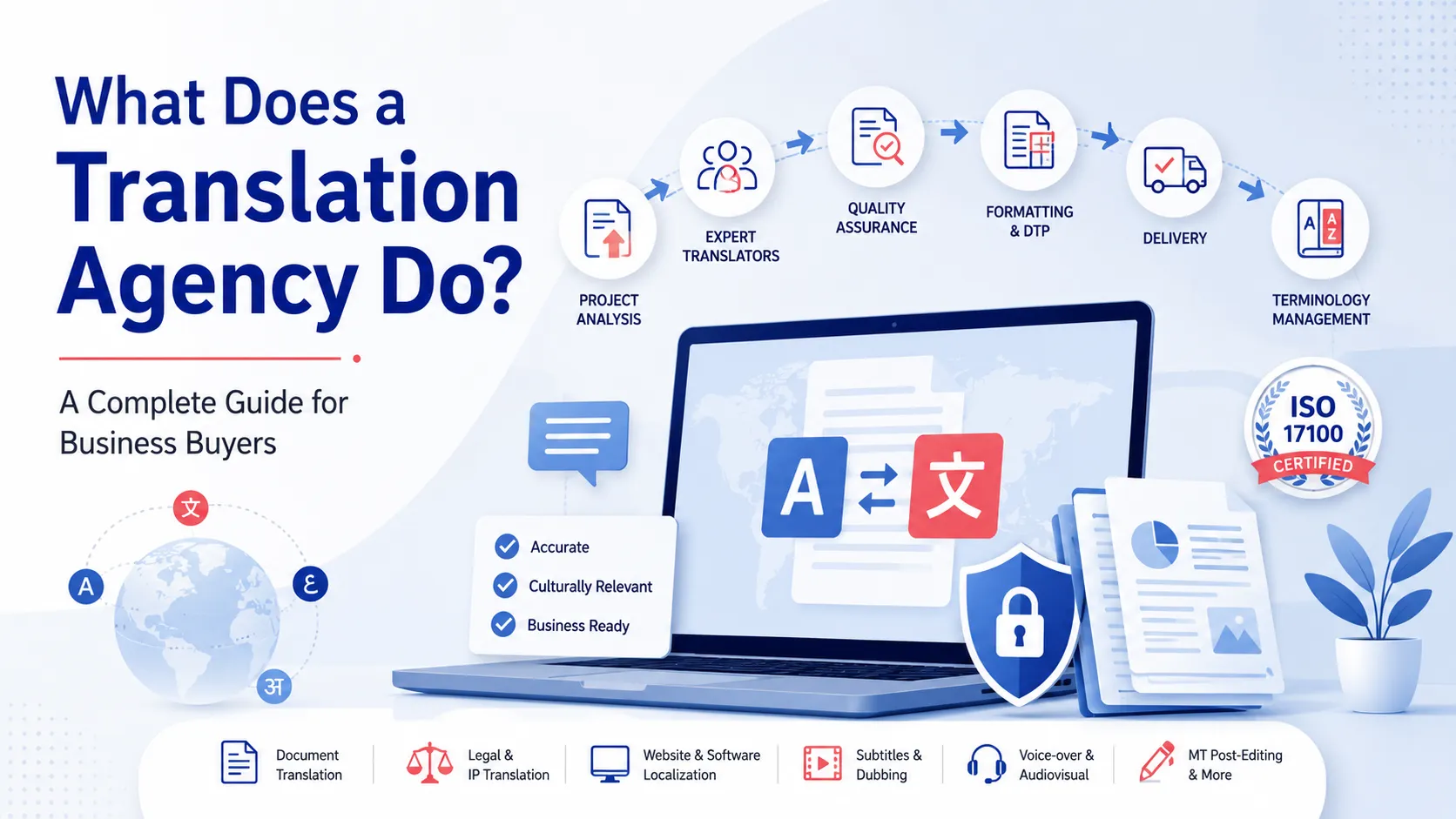
Translation agencies, formally called Language Service Providers (LSPs), manage the full workflow from file intake to final delivery using a vetted linguist network, project managers, and structured quality assurance processes. They serve businesses that need volume, multiple languages, or documented accountability.
Boutique specialist teams occupy the space between a freelancer and a large agency. They are small groups of senior linguists who offer direct relationships and consistent quality, without the management overhead that large firms carry.
For most B2B buyers, the meaningful comparison is between freelancers and professional agencies. That is where the rest of this guide focuses.
The Freelance Translator: Strengths, Limitations, and Honest Risk Assessment
Around 75 percent of professional translators are self-employed, which means the freelance market is large and contains genuinely skilled specialists. For the right type of project, a freelance translator is a well-considered choice.
Where Freelancers Deliver Real Value
- Lower cost per word. Freelancers carry lower overheads than agencies and typically charge between 0.10 and 0.20 dollars per word. For a small, single-language project with no urgency, this is a meaningful cost advantage.
- Direct communication. You speak with the person doing the work, which removes the risk of brief details being diluted through account managers and project coordinators before reaching the translator.
- Deep subject-matter specialisation. Many freelancers have built careers around narrow domains such as pharmaceutical regulatory submissions, maritime law contracts, or patent documentation. That depth can exceed the knowledge of generalist agency linguists who work across many content types.
- Flexibility for contained projects. For a one-off document or a low-risk internal communication, a trusted freelance specialist is often the most practical option.
Where Freelancers Create Operational Risk
- Capacity ceiling. A professional translator produces around 2,500 words per day. A 50,000-word technical manual would take weeks to complete. Multi-language simultaneous delivery is structurally impossible for an individual.
- No continuity safeguard. If your freelancer becomes ill, takes on a competing project, or simply becomes unavailable, your project stops. There is no backup, no project manager to redirect the work, and no service agreement to enforce.
- Quality assurance responsibility falls on you. The multi-stage review workflow that professional agencies run does not automatically exist with a freelancer. Arranging independent editing and proofreading is your problem to solve and fund separately.
- Informal accountability. Disputes over quality, timelines, or confidentiality have limited formal remedies unless a detailed contract was signed upfront, which many freelance engagements do not include.
- Fragmented technology infrastructure. Translation Memory assets built through freelance relationships are often inaccessible or lost when the working arrangement ends, meaning your organisation loses the consistency and cost benefits that accumulated over time.
The Translation Agency Model: Infrastructure, Scale, and Documented Quality
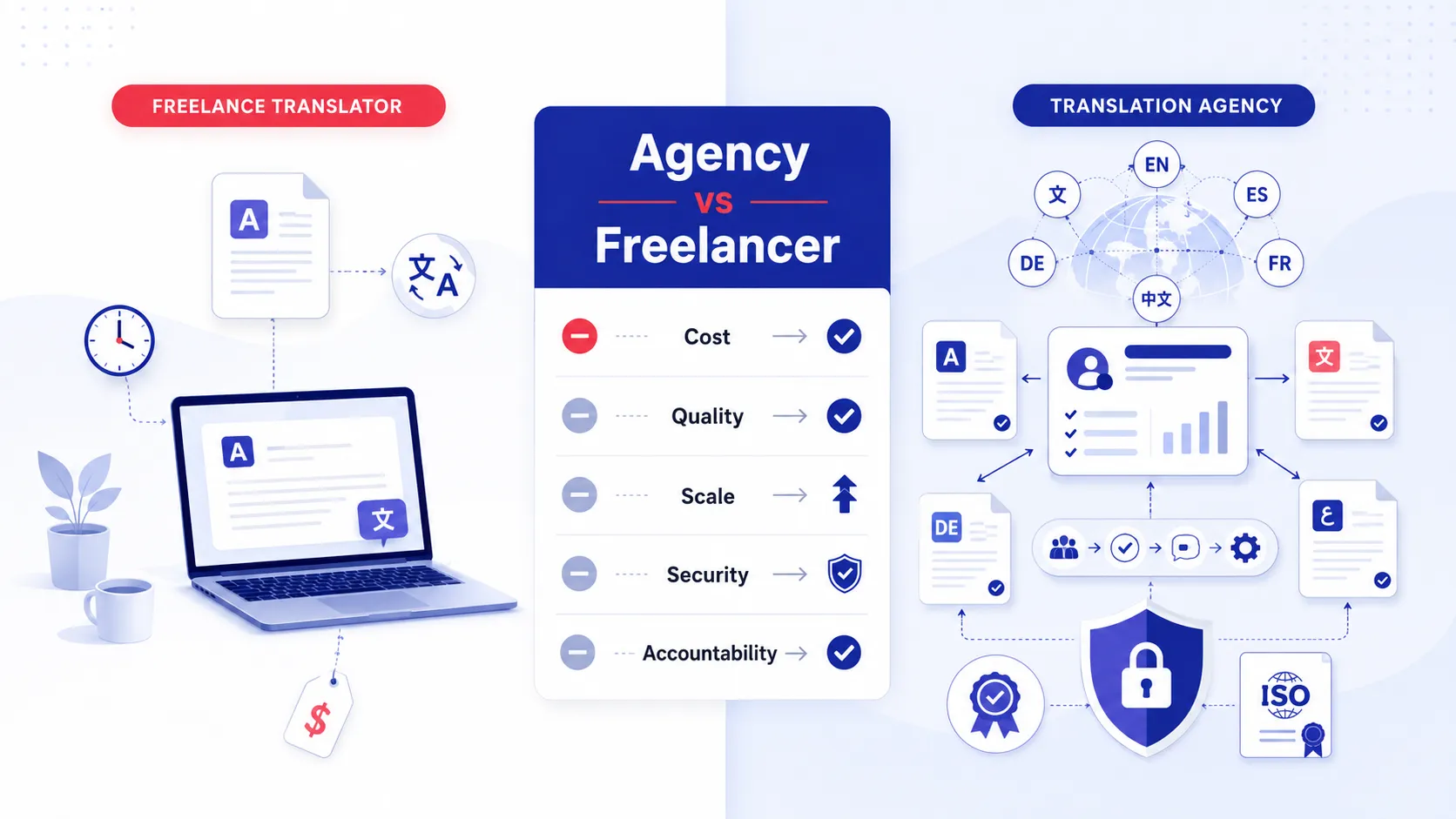
A professional translation agency provides what a freelancer structurally cannot: a managed, documented, quality-assured workflow that does not depend on any single individual’s availability.
Scalability Across Languages and Volume
An agency with a broad linguist network can run parallel workflows across multiple languages simultaneously. This is the baseline requirement for any business launching in more than one market at the same time.
Circle Translations, based in Vilnius, Lithuania, and serving over 900 businesses globally, translates more than 1.7 million words per month across 74 languages and 124 language combinations. That operational scale reflects the kind of infrastructure that enterprise clients and growing businesses need when their translation requirements extend beyond a single document or language pair.
Structured Quality Assurance Through the TEP Process
The TEP (Translation, Editing, and Proofreading) workflow is the professional standard for translation quality assurance. A genuine TEP process works as follows:
- Translation is performed by a qualified linguist with verified subject-matter expertise.
- Editing is carried out by a second, independent linguist who reviews the output for accuracy, fluency, and terminology consistency.
- Proofreading is a final pass by a third reviewer who checks grammar, punctuation, formatting, and readability before delivery.
The critical word in that description is “independent.” Each stage must be completed by a separate reviewer to catch the errors that any single translator, however skilled, will miss in their own work. Agencies that compress these stages or assign them to the same person are not running a genuine TEP workflow, and the quality outcomes reflect that.
ISO 17100 Compliance as a Quality Benchmark
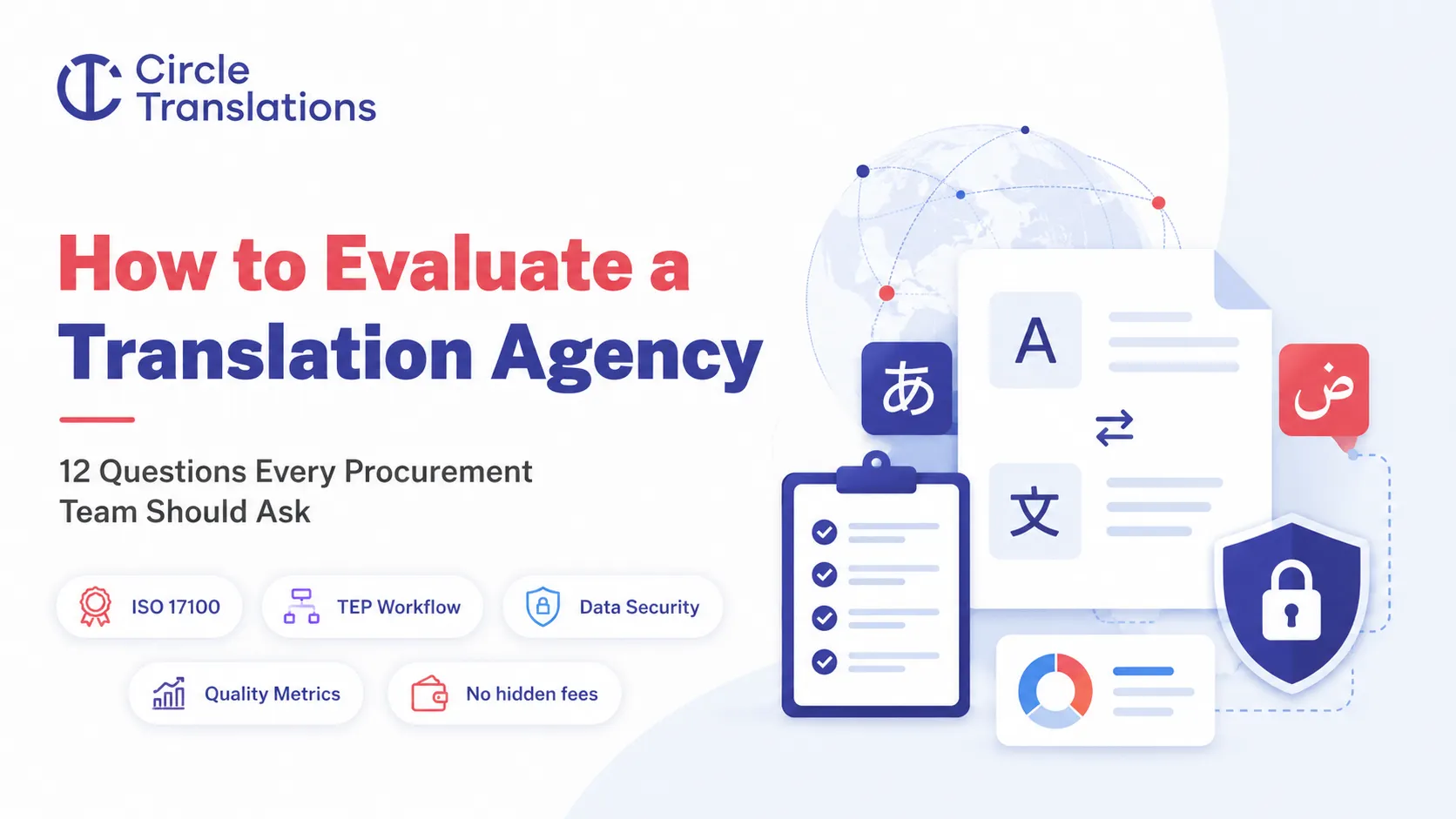
ISO 17100:2015 is the international standard for translation service providers. It defines requirements for translator qualifications, mandatory dual-control review (where every translation is independently checked by a second qualified linguist), and project management processes. Certification requires third-party audit and verification.
For procurement teams, ISO 17100 certification is a meaningful quality signal because it confirms that the agency’s workflows have been externally verified rather than self-reported. When evaluating any agency, ask for the certificate number, the issuing body, and the date of the most recent audit.
Dedicated Project Management and Daily Communication
Professional agencies assign a dedicated project manager to each client account. This matters for several practical reasons:
- Brief integrity: Project requirements are received, documented, and communicated to linguists accurately, with no detail lost in translation (ironic as that sounds).
- Progress visibility: Clients receive regular updates throughout the project rather than silence until delivery.
- Issue resolution: When a file arrives in an unexpected format or a deadline shifts, the project manager handles it without requiring input from your team.
Circle Translations provides dedicated project managers and daily updates on every project, along with 24/7 chat and phone support, which removes the coordination overhead that falls on in-house teams when working with freelancers independently.
Data Security and Contractual Accountability
This is the area where agencies and freelancers diverge most significantly for B2B clients handling sensitive content.
Professional agencies like Circle Translations require non-disclosure agreements with all translators, use encrypted file transfer protocols, and restrict access to source materials through secure managed platforms. This matters enormously when the content in question includes legal contracts, patent applications, financial filings, medical records, or commercially sensitive product documentation.
With an individual freelancer, data security depends almost entirely on what was agreed in a personal contract, whether one was drafted at all, and whether the freelancer’s own working environment meets an adequate security standard. For regulated industries, that informal arrangement is not an acceptable risk.
Pricing: What a Genuine Comparison Looks Like
The per-word rate comparison between agencies and freelancers is the most common basis for sourcing decisions and also the least informative one.
What Drives Agency Pricing
Agency rates reflect project management, independent editing, proofreading, technology infrastructure, and account support. Additional line items that are commonly not disclosed upfront include:
- Project management fees of 10 to 15 percent of the overall quote
- DTP (Desktop Publishing) fees for reformatting documents where translated text is longer or shorter than the source
- Engineering costs for preparing complex or non-standard file types
- Rush surcharges of 25 to 50 percent for urgent delivery, which is standard industry practice
That last point is worth examining directly. Rush fees are common, but they are not universal. Circle Translations operates without rush fees as a standard policy, which substantially improves cost predictability for teams managing time-sensitive or high-volume projects. Over a full year of translation activity, the absence of rush surcharges is a material financial difference.
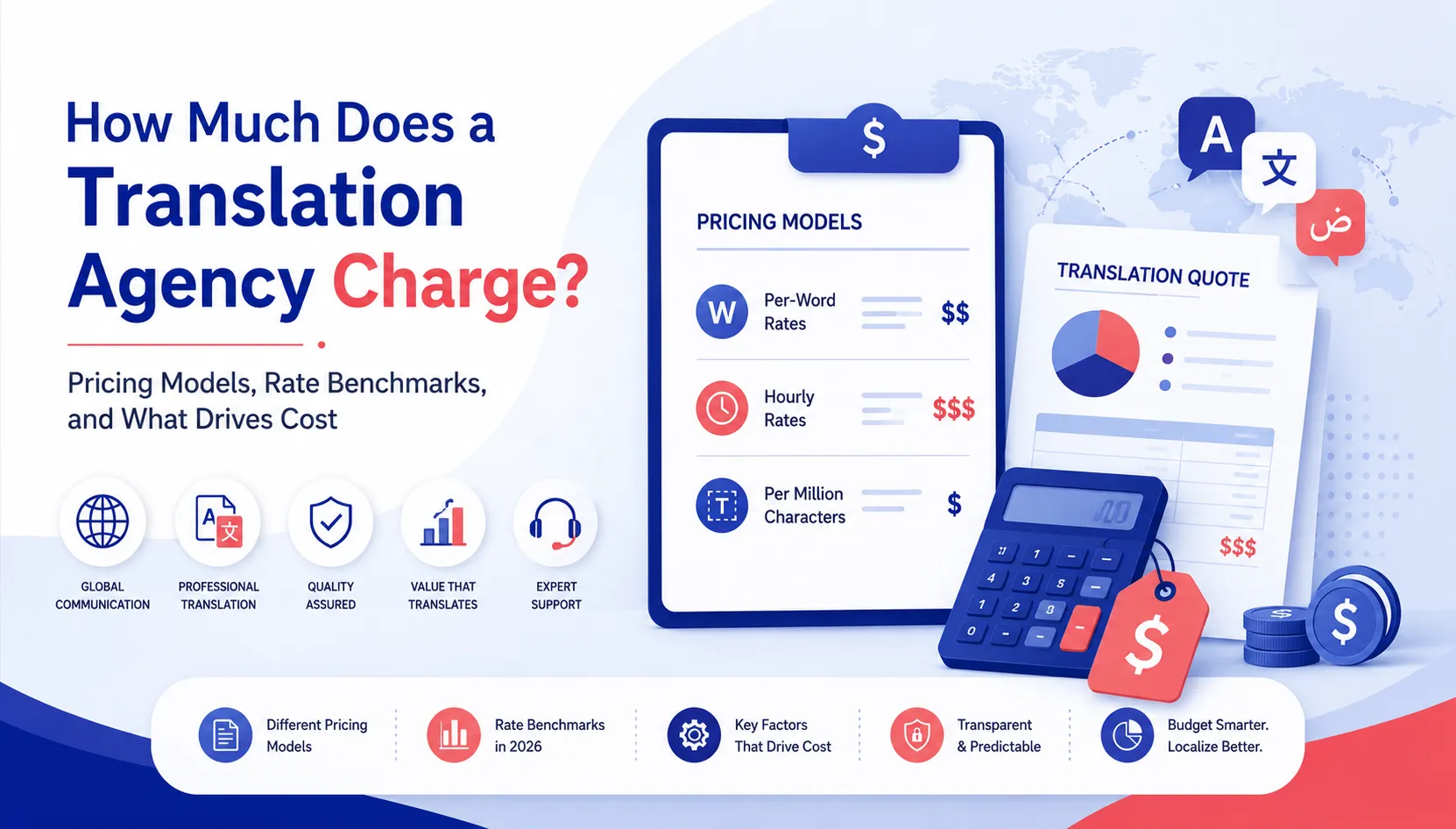
Circle Translations publishes a transparent pricing structure starting from €0.05 per word for machine-aided translation through to €0.10-0.16 per word for expert native translation of scientific and technical texts. Every plan includes a dedicated project manager, professional proofreading, native editing, daily updates, and 24/7 support. For an accurate picture of what different content types and quality tiers cost in practice, the translation rates page provides a clear breakdown.
The Hidden Costs of the Cheaper Option
When a freelance translation produces an output that fails an internal review, requires re-editing by a native speaker, or triggers a compliance query, the original per-word saving disappears quickly. Rework costs are difficult to forecast because they are invisible until they occur, but they are a consistent feature of workflows that lack structured quality assurance.
The indirect cost of relationship fragility is also worth acknowledging. When a trusted freelancer moves on, raises their rates substantially, or becomes unavailable at a critical moment, the institutional knowledge they hold about your terminology, tone, and preferences leaves with them. Rebuilding that knowledge base takes time and carries a real opportunity cost.
Technology Infrastructure: A Quality Indicator That Both Models Should Meet
Whether you work with a freelancer or an agency, the professional use of translation technology is a meaningful indicator of how seriously a provider takes consistency and quality.
What to Look for in Any Translation Provider
CAT (Computer-Assisted Translation) tools are structured work environments that support human translators in managing terminology, working efficiently with formatted documents, and accessing client-specific glossaries. Standard professional platforms include SDL Trados, memoQ, and Phrase. CAT tools are not machine translation; they are quality and consistency infrastructure for human translators.
Translation Memory (TM) stores approved translated segments from previous projects and presents them automatically when matching or similar content appears in new work. This has two important effects: it ensures that terminology remains consistent across your entire document portfolio, and it reduces billable word counts for repeat content, meaning clients with ongoing needs pay progressively less over time as their TM builds.
Terminology databases and glossaries ensure that branded terms, product names, and industry-specific vocabulary are translated consistently regardless of which linguist works on a given project. Agencies that maintain client-specific glossaries as part of the account relationship offer a material quality advantage over arrangements where terminology is managed informally.
With agencies, TM assets are maintained as part of the client relationship and remain accessible for the lifetime of the account. With freelancers, these assets are often fragmented or inaccessible if the relationship ends, meaning the consistency investment is lost.
Why Specialisation Matters More Than Language Fluency
One of the most consistently underestimated risks in translation sourcing is assuming that native language competency is sufficient for any type of content. It is not.
The English word “tube” has over 20 different translations in Russian depending on whether the context is electronics, construction, plumbing, or public transport. A translator without subject-matter expertise in the relevant field will make terminology choices that are linguistically defensible but professionally inaccurate.
For industries where translation accuracy carries legal, regulatory, or safety implications, subject-matter expertise is not an add-on. It is a baseline requirement.
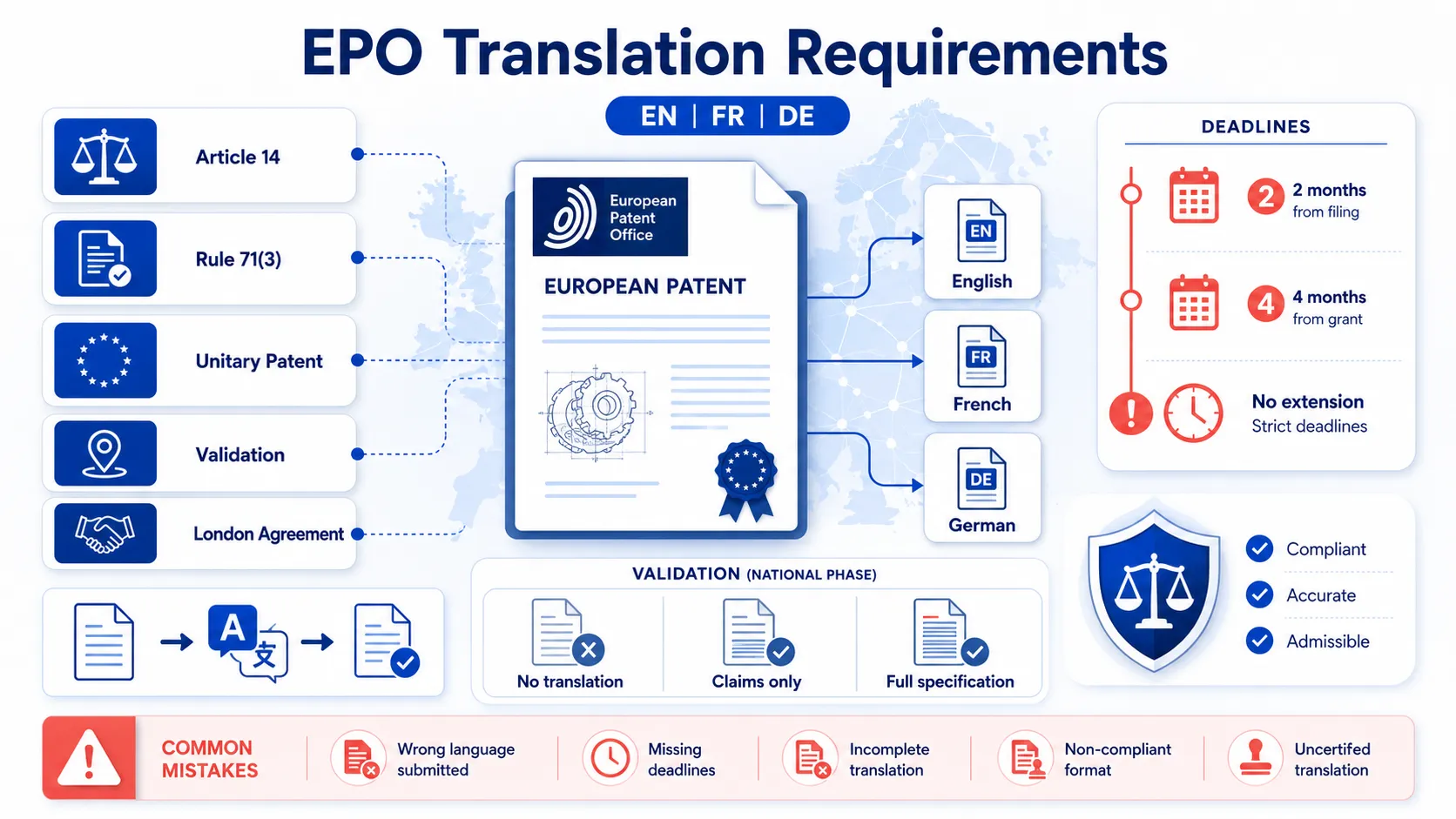
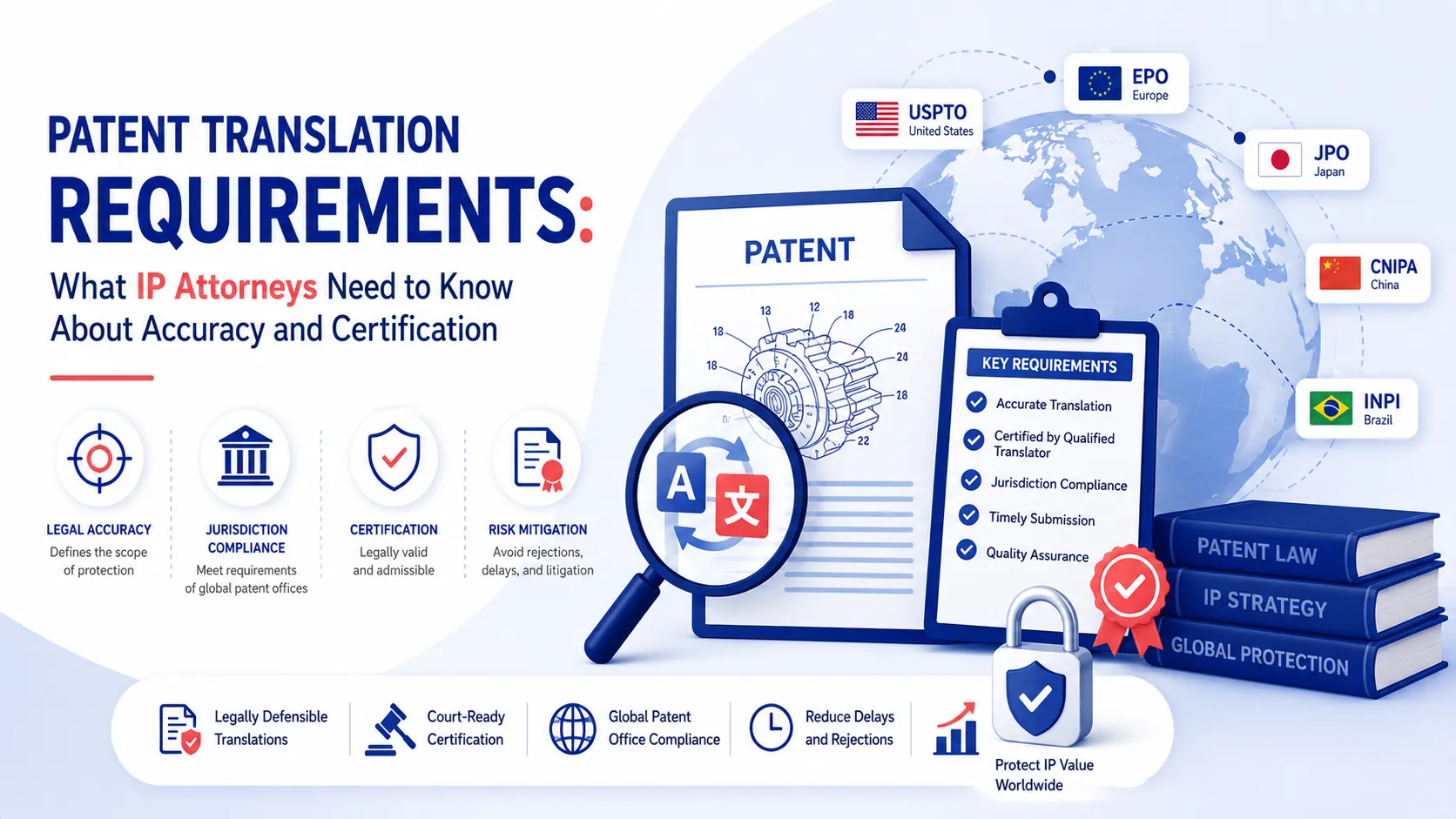
Circle Translations maintains dedicated industry expertise across banking and finance, legal, healthcare, automotive, manufacturing, gaming, energy, cryptocurrency, hospitality, travel, and retail. This means that a patent document is handled by a linguist with verified intellectual property knowledge, a pharmaceutical submission by one with healthcare expertise, and a gaming localization project by someone who understands UI character limits, cultural humor, and platform conventions.
For a practical look at how professional localization applies across different content types and global markets, the overview of translation and localization services covers the full scope of what a managed language service covers from document translation through to creative adaptation.
Decision Framework: Matching the Right Model to Your Situation
The agency versus freelancer decision is not categorical. It depends on the specific characteristics of your project, your risk tolerance, and your operational context.
Choose a Freelance Translator When:
- The project is small, contained, and involves a single language pair
- The content is low-risk (internal communications, first-draft reviews, or reference material)
- You have an established, trusted specialist with a proven track record in your subject area
- Your timeline is flexible and does not require parallel delivery across languages
Choose a Translation Agency When:
- You need multiple languages delivered simultaneously or within a tight window
- Your content carries legal, regulatory, brand, or compliance risk
- You need a documented quality process, formal NDAs, and a named escalation path
- Your volume or frequency requires scalable infrastructure and consistent terminology management
- You need additional services (DTP, voice-over, subtitling, MTPE, or localization) managed within a single workflow
- You want a long-term partner who builds institutional knowledge about your brand over time
Consider a Hybrid Approach
Some businesses use a trusted freelance specialist for a particular language pair where they have a long-established relationship, while routing higher-volume, multi-language, or regulated content through a professional agency. This works provided the governance is clearly defined and quality standards do not diverge noticeably between the two streams.
Conclusion
The translation agency versus freelance translator question does not have a universal answer, but it does have a structured way of thinking about it. Freelancers offer cost efficiency, direct communication, and genuine depth of specialisation for contained, lower-risk projects. Professional agencies offer the scalability, accountability, quality infrastructure, and data security that complex, multi-language, or regulated content genuinely requires.
For B2B teams expanding into new markets, managing ongoing multi-language content, or working in industries where accuracy has financial or legal consequences, the agency model provides a level of structural reliability that freelance arrangements cannot replicate at scale.
Circle Translations serves over 900 businesses globally across 74 languages and 124 language combinations, with a 99.97% on-time delivery rate, no rush fees, and a full-service model covering everything from technical document translation and patent services through to subtitling, voice-over, and machine translation post-editing. If your team is weighing up which sourcing model fits your next project, the Circle Translations team can provide a detailed, transparent proposal tailored to your content type and volume.
Frequently Asked Questions
1. Is a translation agency always more expensive than a freelance translator?
Per word, agencies typically charge more because their pricing includes project management, multi-stage quality review, and technology infrastructure. However, once you account for Translation Memory savings on repeat content, eliminated rush fees, and the absence of rework costs, the total cost difference narrows considerably for complex or ongoing projects.
2. What is ISO 17100 and why does it matter when choosing a translation provider?
ISO 17100:2015 is the international standard for professional translation service providers, requiring documented translator qualifications, mandatory dual-control review by a second independent linguist, and verified project management processes. Choosing an ISO 17100-certified provider means their workflows have been externally audited rather than self-reported, which provides a more reliable quality assurance baseline.
3. Can a single freelance translator handle a large multi-language project?
No. A professional translator produces around 2,500 words per day, and a single person cannot run parallel workflows across multiple languages. Large or multi-language projects require the coordinated linguist network and project management infrastructure that only an agency provides, and attempting to manage multiple freelancers independently introduces serious consistency and coordination risks.
4. What is the TEP process and should I expect it from my translation provider?
TEP stands for Translation, Editing, and Proofreading, and it is the professional standard for quality-controlled translation delivery. Each stage must be completed by a separate, independent linguist rather than the original translator reviewing their own work. Always ask prospective providers whether their workflow includes genuinely independent editing, as many agencies describe compressed two-stage reviews as TEP-compliant when they are not.
5. How do translation agencies protect sensitive business documents?
Professional agencies protect client content through NDAs signed by all linguists, encrypted file transfer protocols, and secure platforms that restrict document access to authorised users only. For legal, financial, or medical content, this formal data security framework is a procurement requirement rather than a nice-to-have, and it is important to ask specifically whether security policies extend to the full external linguist network.
6. What is Translation Memory and does it reduce costs over time?
Translation Memory (TM) is a database that stores previously approved translated segments and applies them automatically to matching content in new projects, reducing billable word counts for repeat or consistent material. With an agency, TM assets accumulate over the lifetime of the client relationship and compound in value, while freelance TM assets are often lost when the working arrangement ends.
7. What information should I provide when briefing a translation agency?
A good project brief includes the intended use of the content (marketing, legal, internal, or regulatory), the target audience and their region, any existing glossary or brand style guide, the required delivery format, and a clear deadline. Sharing examples of previously translated content you consider high quality helps the agency align with your terminology and tone from the start.
8. Are rush fees standard practice in the translation industry?
Rush surcharges of 25 to 50 percent for urgent delivery are common across the translation industry, but they are not universal. Some agencies, including Circle Translations, operate without rush fees as a standard commercial policy. For teams managing time-sensitive workflows or unpredictable project volumes, a no-rush-fee policy has a meaningful effect on total annual translation spend and budget predictability.