In the world of international law, the difference between winning and losing a case can sometimes come down to a single word. When you are managing a cross-border dispute or a complex regulatory investigation, you don’t just need a translator. You need a partner who understands that every document is a piece of evidence.
Litigation translation services for law firms and legal teams are designed to handle high-stakes, high-accuracy needs. Whether it is a civil dispute, a commercial battle, or a criminal investigation, the documents involved must be handled with extreme care.
When your team is facing tight court deadlines, the last thing you should worry about is whether a witness statement was translated correctly. Litigation support teams, corporate legal departments, and external counsel all rely on these services to ensure that multilingual evidence is court-ready and legally sound.
From the discovery phase to the final trial, having a clear, accurate translation of filings, transcripts, and exhibits is not just a luxury, it is a requirement for justice. In this guide, we will walk you through everything you need to know about navigating the world of litigation translation.
What is litigation translation (and where is it used in legal practice)?
At its simplest, litigation translation is the process of converting legal documents from one language to another, specifically for use in a legal dispute. It is much more specialized than general translation because it requires a deep understanding of the law in both the source and target countries.
While general legal translation might cover things like simple business letters or general policies, litigation translation focuses on the “heat of the battle.” It is used when there is a disagreement that needs to be settled by a court, an arbitrator, or a government agency.
Where you will see it in action
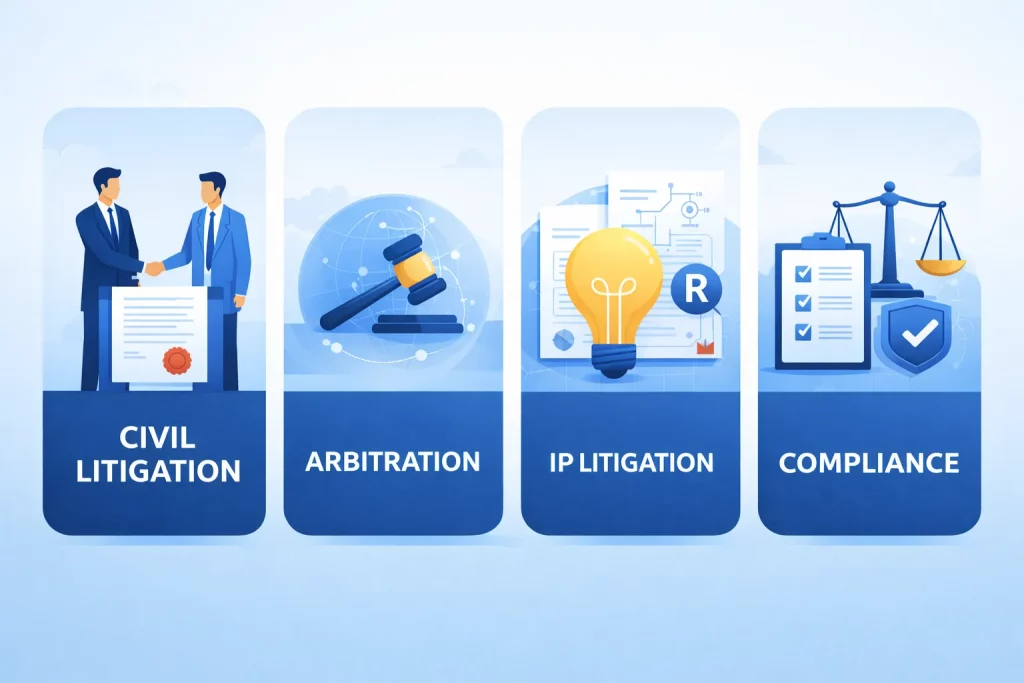
You will find litigation translation used in several key areas:
- Civil and Commercial Litigation: When two companies or individuals sue each other over contracts, property, or damages.
- International Arbitration: When disputes are settled outside of a traditional court, often involve parties from different countries.
- IP and Patent Litigation: When a company’s inventions or trademarks are being challenged or defended.
- Compliance Investigations: When a government body is looking into a company’s actions across borders.
In these scenarios, the court often has very specific rules about how a document must look. This includes the way it is formatted, how it is certified, and whether it has been sworn by a professional. If these rules are not followed, the document might not even be accepted as evidence.
Which litigation documents require translation?
When you start a case, the mountain of paperwork can feel overwhelming. Not every single page needs to be translated for the court, but the most important ones certainly do.
Here is a look at the types of documents that legal teams usually send for translation:
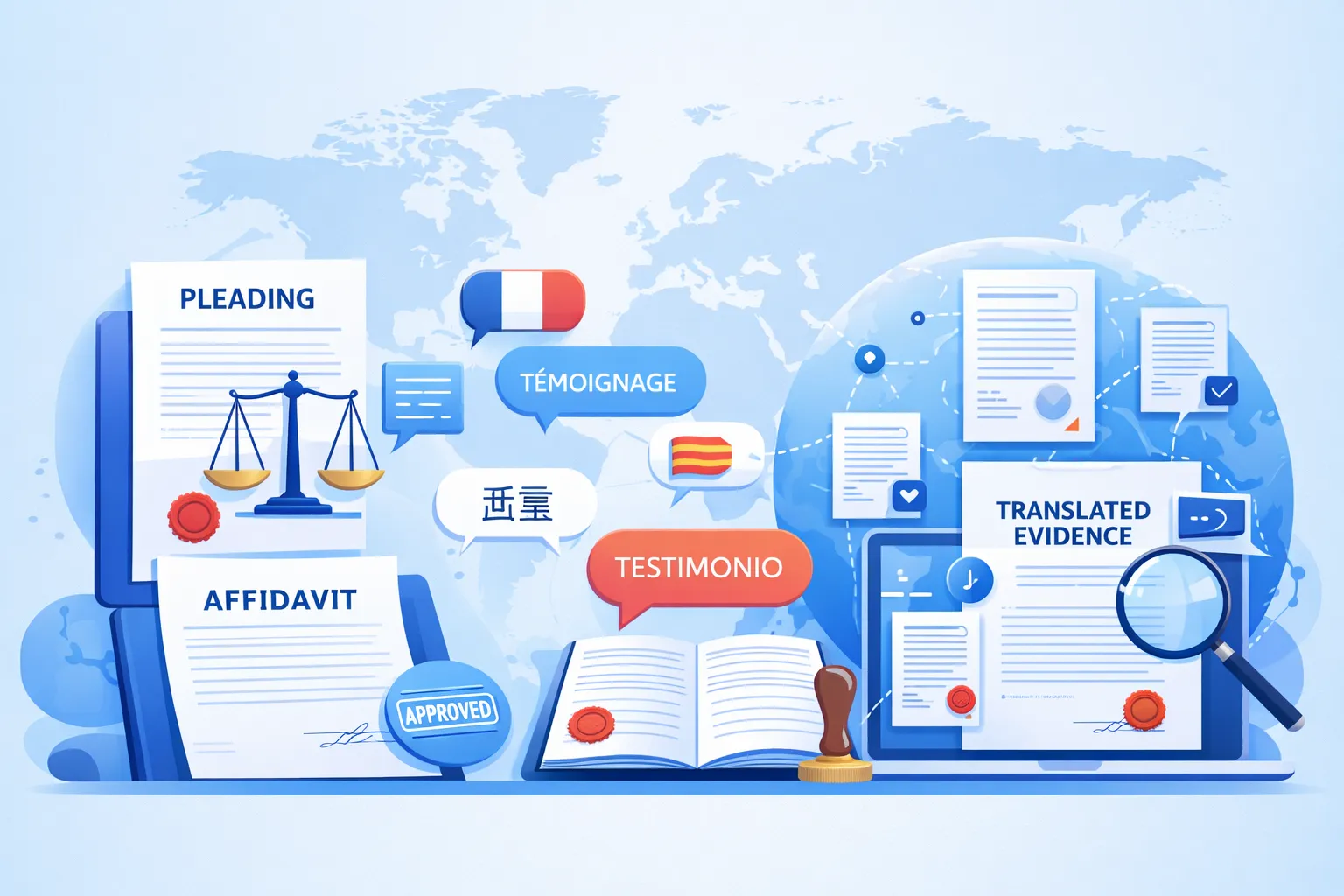
- Pleadings and Motions: These are the official documents filed with the court that explain each side’s position.
- Affidavits and Witness Statements: These are written versions of what a person says happened. Accuracy here is vital because it affects someone’s credibility.
- Discovery Documents: This is often the largest category. It includes everything from internal emails and chat logs to financial spreadsheets and private memos.
- Court Transcripts: If a hearing happened in another country, you need a perfect record of what was said by the judge and the lawyers.
- Expert Reports: When a scientist or a financial expert writes a report, it is filled with technical language that must be translated by someone who understands that specific field.
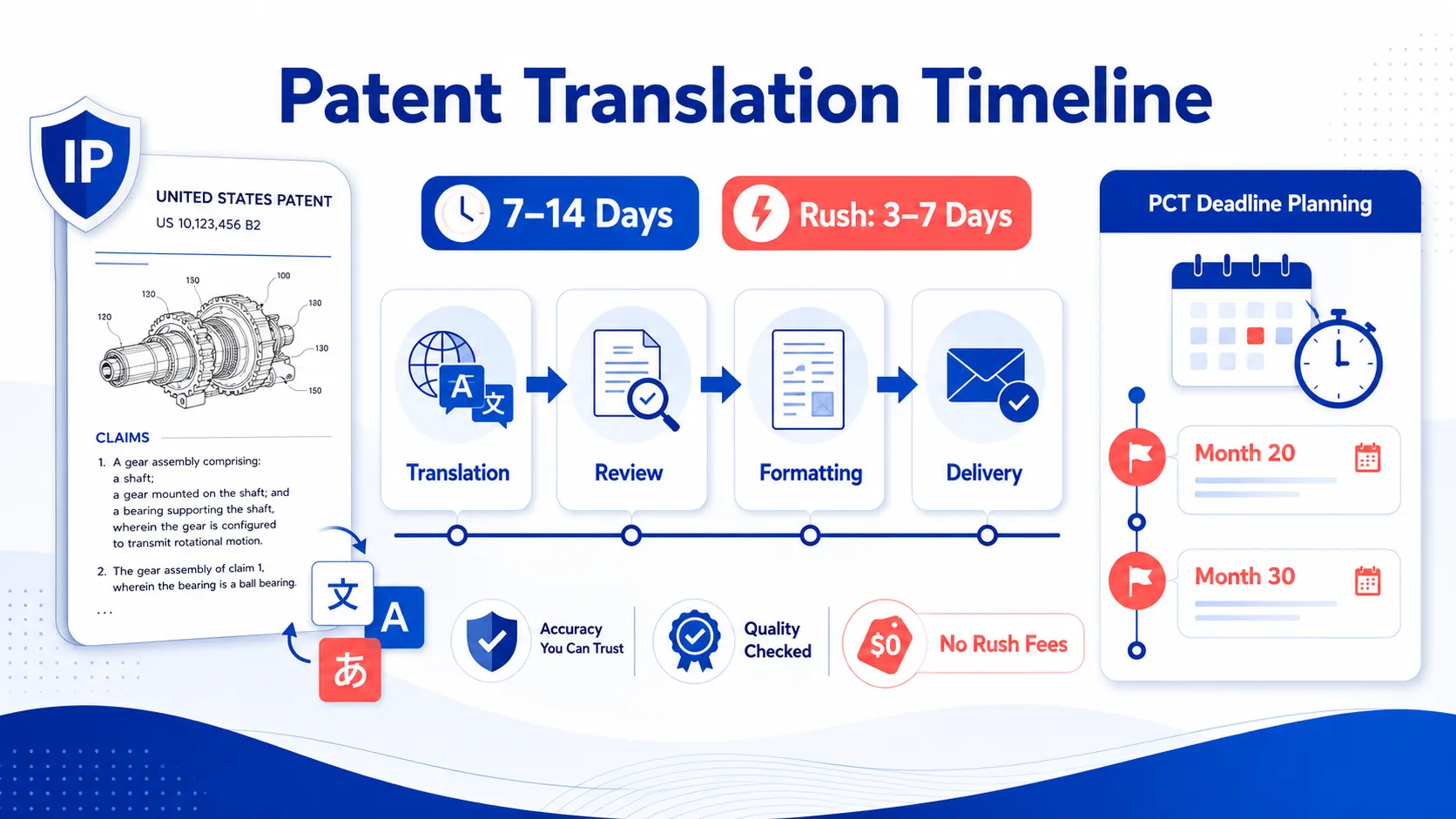
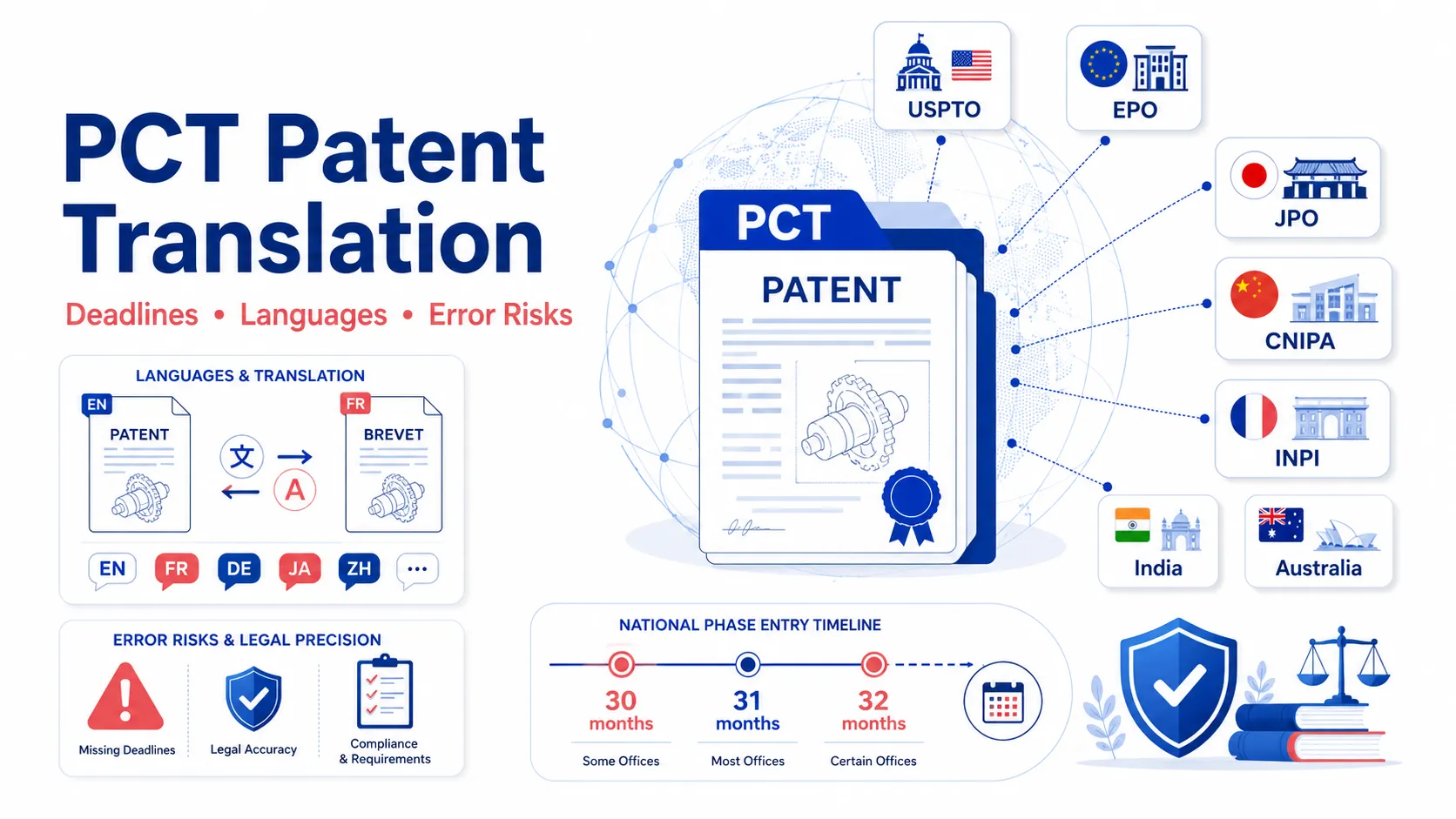
- Patents and Technical Specs: In intellectual property cases, these documents define the “rules” of the invention being argued over.
- Evidentiary Materials: This could be anything, a photo caption, a medical record, or even a social media post that helps prove a point.
Why do accuracy and terminology control matter in litigation?
In a regular business meeting, if someone uses the wrong word for “contract,” the other person might still understand what they mean. In a courtroom, that same mistake can lead to a case being dismissed.
Legal risk is the biggest reason why accuracy is non-negotiable. A mistranslation can change the entire meaning of a contract clause or an admission of guilt. If a translation is poor, the opposing counsel can challenge its admissibility, meaning the judge might not even let you use it.
The power of “Meaning-Preserving Translation”
Good litigation translation is not about swapping word-for-word. It is about preserving the legal meaning. This is why we use “Terminology Control.”
We create case-specific glossaries. These are lists of words that must be translated the exact same way every single time they appear in your thousands of pages of documents. This ensures consistency. If a specific term is used in a cited exhibit, it must match the way that term is used in the main filing.
If your translations are inconsistent, it makes your legal team look less prepared and can confuse the judge or the jury.
How does a litigation translation workflow work (end-to-end)?
Working with a professional agency is different than just sending a file to a freelancer. Because litigation is so sensitive, the process is very structured.
1. Intake and Conflict Check
The first step is checking for “conflicts of interest.” Just like a law firm cannot represent both sides of a lawsuit, a translation agency should ensure they aren’t working for both sides of a dispute in a way that creates a risk.
2. Secure Handling
Once the documents are in, they are placed in a secure environment. Litigation files often contain trade secrets or private personal data, so they are never sent through regular, unencrypted email.
3. Translation by a Subject Matter Expert (SME)
The document is assigned to a linguist who is also a legal expert. This person understands the legal system of both languages.
4. Revision and Legal QA
A second legal expert reviews the translation. They check for accuracy, tone, and legal nuance. They make sure the formatting matches the original exactly.
5. Certification and Delivery
If the court requires it, the document is certified or sworn. This is a formal statement that the translation is true and accurate. Finally, the files are delivered back to the legal team through a secure portal.
What ensures accuracy in litigation translation?
Accuracy in a legal dispute isn’t just about getting the words right; it’s about protecting the legal intent. One wrong word in a witness statement can give the opposing counsel an opening to challenge the entire piece of evidence.
Here is the “safety net” we use to ensure every document is airtight:
- Legal-Specialized Linguists: We don’t use generalists. Your documents are handled by professionals who have either practiced law or have advanced degrees in legal translation. They understand the difference between “common law” and “civil law” systems.
- The Dual-Review Process: Also known as the “four-eyes principle,” every translation is checked by a second senior legal editor. This isn’t just a spell-check; it’s a deep dive into the legal nuances.
- Case-Specific Glossaries: We create a “master list” of terms for your case. If a specific word is used to describe a piece of machinery on page 1 of a patent, we make sure it is called the exact same thing on page 500 of the expert report.
- Context Matching with Exhibits: A document is rarely a standalone piece of text. Our translators review the surrounding evidence and cited exhibits to ensure that the terminology remains consistent across the entire case file.
- Preserving Formatting for Filings: Courts are very particular about how documents look. We ensure that the translated version preserves the original layout, including margins, stamps, signatures, and page numbering, so it is ready for immediate filing.
How do certified or sworn translations fit into litigation?
A judge needs to know that a translation is honest. In the legal world, a simple Word document usually isn’t enough. You need a certified or sworn translation.
Think of this as a “badge of trust.” It tells the court that a professional stands behind the work. Without it, your evidence might not even be accepted. In litigation, these are often mandatory.
When will you need them?
You don’t need to certify every internal email, but you usually need it for:
- Official Filings: Any contract or pleading sent to the court.
- Immigration: Birth certificates or police records for legal cases.
- Government Requests: When responding to the DOJ or other authorities.
- Arbitration: Most international tribunals require a formal “statement of accuracy.”
What does a certified document look like?
A court-ready translation is a formal package. It usually includes:
- A Signed Statement: This letter from the agency confirms the translation is true and complete.
- Stamps on Every Page: This “tamper-proof” step ensures no one can swap out pages later.
- The Seal: A professional stamp that includes the agency’s credentials.
Some countries require “sworn” translations. This is a more formal step where the translator has taken an oath before a court or a government body. It is important to know which one your specific jurisdiction requires so you don’t waste time on the wrong format.
By providing these “ready-to-file” documents, we take the stress out of your court deadlines.
How are multilingual evidence and eDiscovery handled?
Modern lawsuits involve a massive amount of digital data. This is what we call eDiscovery. When a company is sued, the legal team might have to look through 500,000 emails to find the three pages that matter.
If half of those emails are in Japanese and the other half are in German, you have a major challenge. You cannot afford to have a human translate all 500,000 emails, it would take years and cost a fortune.
The Prioritization Method
To handle this, we use a tiered approach:
- Keyword-Led Search: We translate the list of “search terms” into the target languages. This helps us filter the data.
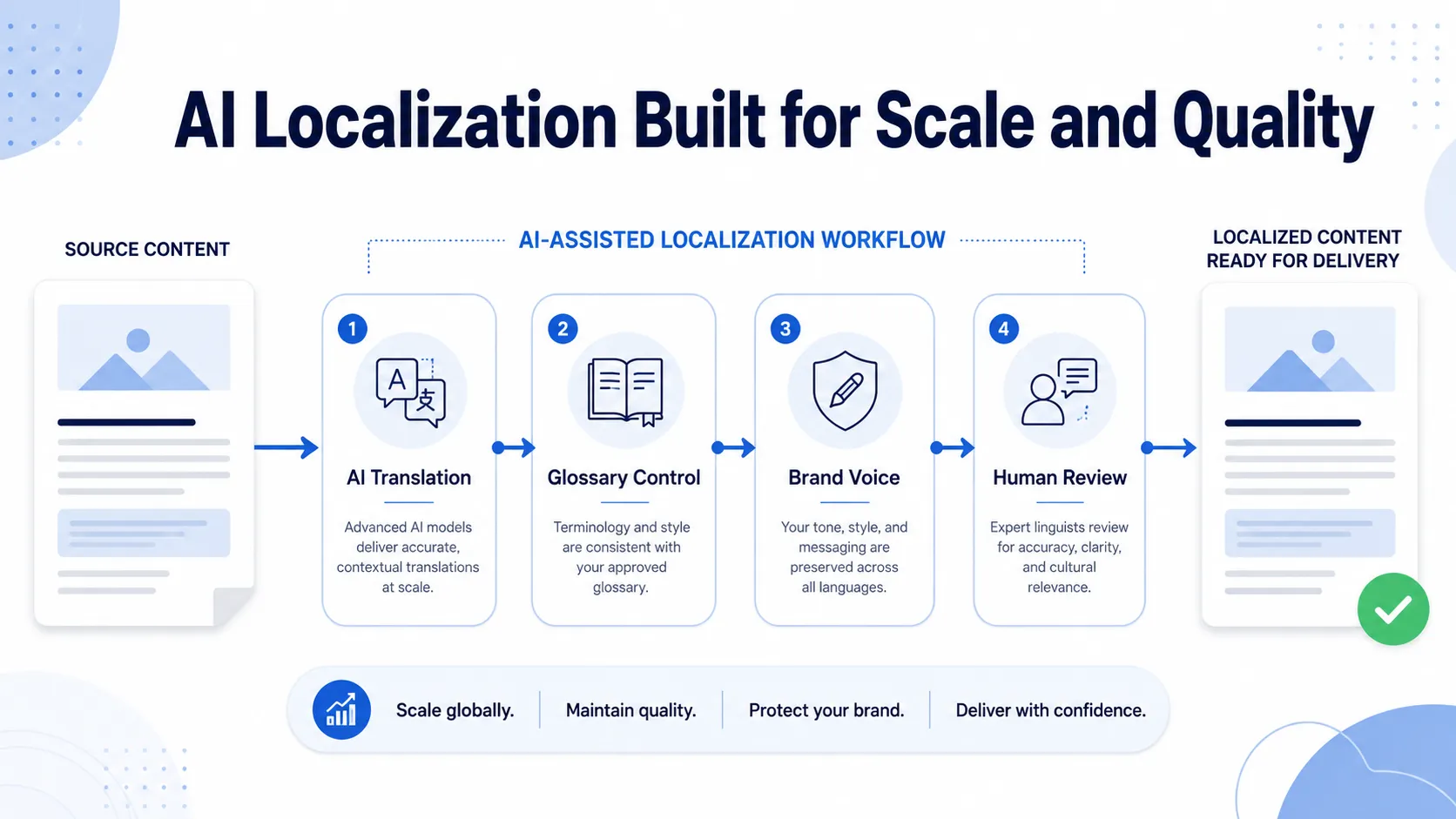
- Machine Translation (MT): We use high-speed AI translation for the initial “bulk” review. This allows your lawyers to read the emails and decide which ones are actually important.
- Human Translation: Once you find the “smoking gun” documents that will actually be used as evidence in court, those are sent for full human translation and certification.
This method saves you money while ensuring that the documents the judge sees are 100% accurate.
Which languages matter most in global litigation?
While we handle over 120 languages, certain “language pairs” appear more often in global disputes. These usually follow the biggest paths of international trade.
| Language Pair | Common Regions | Type of Disputes |
| English ↔ Spanish | USA, LATAM, Spain | Trade, Labor, Construction |
| English ↔ Chinese | China, SE Asia, Global | Manufacturing, IP, Finance |
| English ↔ Japanese | Japan, USA | Automotive, Technology, Patents |
| English ↔ German | EU, Germany | Engineering, Pharma, Regulatory |
| English ↔ Arabic | Middle East | Energy, Infrastructure, Arbitration |
| English ↔ Portuguese | Brazil, Portugal | Agriculture, Tech, Mining |
Each of these pairs has its own challenges. For example, Arabic and Chinese legal systems are very different from Western “Common Law.” This makes the role of the expert translator even more important.
Why subject-matter expertise is essential for litigation cases
If you are fighting a case about a medical device, you don’t just need a legal translator. You need someone who also understands medical terminology.
Litigation often crosses over into other specialized fields. Here are a few examples:
- Construction Litigation: Translators must understand architectural blueprints and engineering standards.
- Financial Litigation: The linguist needs to know how to read balance sheets and tax laws.
- Medical Malpractice: This requires a deep knowledge of anatomy and hospital procedures.
- Regulatory/Insurance: This involves understanding complex policy wording and government “red tape.”
If the translator doesn’t understand the “subject matter,” they might use the correct legal word but the wrong technical word. This makes the evidence less effective.
How do technical backgrounds affect litigation translation?
Think about a patent infringement case between two smartphone companies. The documents are not just “legal.” They are about software code, circuit boards, and chemical coatings.
In these cases, we look for translators with technical degrees. A translator who was formerly a software engineer or a chemist is much better at translating a technical exhibit than a generalist.
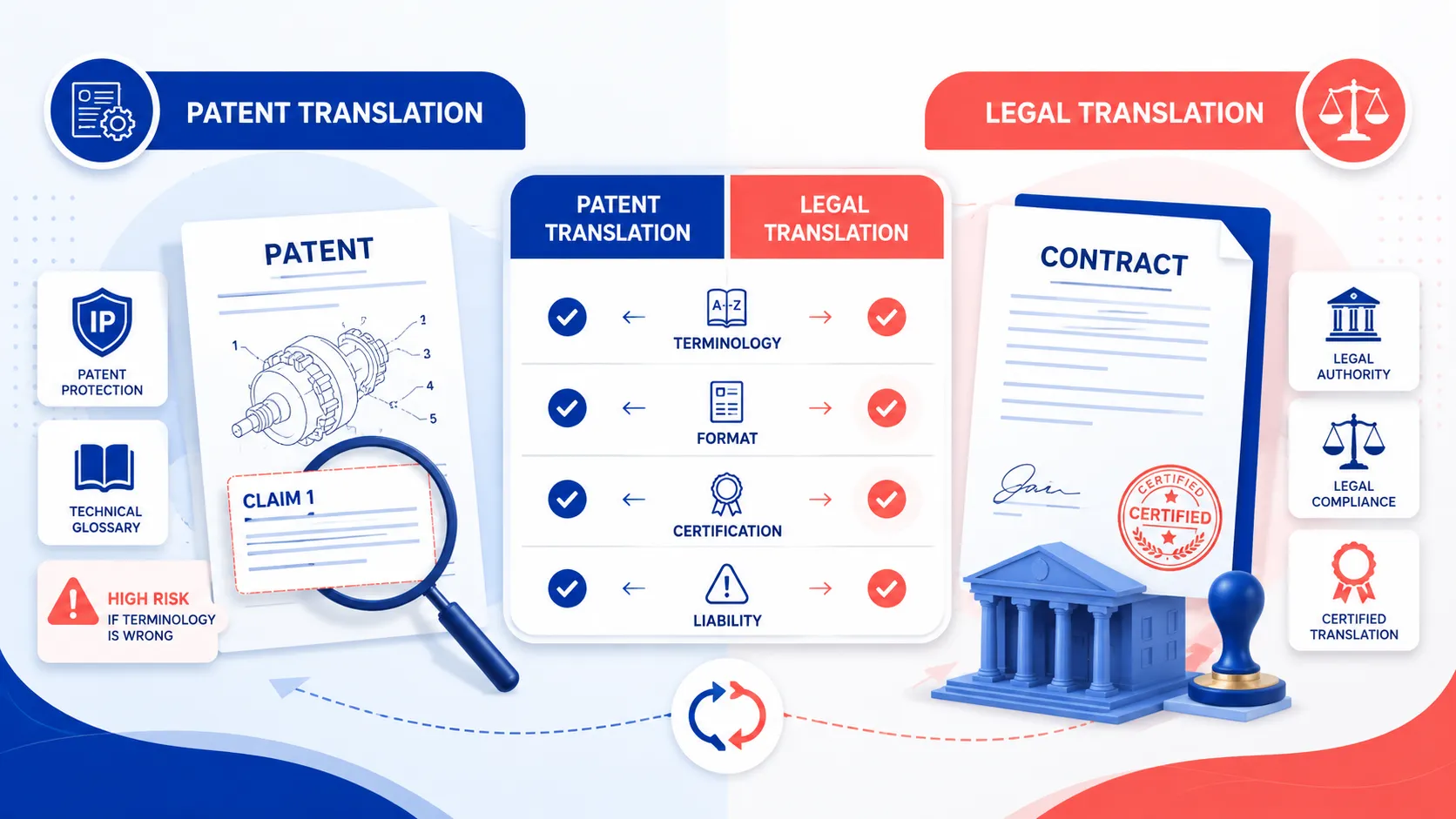
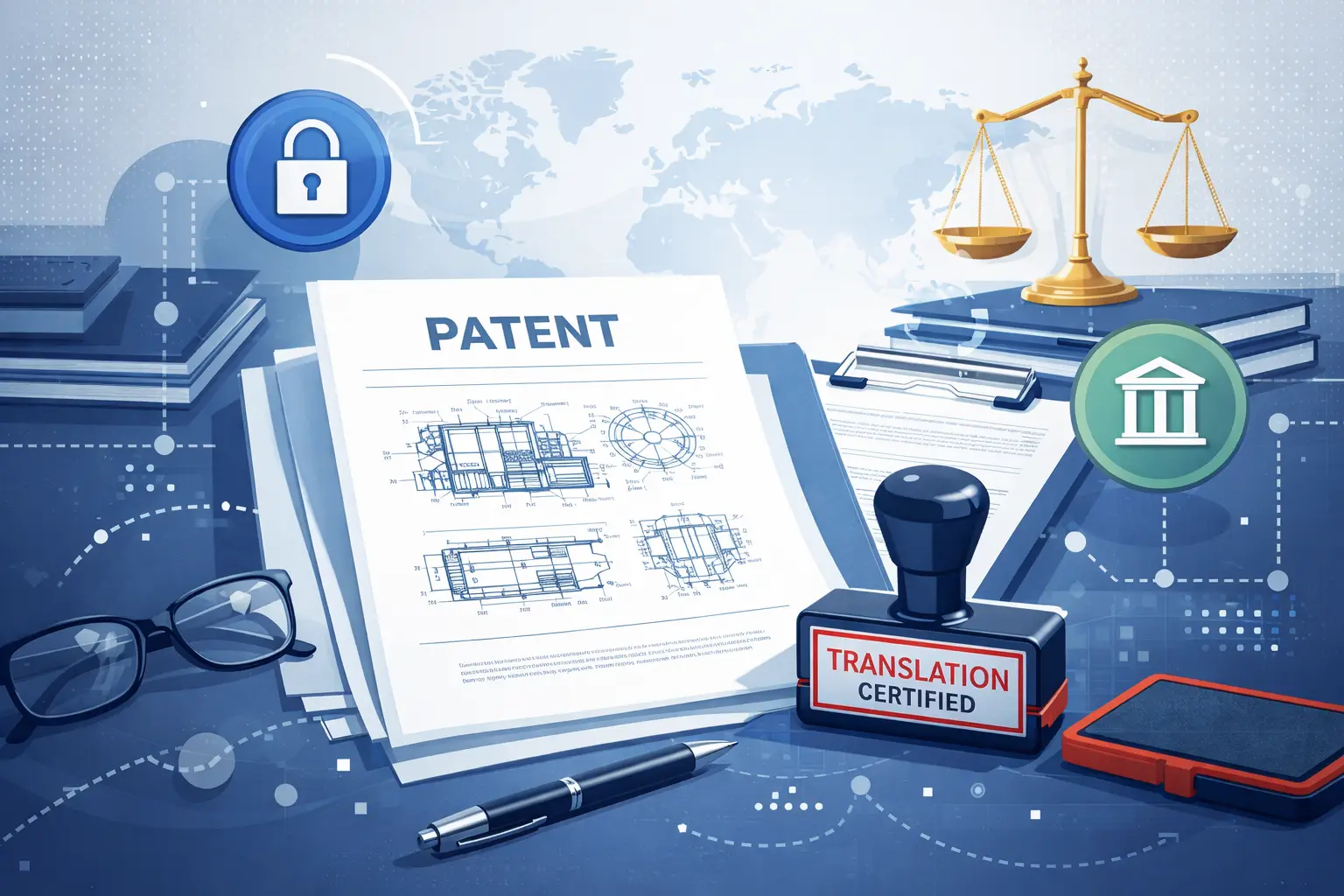
This is where “Patent Translation” crosses over with “Litigation Translation.” The goal is to ensure that the technical precision of the invention is perfectly clear to the judge, even if the judge isn’t a scientist.
How do litigation teams handle urgent translations?
In litigation, “urgent” is the standard speed. We know that court dates don’t change just because a document is in another language.
We offer different tiers of turnaround time:
- Same-Day/Overnight: For those emergency filings where you just found a new piece of evidence.
- Weekend Support: Because legal teams often work through the weekend before a trial.
- Phased Delivery: We send you the most important pages first so you can start working, while the rest of the file follows.
By using “rolling delivery,” your legal team never has to wait for a massive 500-page project to be finished before they can start reading the first 10 pages.
What security measures protect sensitive litigation files?
Trust is everything in the legal world. If a sensitive document is leaked, it could ruin a case or damage a company’s reputation forever.
We protect your data using several layers of security:
- NDAs (Non-Disclosure Agreements): Every person who touches your file is legally bound to keep it secret.
- Encrypted Portals: We use “bank-grade” encryption for all file transfers.
- Audit Trails: We can see exactly who opened a file and when they did it.
- Access Control: We follow the “least-privilege” rule. Only the specific translator and the manager assigned to your case can see the documents.
Our workflows are designed to be GDPR and ISO compliant, ensuring that your client’s privacy is always the top priority.
How do firms evaluate translation reliability for litigation?
If you are choosing a partner for your next case, don’t just look at the price per word. A “cheap” translation can become the most expensive mistake you ever make.
Here is what you should ask:
- What is your experience with this specific type of law?
- Do you have references from other law firms?
- What is your quality assurance process?
- Can you handle the specific “court formatting” required in this country?
- What are your security protocols?
A reliable agency will be happy to explain their process and provide a “test piece” to show you their level of quality.
Why choose our litigation translation services?
At Circle Translations, we understand the pressure of the courtroom. We have built our legal team to be an extension of your own litigation support unit.
We offer:
- Legal Expertise: Our linguists are experts in international law.
- 24/7 Support: We know that global cases happen in every time zone.
- Certified Accuracy: Every document is court-ready and formatted correctly.
- Absolute Confidentiality: Your secrets are safe with our secure, encrypted systems.
- 120+ Languages: We can support your case no matter where in the world it takes you.
We don’t just translate words; we help you build your case.
How we support law firms, corporate legal teams & eDiscovery units
We know that every legal team works differently.
- For Law Firms: We focus on speed and court-ready certification.
- For Corporate Teams: We focus on cost-efficiency and long-term terminology management.
- For eDiscovery Units: We provide the technical tools to process massive amounts of data quickly.
We adapt our workflow to fit your specific software and timeline, making the translation process one less thing you have to manage.
What deliverables do clients receive?
When the project is done, you don’t just get a Word document. You get a professional “litigation pack” that includes:
- Final Localized Documents: Translated and formatted to match the original.
- Certified/Sworn Statements: All necessary stamps and signatures for the court.
- Bilingual Files: A “side-by-side” view so your lawyers can compare the original and the translation.
- Glossary and Termbase: A list of the key terms used in your case for future use.
- Revision Logs: A record of the quality checks performed.
Litigation Translation Services — FAQs
These are some of the most common questions we hear from law firms preparing for a multilingual dispute.
What are litigation translation services?
It is the translation of documents used in civil, commercial, or regulatory disputes. This includes things like pleadings, exhibits, witness statements, and discovery materials, performed by linguists who are legal experts.
Which litigation documents need certified translation?
Most courts require a “certified” or “sworn” translation for any document that is being submitted as evidence. This includes affidavits, official records, and any filings that the judge needs to read.
Can machine translation be used in litigation?
Yes, but mainly for “internal” use. It is great for looking through thousands of emails during discovery to find important information. However, for anything that is actually submitted to the court, you must use a human translator to ensure 100% accuracy.
How fast can litigation translations be completed?
We often provide same-day or 24-hour turnarounds for urgent court filings. The total time depends on the length of the document and how technical the language is.
How do you maintain confidentiality for legal documents?
We use encrypted file transfer portals, strict NDAs for all staff, and secure, password-protected environments. We treat your files with the same level of security that a law firm does.
Do you provide translation for expert reports and technical exhibits?
Yes. We match these projects with translators who have “dual expertise.” This means they understand both the law and the specific field (like medicine, engineering, or finance) mentioned in the report.
What information do you need to provide a litigation translation quote?
To give you an accurate price and timeline, we need to know the languages, the page count, the deadline, and whether you need certification. Providing a sample of the document helps us give you a more precise quote.