
If you’re reading this, chances are you’ve noticed some anomalies in your analytics, such as traffic from Germany, demo requests from Mexico, or LinkedIn messages in French. Your product works globally, but your website does not speak any of the languages.
That’s where multilingual SEO comes in.
Multilingual SEO is the practice of optimizing one website to rank in multiple languages. It combines language-led information architecture, localized content, and technical signals, and helps search engines serve the right version to the right user.
Multilingual SEO builds a foundation for qualified organic traffic that compounds over time. For B2B teams, this means reaching decision-makers who research in their native language, compare solutions in local search results, and ultimately convert at higher rates when they find content that speaks directly to them.
This guide shares field-tested multilingual SEO best practices that connect directly to your workflow. Whether you’re a marketing lead planning international expansion or a product owner evaluating Translation & Localization services, you’ll find practical strategies you can implement today.
What is multilingual SEO?

Multilingual SEO is a language-first approach to optimize for the search engines to get ranked in the local search results. You’re taking one brand and creating multiple language versions on the same website. For example: apple.com with /es/ for Spanish, /de/ for German, and /fr/ for French.
The focus is on language-led information architecture. That means building your site structure around locales, interacting with the local search behavior. And this is managed under one domain with clear language signals.
A locale is a combination of language and optional region, for example: en-US for American English or fr-CA for Canadian French. These language variants capture regional differences in how people search and speak, like someone in Spain might search differently from someone in Mexico, even though both speak Spanish.
Understanding these concepts helps you build an architecture that scales. When you set up locales properly from the start, adding new languages later becomes straightforward.
How is multilingual SEO different from international SEO?
Multilingual SEO and international SEO often get used interchangeably, but they’re not the same thing.
International SEO is broader than multilingual SEO. It adds country-level targeting with elements like ccTLDs (example.de for Germany), local hosting, currency displays, shipping options, and region-specific offers. This means you’re adapting the entire experience for specific markets, rather than just translating words.
Multilingual SEO, on the other hand, focuses purely on language. International SEO focuses on countries and regions, which does include language, but goes much deeper into localization.
For most B2B SaaS and enterprise companies, you start with multilingual SEO. Get your German, Spanish, and French content working properly. Prove that organic traffic converts in these languages. Then, you layer on stronger country signals and move toward full international SEO.
Why multilingual SEO matters for B2B pipelines
Let’s cut to the numbers. Multilingual SEO drives organic pipeline from new regions, lowers customer acquisition cost compared to paid-only expansion, and increases conversion rates when buyers read content in their own language.
Research consistently shows that multilingual SEO helps reach broader audiences and drives organic growth across languages. When someone searches for something in German or Spanish, they’re looking for content that they can interact with comfortably, and not in English.
In practice, this looks like: if a SaaS company launches a German blog covering topics their English content already ranks for, they’re going to see steady traffic from DACH (Germany, Austria, Switzerland) feeding into their pipeline, and when they add Spanish later on, LATAM demo requests increase noticeably, along with the DACH region’s traffic.
The pattern repeats: research queries bring people in, solution queries move them down the funnel, and branded queries show you’re building awareness in that language.
When should a B2B company invest in multilingual SEO?
Getting the timing right is crucial for multilingual SEO. Jump in too early, and you’ll waste resources. Wait too long, and competitors take the ground.
You’re ready for multilingual SEO when you see:
- steady organic performance in your home market
- Repeated inbound interest from specific countries
- sales teams opening new regions
- The product is already localized, but the content is lagging
- paid campaigns running in non-English markets without organic support
Before you commit, run through a readiness checklist. You need positive answers to these questions:
- Do you have a budget for quality translation and ongoing optimization?
- Can your content operations handle multiple languages?
- Do you have a translation partner who understands multilingual SEO?
- Does your CMS support proper locale management?
If you’re checking most of these boxes, it’s time to build your multilingual SEO roadmap.
Strategy first: how to design a multilingual SEO roadmap
Real results come from strategy. You need a roadmap that covers market selection, audience research per region, keyword strategy by language, information architecture that scales, a content plan tied to business goals, and a measurement framework that shows what’s working.
The biggest mistake teams make is treating multilingual SEO like a plugin you turn on. It simply does not work this way.
Here’s the sequence that works:
determine which languages and markets offer the best opportunity → research how your audience searches in each language → build keyword clusters mapped to intent and content types → design your URL structure and technical foundation → create localized content with SEO optimization baked in → measure performance by language and iterate.
This isn’t a three-week project. Good multilingual SEO can take upto quarters, not weeks. But when you approach it strategically, you will get steady organic traffic and, in the process, build something that drives the pipeline for years.
Which languages and markets should you target first?
Start by analyzing where your current traffic comes from. Check for existing foreign traffic. Check Google Analytics by country, review your CRM for leads by region, and look at which markets your competitors are targeting.
Then layer in search volume research. Use Google Keyword Planner with country filters to see monthly searches for your core terms in different languages.
A keyword that drives 10,000 searches in English might pull 3,000 in German and 2,000 in Spanish. That’s still meaningful volume.
Create a simple scoring model of opportunity vs effort. This helps you prioritize which languages to launch first.
How to align multilingual SEO with sales and partner motions
Here’s where B2B gets interesting. Your multilingual SEO needs to support how your business actually goes to market.
If you’re expanding in Germany, your German content should launch alongside that expansion. Your content should include partner landing pages and co-marketing resources.
Map your language rollouts to sales coverage and partner networks. When launching into foreign markets, make sure your sales team knows so they can share localized case studies with local prospects. When you translate product pages, give your partners in those regions landing pages they can link to.
The content itself matters too. Local case studies perform incredibly well. A German SaaS buyer wants to see how other German companies use your product. Partner co-marketing pages give resellers a platform to promote. Regional resource centers become hubs that support local campaigns and initiatives.
Multilingual keyword research and content planning

This is where most multilingual SEO strategies fall apart. Teams translate their English keywords directly, publish content, and wonder why it doesn’t rank.
Here’s the truth: people in different languages don’t search the way you think they do. Native-language queries, understanding cultural nuance, and mapping intent per market are hence an integral part of multilingual SEO.
The workflow matters as much as the tools. You need a repeatable process that your content team can execute consistently across languages, with clear deliverables at each stage.
Why literal keyword translation fails in multilingual SEO
Just because a keyword is performing well in English, doesn’t mean translating that word-for-word in your target language will perform equally well. This technically makes sense, but real search bhavior don’t necessarily work with technicalities.
This happens constantly. English uses certain professional terminology that doesn’t translate directly. German searches, for example, are more technical and compound-heavy. Spanish speakers in Spain search differently from Spanish speakers in Mexico.
When you rely on literal translation, you target phrases nobody uses, miss the actual search intent, and end up with awkward wording that hurts conversion even if you somehow rank.
Step-by-step multilingual keyword research process
Here’s the workflow that works.
- Collect your seed keywords from your source market. The terms you already rank for in English is a good place to start.
- Analyze the actual search results in each target language. What do the top-ranking pages talk about? What phrases do they use?
- Use local keyword research tools. Google Keyword Planner works, but set it to the specific country and language. Better yet, use tools like Ahrefs or Semrush with country filters to pull real search volume data.
- Cluster keywords by intent. Which terms show informational intent? Which shows commercial intent? Which are navigational?
- Map these clusters to your site sections. Product pages target high-intent commercial terms. Solution pages capture comparison searches. Blog posts and guides go after problem-focused informational queries.
- Maintain a shared glossary across languages. Consistency is key. Having a glossary works for you in the long run, with integrations of new languages
Mapping multilingual keywords to content types and journeys
Your keyword research should connect directly to the buyer intent in each language.
High-intent keywords like “CRM software kaufen” (buying CRM software in German) should belong on solution and comparison pages. These are people ready to evaluate vendors.
Problem-focused keywords like “comment améliorer la fidélisation client” (how to improve customer retention in French) work perfectly for blog posts and guides. You’re catching people early in their research.
Branded terms and product-specific searches should lead to resource centers, product documentation, and tools. Someone searching “Salesforce alternative auf Deutsch” is deep in the buying process.
For B2B specifically, think about your actual customer journey. When localized properly, pages contribute to more reach and translate them into onboarding. Each content type needs its own keyword strategy.
Technical foundations of multilingual SEO
Now we get into the mechanics. Technical SEO for multilingual sites is the foundation on which everything else builds on.
You need:
- dedicated URLs for each language
- one language per page
- proper hreflang tags
- localized metadata
- clean sitemaps
Miss any of these and search engines will get confused about which version to show to whom.
How to choose a URL structure for multilingual sites
You have three main options: subdirectories (example.com/fr/), subdomains (fr.example.com), or country-code top-level domains (example.fr).
For most B2B brands, subdirectories win. Here’s why. All your SEO equity stays with your main domain. When you earn backlinks to any language version, they strengthen your entire site. Setting up new languages is straightforward: just add another subdirectory. And you maintain consistent branding across all versions.
Subdomains split your authority. Search engines treat fr.example.com and de.example.com as separate sites. You’re building SEO equity for multiple properties instead of one strong domain.
Country-code domains (ccTLDs) make sense for heavy country-specific localization with local hosting, currency, and operations. But they require massive investment. You’re managing separate domains with separate SEO strategies. For most companies starting with multilingual SEO, this is overkill.
Stick with subdirectories. They’re clean, scalable, and consolidate your SEO efforts where they matter most.
Why you need one language per URL (no mixed pages)
Pages with English navigation and French content, or German product descriptions with English CTAs are abominations. They confuse everyone. Search engines can’t determine the primary language, so they struggle to index correctly. Users get frustrated when half the page is in a language they don’t understand. Your hreflang tags send conflicting signals.
The rule is simple: one URL, one language, all elements. That means:
- navigation
- body content
- forms, footers
- pop-ups
- error messages
Hreflang, language targeting, and sitemaps
Hreflang tags tell search engines which language and region each page targets. Here’s an example: <link rel=”alternate” hreflang=”de” href=”https://example.com/de/page/” />
This code says: “Here’s the English version, here’s the German version.” When someone in Germany searches, Google knows to show the German page.
Common mistakes kill hreflang implementations.
- Missing return tags: each page must link to all alternate versions, including itself
- Incorrect language codes: using “de-de” when you mean “de”
- pointing to non-indexable URLs
- conflicting signals from other tags
Get it wrong, and you end up with German pages ranking in Spain or English pages showing up in France.
For sitemaps, create language-specific sitemaps or a single multilingual sitemap that includes all language versions. Submit everything to Google Search Console with proper geotargeting settings for each language.
Metadata, schema, and internal links for each language
Every element that search engines read, needs localization.
That means title tags, meta descriptions, heading tags, image alt text, and schema markup. A product page in Spanish needs Spanish metadata optimized for Spanish keywords, not Google-translated English metadata.
Internal linking follows the same rule. French pages should link to other French pages, not back to English content.
Your language switcher should be the only cross-language navigation element.
Create an on-page SEO checklist for each language: title tag with target keyword, meta description under 155 characters, H1 matching search intent, image alt text translated and descriptive, schema markup in correct language, and internal links to relevant pages in the same language.
SEO translation and localization best practices
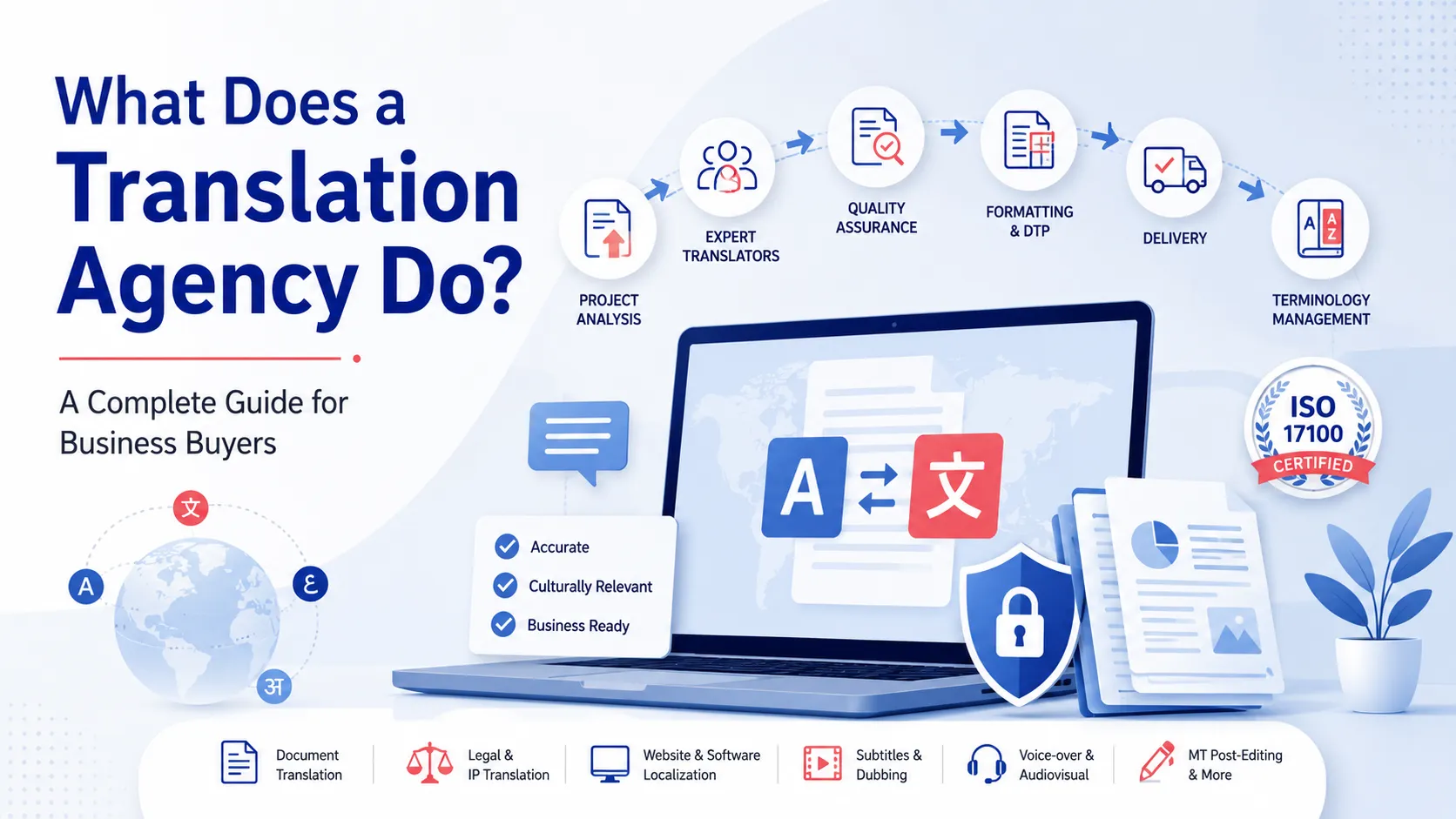
Localization is adapting content for cultural context, regional preferences, and local search behavior. Translation is converting words from one language to another, a fundamental part of localization.
For multilingual SEO, you need both. Basic translation gives you comprehensible content. SEO translation adds keyword optimization. Full localization makes content feel native to the user.
What makes SEO translation different from standard translation?
A standard translator converts your English blog post to German word-for-word, maintaining meaning and readability. They do good work.
An SEO translator, however, starts with your multilingual keyword research. They review how the top-ranking German pages structure their content. They rewrite headings to match local SERP patterns. They adjust meta descriptions to fit how German searchers phrase queries.
This is why keyword briefs matter. Give your translator the target keywords, search volume data, and examples of top-ranking content in that language. They’ll create something that ranks, besides reading correctly.
Workflow: from keyword brief to localized page
Here’s the production workflow that scales:
First, create a multilingual keyword brief with target keywords, search volume, competitor examples, and search intent for each page.
Second, your SEO translator drafts the page using the brief, your brand style guide, and their understanding of local search patterns. They’re not translating sentence by sentence—they’re rewriting for that market.
Third, a native editor reviews for clarity, flow, and cultural appropriateness. Some phrases work in English but feel off in other languages. The editor catches these.
Fourth, your SEO lead checks on-page elements: title tags, meta descriptions, header structure, keyword density, internal links, and image alt text.
Fifth, implement in your CMS with proper URL structure and hreflang tags. Sixth, QA everything in staging before publishing.
This process takes longer than running content through Google Translate. It also actually works.
Using CMS and localization platforms without hurting SEO
Depending on how your CMS is configured, it can make multilingual SEO easier or nearly impossible.
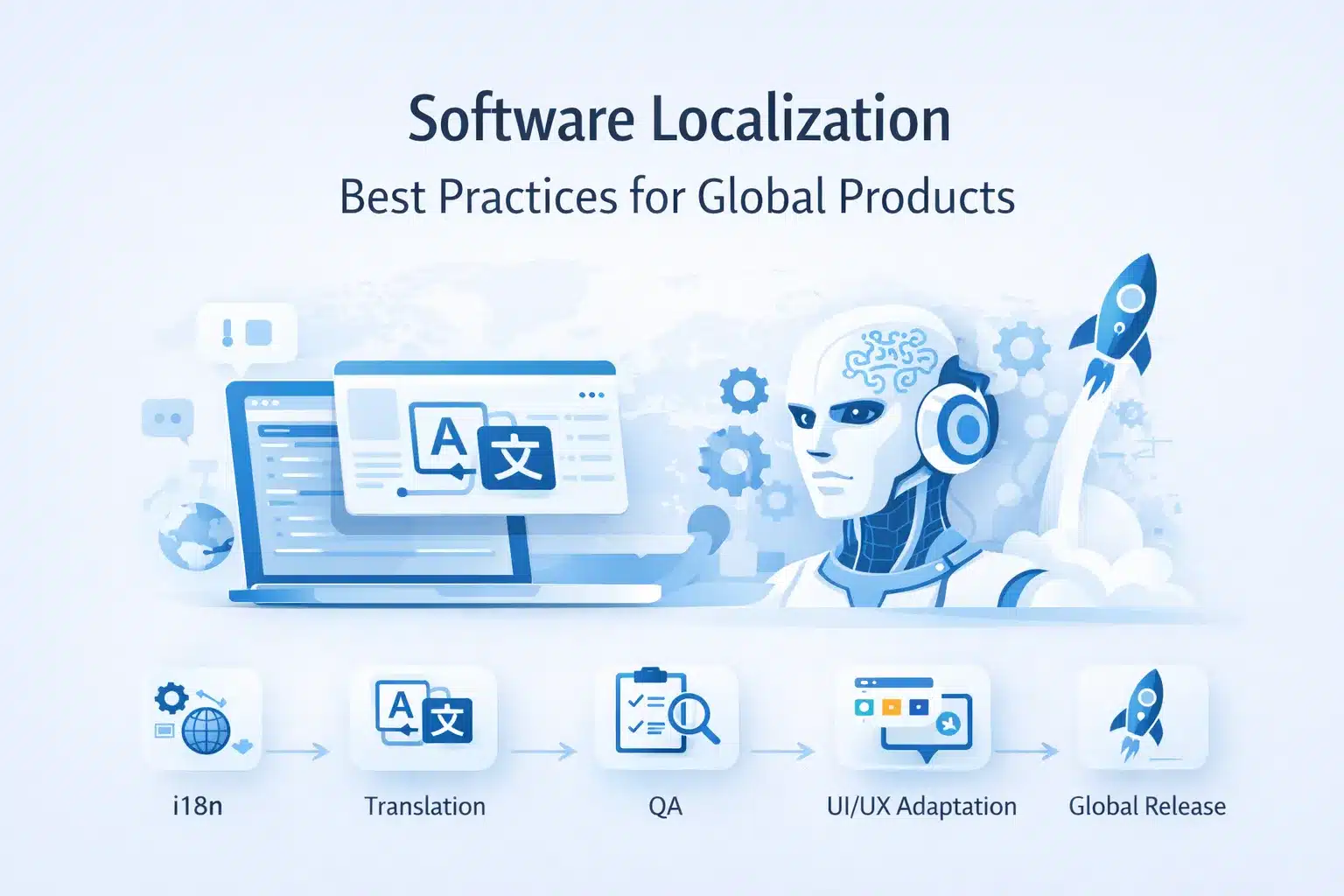
Platforms like Contentful let you define locales, create reusable content components, and manage references across languages. You build your content model once, then populate it per language.
The pitfalls are something you need to look out for. Most common ones include: duplicated entries that should be linked, misaligned URL slugs, inconsistent navigation structure, and mixed language in global components like headers and footers.
Set up your locale structure properly from the start. Define which languages you’ll support, how locales map to URLs, and how content references work across languages. Get this foundation right, and adding new languages later becomes straightforward.
Measurement, reporting, and continuous improvement
You can’t optimize what you don’t measure. Multilingual SEO requires tracking by language, market, content type, and conversion stage.
Split your analytics to see performance per locale. Use Google Search Console’s country and language reports to monitor which pages rank where. Track not just traffic, but qualified traffic, the kind that converts.
KPIs for multilingual SEO in B2B
Here are the metrics that matter: Organic sessions by locale, non-branded clicks per language, demo or trial conversions per language, partner referral traffic from localized content, and assisted pipeline by language version.
Compare performance between your source language and localized versions. Are German pages converting at similar rates to English? If not, the issue might be translation quality, keyword targeting, or positioning.
For B2B specifically, track how multilingual content moves people through the funnel. Blog posts generate awareness. Solution pages drive consideration. Case studies and whitepapers capture intent.
Common multilingual SEO issues and how to audit them
Even well-implemented multilingual sites develop problems over time. Run quarterly audits to catch issues before they hurt rankings.
Check for wrong or missing hreflang tags, mixed languages on the same page, untranslated metadata, auto-translated content that was never reviewed, and orphaned language versions with no internal links.
A simple audit checklist: crawl all language versions, verify hreflang implementation, confirm one language per page, check metadata translation, test internal linking within each language, review top pages for keyword optimization, and compare rankings to top competitors in each market.
Use tools like Screaming Frog for technical audits, Google Search Console for indexing and ranking data, and your analytics platform for traffic and conversion analysis.
How AI tools fit into multilingual SEO workflows
AI can support drafts, keyword clustering, and initial translations. But AI can’t understand nuanced cultural context, make judgment calls about brand voice in different markets, or ensure compliance with local regulations.
Use AI for speed and scale. Let it generate first drafts, suggest keyword variations, or help cluster search terms by intent. Then have human linguists handle the refinement, cultural adaptation, and final optimization.
The hybrid model works best: AI handles the heavy lifting, humans add the expertise. You get a faster time to market without sacrificing quality.
Why partner with our translation & localization team for multilingual SEO?
Here’s where everything comes together. Multilingual SEO is translation plus SEO strategy plus technical implementation plus ongoing optimization.
Doing this in-house means hiring translators, training them on SEO, coordinating with developers, and managing everything across multiple languages.
When you work with a specialized team, you get the full stack in one place. Strategy development, keyword research per language, SEO-optimized translation, technical implementation, and performance tracking. One partner, one roadmap, consistent execution.
The benefits can be seen from early on tho. Faster rollout, unified terminology across all languages, coordinated optimization across markets, and one dashboard showing performance per language.
How we work with in-house SEO and dev teams
We don’t replace your team. We extend it.
Here’s the typical collaboration: joint audit of your current site and multilingual readiness, shared roadmap with clear ownership, implementation tickets integrated into your sprints, regular QA and optimization reviews, and coordinated launches tied to your marketing calendar.
Your SEO team stays in control of strategy. Your developers handle the technical infrastructure. We provide the linguistic expertise, market research, and multilingual execution that makes everything work.
Next steps: from audit to full multilingual SEO rollout
Ready to start? Here’s the path forward.
Step one: discovery call to understand your goals, current performance, and target markets. Step two: multilingual SEO audit covering technical foundation, content gaps, and opportunity analysis. Step three: roadmap and business case showing projected traffic and pipeline by language.
Step four: pilot with one or two languages to prove the model and refine the workflow. Step five: scale-out to additional languages based on results and business priorities.
We’ve seen this pattern succeed across industries and company stages. The teams that win start with strategy, commit to quality, and measure what matters.
Multilingual SEO Best Practices — FAQs
Short answers to questions B2B teams ask when they start working on multilingual SEO.
What is multilingual SEO in simple terms?
Multilingual SEO is the practice of making one website visible in search results across multiple languages. It combines localized content, dedicated URLs, language signals like hreflang, and language-specific keywords so that users see the right version when they search in their own language.
How is multilingual SEO different from international SEO?
Multilingual SEO focuses on language—creating English, German, and Spanish versions of one global site. International SEO adds country-level signals such as ccTLDs, local hosting, currency, and localized offers. In many B2B cases, brands start with multilingual SEO on one domain, then add stronger country targeting later.
Do I need to translate all content to get SEO benefits?
Not always. Most guides recommend starting with pages that influence revenue: product pages, solution pages, pricing, high-performing blog posts, and key resources. Over time you can expand the long tail, but even a focused set of localized pages can bring meaningful traffic and leads in new markets.
Can I just translate my English keywords with a tool?
Tools help with discovery, but relying on direct translation often leads to low-volume or off-intent terms. Specialists recommend native keyword research for each market, combining local tools and SERP reviews to capture how people really search.
Which technical elements matter most for multilingual SEO?
The recurring items across checklists are dedicated URLs per language (often subdirectories), correct hreflang tags, one language per page, translated metadata and alt text, and clean sitemaps. These give search engines clear signals about language and region.
Is a plugin enough to manage multilingual SEO?
Plugins and SaaS tools can handle language switching, URLs, hreflang, and machine translation, and they are helpful for many teams. For B2B brands with bigger pipelines, the best results usually come when tools sit inside a strategy that covers keyword research, content quality, and analytics per language.
How long does it take to see results from multilingual SEO?
Timelines depend on domain strength and market competition, but most guides note that new localized sections follow similar patterns to any SEO project: several weeks for crawling and indexing, and a few months for stronger rankings on core queries. The advantage is that you can often repurpose proven English content, so results in new languages may arrive faster than starting from zero.